
[vc_row el_class=”td_classic_blog_home”][vc_column_text css=””]
Oil prices surged above $90 after shipping disruptions in the Strait of Hormuz, catching many analysts off guard after forecasts of a supply surplus in 2026. But predicting how high prices could go requires understanding the structural forces that ultimately limit oil markets.
This analysis examines:
-
Why spare production capacity acts as a buffer in oil markets
-
How the Strait of Hormuz changes the global supply equation
-
The role of demand destruction in capping price spikes
-
Why the Strategic Petroleum Reserve can stabilize—but not solve—market disruptions
-
The key Oil Price Ceiling Factors that define how high crude prices could climb
Oil prices are notoriously difficult to forecast. The market has a long history of humbling anyone who speaks with too much certainty. There are just too many complex variables involved.
At the end of 2025, the prevailing narrative was that a surplus of oil was in store for 2026. Several major banks and forecasting agencies expected global supply to exceed demand by multiple millions of barrels per day. Some projections—including those from JPMorgan Chase—anticipated Brent crude drifting into the $60 range by mid-2026.
How quickly things change.
Following a week of escalating conflict in the Middle East and a functional shutdown of commercial traffic through the Strait of Hormuz, West Texas Intermediate (WTI) climbed above $92 per barrel. That is its highest level since the 2022 price shock following Russia’s invasion of Ukraine.
While that price remains far below the record levels seen in 2008, the dynamics today are different. Instead of debating whether a disruption might occur, markets are reacting to one already unfolding.
The question many readers now ask is simple: How high could oil prices go?
The honest answer is that no one knows for certain. But we can evaluate the possibilities by looking at three physical constraints that ultimately govern oil markets: spare capacity, demand elasticity, and the limits of policy intervention.
Spare Capacity vs. The Hormuz Math
The first constraint is the global supply buffer.
At the end of 2025, the world had roughly 3 to 4 million barrels per day of effective spare production capacity, almost entirely held by Saudi Arabia and the United Arab Emirates.
Under normal conditions, that cushion helps stabilize prices during temporary disruptions.
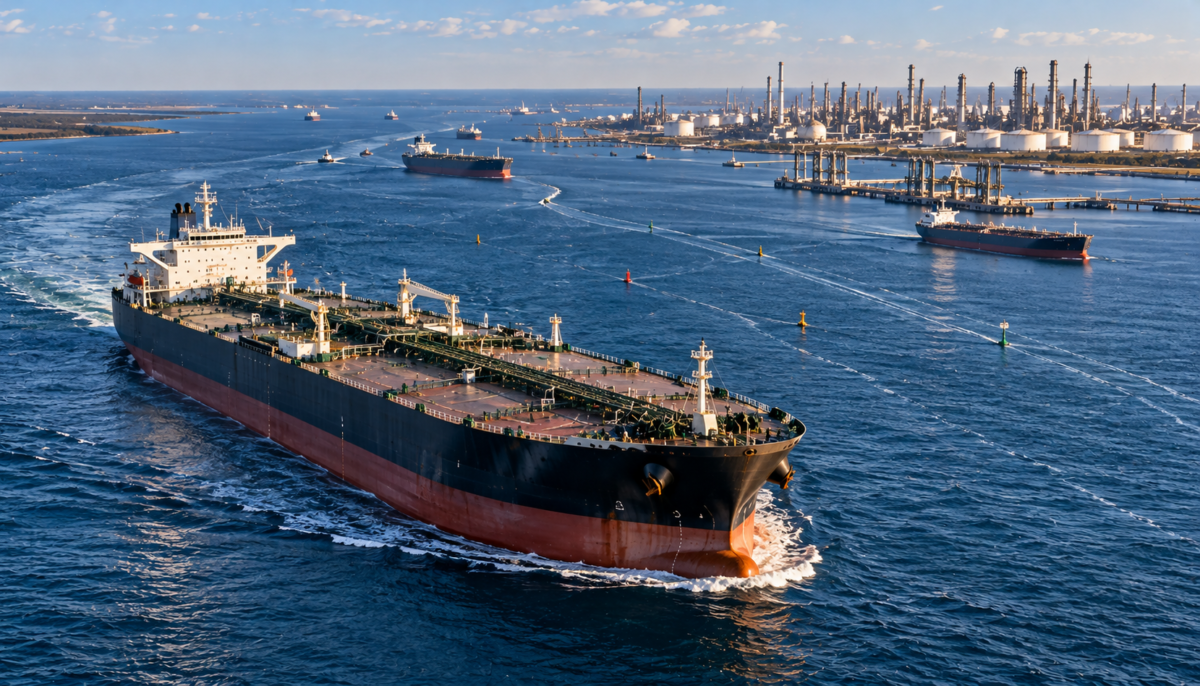
But the scale of the Strait of Hormuz puts that buffer into perspective. Roughly 20 million barrels per day—nearly one-fifth of global oil consumption—moves through that narrow waterway.
Even if every barrel of spare capacity were brought online immediately, it would offset only a fraction of the volume currently at risk.
In other words, spare capacity can help smooth smaller disruptions. It cannot fully compensate for a systemic chokepoint affecting such a large share of global supply.
The Demand “Breaking Point”
Sometimes when people ask me how high oil prices could go, I ask a different question: How expensive would gasoline have to become before you start driving less?
That thought experiment captures a fundamental truth about oil markets.
Demand is remarkably resilient in the short term. People still commute to work, trucks still deliver goods, and airplanes still fly.
But at some point, high fuel costs begin to change behavior. Consumers drive less, businesses cut discretionary travel, and economic growth slows.
History offers a useful benchmark. In 2008, WTI crude surged to $147 per barrel just before the global economy entered recession. Many analysts now view roughly $120 per barrel as a modern “recession trigger”—the level where energy costs begin to meaningfully erode consumer spending and economic momentum.
In that sense, high prices ultimately become their own correction mechanism. They suppress demand until the market rebalances. Or, as the saying goes, the solution to high prices is high prices.
The Strategic Petroleum Reserve: A Stabilizer, Not a Solution
Policy tools can also influence prices—but only within limits.
The U.S. Strategic Petroleum Reserve currently holds about 415 million barrels of crude oil. While that is still one of the world’s largest emergency stockpiles, it is well below the peak level of more than 700 million barrels seen 15 years ago.
A coordinated release from the SPR can help calm markets and offset short-term disruptions, as it did after Russia’s invasion of Ukraine. For example, a drawdown of one million barrels per day could temporarily add supply during a crisis.
But compared to the roughly 20 million barrels per day that normally move through the Strait of Hormuz, even aggressive releases only partially offset the disruption.
The SPR can buy time for markets to adjust. It cannot replace the Persian Gulf.
Bounding The Scenarios
Instead of trying to predict a precise price target, it is more useful to think in terms of ranges tied to real-world developments.
Contained disruption ($90–$110 WTI). If the current disruption proves temporary and shipping through the Strait resumes relatively quickly, the current price spike could fade as the previously expected 2026 supply surplus reasserts itself.
Structural shock ($110–$130 WTI). If disruptions persist for several weeks—through tanker strikes, infrastructure damage, or prolonged insurance withdrawals—the market will begin pricing in a sustained supply risk.
Severe disruption ($140+ WTI). This scenario would likely require a major escalation, such as significant damage to key processing facilities in Saudi Arabia or the UAE. At that point the market would be driven less by trading sentiment and more by a global scramble for physical barrels. At that point, we really don’t know how high oil prices might rise, but at some point, they will trigger an economic response.
The Road Ahead
Oil markets are ultimately self-correcting. High prices tend to sow the seeds of their own reversal by slowing economic activity and reducing demand.
But that adjustment process can take time—and it can be painful while it unfolds.
The key question right now isn’t whether oil prices could spike further. History shows they can.
The real question is how long the global economy would have to live with those prices before demand destruction forces the market back toward equilibrium. And more importantly, what those impacts on the global economy will ultimately be.
This article was originally published on Forbes.com and was written by Robert Rapier, Senior Contributor at Forbes and Editor in Chief of SHALE Magazine. The original version can be found on Forbes here.
Keep In Touch with Shale Magazine
As the new era of energy unfolds, you can bet we’ll be the boots on the ground to keep you informed. Subscribe to Shale Magazine for sharp insight into the arenas that matter most to your life. And don’t forget to listen to our riveting podcast, The Energy Mixx Radio Show, where our very own Kym Bolado interviews the most extraordinary thought leaders, business innovators, and industry experts of our time.
Subscribe to get more posts from Robert Rapier