
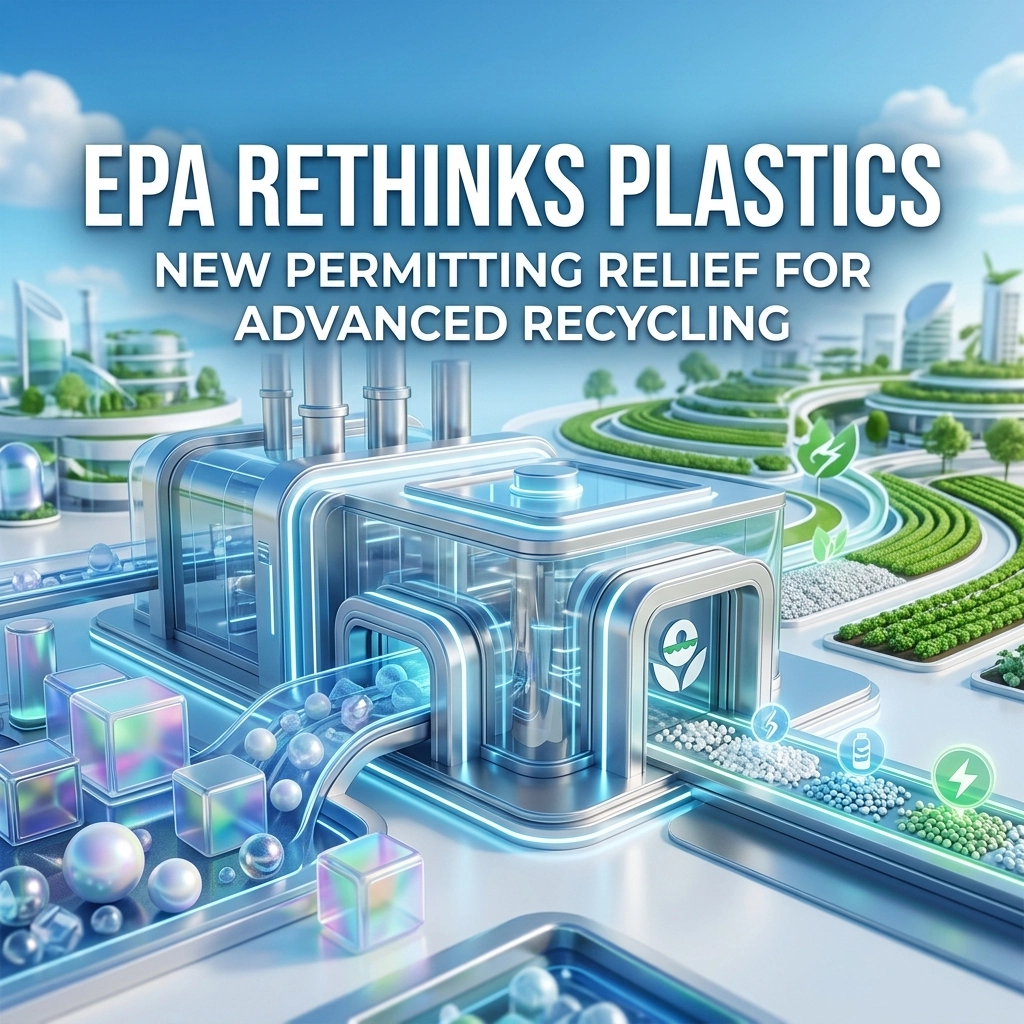
[vc_row][vc_column][vc_column_text css=””]The Environmental Protection Agency is currently making moves that could fundamentally reshape the future of the petrochemical industry and the way we handle plastic waste in the United States. In a significant shift from previous policy directions, the EPA announced a formal solicitation for comments regarding the regulatory classification of pyrolysis technologies. Specifically, the agency is looking at whether these advanced recycling methods should be officially excluded from the stringent incineration standards under the Clean Air Act.
For those tracking the intersection of environmental policy and industrial investment, this is more than just a dry regulatory update. It represents a potential pivot toward a more circular economy that treats plastic waste as a valuable feedstock rather than a disposal problem. By reconsidering how these facilities are permitted, the EPA is opening the door for billions of dollars in domestic investment into advanced recycling infrastructure.
Reclassifying Pyrolysis and the Petrochemical Industry
At the heart of this regulatory shift is the technical distinction between burning waste and chemically recycling it. For years, the debate has centered on whether pyrolysis—a process that uses heat in an oxygen-free environment to break down plastics into their molecular building blocks—should be regulated the same way as a municipal waste incinerator.
Under Section 129 of the Clean Air Act, incinerators are subject to heavy oversight and strict emission limits for nine specific pollutants, including heavy metals and dioxins. While these protections are vital for traditional combustion, industry leaders argue that applying them to pyrolysis is like trying to fit a square peg in a round hole. Because pyrolysis does not involve the actual combustion of the material, but rather a thermal decomposition, proponents argue it should be classified as manufacturing.
If the EPA moves forward with this reclassification, pyrolysis facilities would likely fall under Section 111 of the Clean Air Act. This shift would provide significant permitting relief for the petrochemical industry, as Section 111 is generally viewed as more tailored to industrial manufacturing processes rather than waste disposal operations. This change could reduce the time and cost associated with bringing new advanced recycling plants online, particularly in heavy industrial corridors like the Gulf Coast.

Economic Drivers and the Clean Energy Transition
The push for this regulatory relief is not happening in a vacuum. It is being driven by massive projected growth in the global pyrolysis oil market. Recent market analysis suggests that the market for pyrolysis oil—the primary output of advanced recycling that can be used to create new, virgin-quality plastics—is set to reach approximately $1.16 billion by 2034.
This growth is a critical component of the broader clean energy transition. As global brands commit to using more recycled content in their packaging, the demand for high-quality recycled resins is skyrocketing. Traditional mechanical recycling, while useful, often degrades the quality of the plastic over time, making it unsuitable for food-grade packaging or high-performance industrial applications. Advanced recycling solves this by returning the plastic to its original liquid or gaseous state, allowing it to be used as a direct substitute for fossil-fuel-based feedstocks.
According to data from the American Chemistry Council (ACC), 27 states have already passed laws recognizing advanced recycling as a manufacturing process rather than waste disposal. The federal government’s alignment with this state-level trend would provide the regulatory certainty needed for large-scale capital deployment. Investors are looking for a clear runway, and a unified federal stance on permitting would likely trigger a surge in domestic projects.
Addressing Environmental Concerns and Emissions Controls
While the industry sees this as a common-sense update to outdated rules, the proposal has met with pushback from various environmental advocacy groups. The core of the opposition centers on the fear that reclassifying these facilities will lead to a “dark spot” in emissions monitoring. Critics argue that even if oxygen isn’t used in the primary chamber, the overall process still produces emissions that require rigorous federal oversight to protect local air quality.
Some environmental groups have pointed out that the EPA is seeking these comments through a somewhat indirect route, embedding the discussion within a rulemaking focused on wood incineration. They contend that this approach lacks the transparency required for a policy shift that could impact dozens of new industrial sites across the country.
However, the EPA’s current solicitation is designed to gather the technical data necessary to bridge this gap. The agency is looking for evidence on exactly what is being emitted from modern pyrolysis units and whether the existing Section 111 standards are sufficient to protect public health while still allowing the industry to grow. This balance is critical for the future of plastic waste management in the U.S., as the country looks for alternatives to landfilling and traditional incineration.

Strategic Implications for the U.S. Energy Landscape
The reclassification of advanced recycling is also a matter of national energy security and resource management. By extracting value from plastic waste, the U.S. can reduce its reliance on primary raw materials for chemical production. This aligns with broader goals of the Department of Energy and the White House to modernize industrial processes and reduce the carbon footprint of the manufacturing sector.
For the petrochemical industry, this is an opportunity to lead the way in a new sector of the energy economy. Facilities that can process mixed plastic waste—the stuff that typically ends up in landfills because mechanical recyclers can’t handle it—are becoming a vital part of the value chain. This shift also has significant implications for states with high concentrations of chemical manufacturing, such as Texas and Louisiana. To learn more about how policy shifts affect regional energy hubs, check out our analysis on https://shalemag.com/louisiana-lng-permitting-strategy.
Horizontal lines of communication between the EPA and industry stakeholders like America’s Plastic Makers suggest that the coming months will be a period of intense data sharing. The EPA’s final decision will likely hinge on whether the industry can demonstrate that pyrolysis is fundamentally a manufacturing process that can operate cleanly under the proposed new guidelines.
The outcome of this EPA review will set the stage for the next decade of American recycling policy. If the agency provides the requested permitting relief, we can expect a rapid expansion of facilities that turn waste into wealth. If the status quo remains, the U.S. may struggle to meet the ambitious recycled-content goals set by both the public and private sectors.
As we move toward the 2026 methane regulatory deadlines and other federal shifts, the plastics reclassification stands out as a key indicator of how the current administration balances industrial growth with environmental standards. The petrochemical industry is at a crossroads, and the decisions coming out of D.C. in the spring of 2026 will determine which path it takes.
Keep In Touch with Shale Magazine
As the new era of energy unfolds, you can bet we’ll be the boots on the ground to keep you informed. Subscribe to Shale Magazine for sharp insight into the arenas that matter most to your life. And don’t forget to listen to our riveting podcast, The Energy Mixx Radio Show, where our very own Kym Bolado interviews the most extraordinary thought leaders, business innovators, and industry experts of our time.
Subscribe to get more posts from Amanda Jenkins[/vc_column_text][/vc_column][/vc_row]