
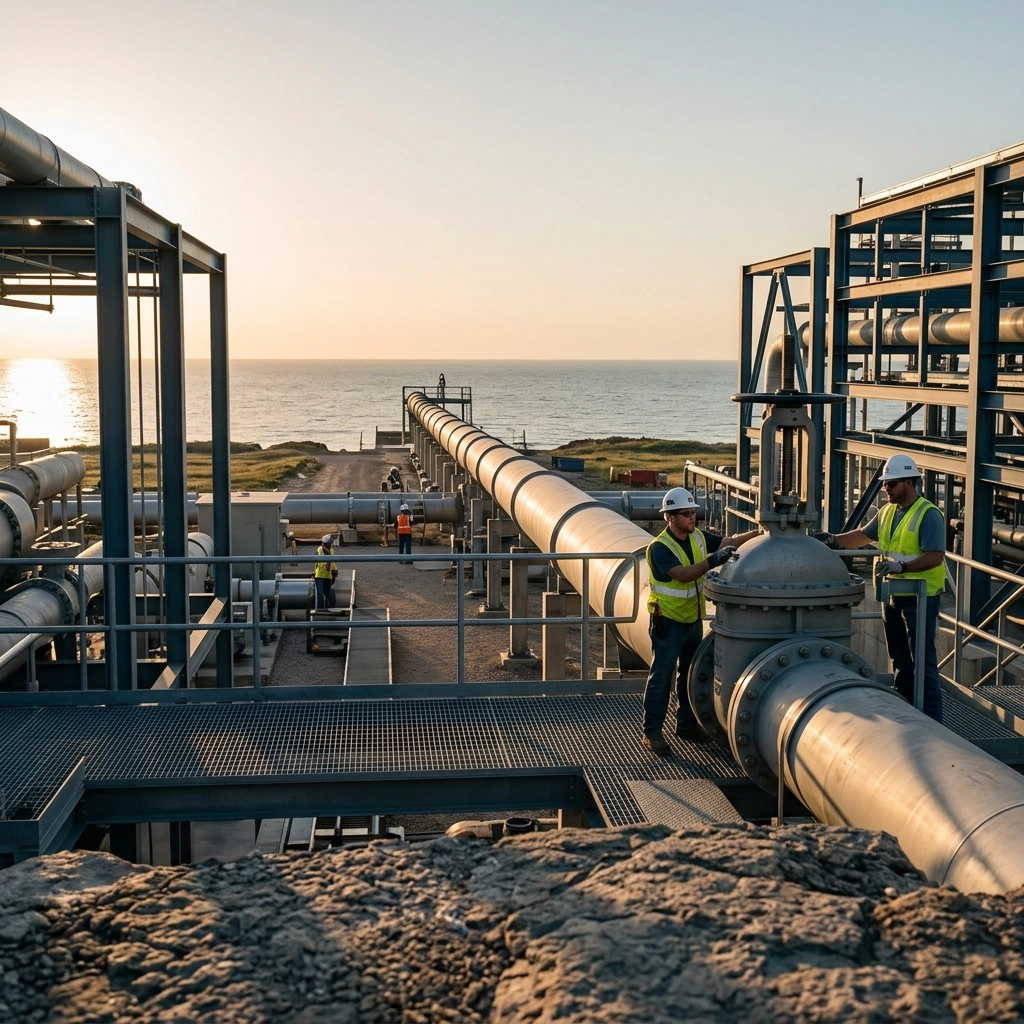
[vc_row][vc_column][vc_column_text css=””]Coastal desalination infrastructure growth represents a significant shift in the economic and environmental landscape of South Texas. For decades, the Coastal Bend has grappled with the dual reality of being a global energy powerhouse while simultaneously facing a precarious long-term water supply. The announcement by Congressman Michael Cloud regarding a new federal posture toward desalination projects marks a turning point for the region. By removing long-standing regulatory and financial barriers, the federal government is signaling that water security is now a prioritized component of national infrastructure and energy policy.
The move follows a high-profile visit to the Coastal Bend by President Donald Trump in February. During this engagement, local leaders emphasized that the regional water crisis was no longer a local administrative issue but a bottleneck for national energy objectives. The Coastal Bend, home to one of the most active ports in the United States, requires massive and reliable water volumes to sustain the industrial operations that define the American energy sector. The subsequent announcement that the administration would expand water infrastructure opportunities effectively opens the door for significant federal funding that was previously out of reach.
Overcoming the Prohibitive $30 Million Cap
Prior to this policy shift, federal support for desalination was hampered by a restrictive $30 million funding cap. This ceiling acted as a prohibitive hurdle for large-scale municipal and industrial projects. In a region like Corpus Christi, where a proposed desalination facility can cost several hundred million dollars, a $30 million federal contribution was often insufficient to catalyze the necessary private and local investment. The removal of this cap by the Trump administration changes the fiscal math for the region, allowing for the kind of large-scale infrastructure development that matches the scale of the Coastal Bend’s industrial footprint.
According to Congressman Michael Cloud, this cap removal is the result of extensive collaboration between local representatives, the White House, and the Bureau of Reclamation. The previous limitations essentially made substantial federal participation in desalination projects virtually impossible. By lifting these restrictions, the federal government allows the Coastal Bend to pursue a long-term water solution that does not rely solely on traditional reservoir systems, which are increasingly vulnerable to drought and fluctuating climate patterns. This policy change aligns with broader efforts to streamline federal regulations and provide the necessary capital for infrastructure that supports domestic production.
The impact of this decision extends beyond municipal drinking water. Large-scale industrial users, including refineries and manufacturing plants, are the primary drivers of water demand in the region. Without a resilient water supply, future expansion in the energy sector would be physically limited regardless of market demand. The integration of desalination into the regional water plan is a strategic necessity for maintaining the pace of industrial growth.
Legislative Advocacy and the WaterSMART Program
The mechanism for this funding surge is the Bureau of Reclamation’s WaterSMART program. This program is specifically designed to leverage both federal and non-federal funds, fostering partnerships between the state and local governments to increase water supply and overall resilience. The program focuses on projects that use modern technology to recover or create water resources that were previously unusable. With the $30 million cap removed, the WaterSMART program can now be applied to the massive seawater desalination projects currently under consideration for the Corpus Christi Inner Harbor.
Congressman Cloud’s office has been instrumental in navigating the federal bureaucracy to ensure South Texas remains a priority. In an April budget hearing, Cloud questioned Andrea Travnicek, the Assistant Secretary for Water and Science in the U.S. Department of Interior, regarding the progress of Corpus Christi’s funding applications. Travnicek confirmed that the department has been tracking these applications closely and coordinating with local officials to ensure all technical requirements are met. This level of inter-agency coordination is essential for projects that involve complex environmental permits and high-level engineering.

The proactive stance taken by the Department of the Interior suggests a shift toward more flexible, localized water management strategies. By empowering local governments to tap into seawater resources, the federal government reduces the pressure on inland freshwater sources, which are often shared across multiple agricultural and municipal districts. This reduces regional conflict over water rights and allows the Coastal Bend to control its own resource destiny. The ongoing efforts in Corpus Christi serve as a pilot model for how other coastal energy hubs might address similar resource constraints.
Water Security as a Pillar of American Energy Dominance
The federal funding announcement specifically references the advancement of the Trump administration’s priorities regarding American Energy Dominance. In the modern energy economy, the extraction, refining, and export of hydrocarbons are water-intensive processes. The Coastal Bend is the primary exit point for much of the crude oil and liquefied natural gas produced in the Permian Basin and the Eagle Ford Shale. Ensuring that this region has a surplus of water is therefore a matter of national economic security.
Energy dominance is not just about the volume of fuel produced; it is about the stability of the infrastructure that supports it. A water shortage in Corpus Christi would not just impact local residents; it would create a ripple effect throughout the global energy supply chain. By investing in desalination, the administration is effectively underwriting the reliability of the Texas energy sector. This holistic approach to infrastructure acknowledges that energy policy cannot exist in a vacuum, separate from water and transportation policy.
The removal of the funding cap is also expected to stimulate local business activity. As these massive desalination projects move into the construction and operational phases, they will require a sophisticated supply chain. From advanced filtration technology to heavy machinery and engineering services, the influx of federal capital will provide significant opportunities for the regional business community. This development reinforces the Coastal Bend’s reputation as a prime location for industrial investment.
The transition toward seawater desalination in South Texas is a clear example of how targeted policy shifts can unlock significant economic potential. By identifying and removing a specific regulatory hurdle: the $30 million cap: the Trump administration has cleared the path for a multi-generational solution to a persistent regional challenge. As the Coastal Bend continues to grow, its ability to produce its own water through desalination will be the cornerstone of its industrial and municipal resilience.
For the residents and businesses of Bee County, Nueces County, and the surrounding areas, this announcement provides a much-needed sense of certainty. Long-term water solutions are no longer a distant hope but a tangible reality supported by federal backing and legislative willpower. As the Bureau of Reclamation moves forward with the WaterSMART program, the region is poised to lead the nation in demonstrating how coastal communities can thrive by turning to the sea for their most vital resource.
Keep In Touch with Shale Magazine
As the new era of energy unfolds, you can bet we’ll be the boots on the ground to keep you informed. Subscribe to Shale Magazine for sharp insight into the arenas that matter most to your life. And don’t forget to listen to our riveting podcast, The Energy Mixx Radio Show, where our very own Kym Bolado interviews the most extraordinary thought leaders, business innovators, and industry experts of our time.
Subscribe to get more posts from Amanda Jenkins[/vc_column_text][/vc_column][/vc_row]