
[vc_row el_class=”td_classic_blog_home”]
Speculation around Venezuela’s oil recovery has intensified following recent political upheaval, but expectations often overlook a critical distinction: structural collapse versus sanctions-driven disruption. While sanctions remain a powerful short-term variable, they are not the root cause of Venezuela’s long-term production decline.
This article explains:
-
Why Venezuela’s oil collapse began long before sanctions
-
How sanctions accelerated — but did not cause — the decline
-
Which barrels could return quickly if restrictions ease
-
Why Chevron holds a unique advantage
-
Why long-term recovery remains a decade-long challenge
Venezuela Oil Sanctions Impact Recovery Timeline
After the latest political shock in Venezuela, speculation has surged over the prospects of a recovery for the country’s oil industry. On paper, Venezuela still holds the world’s largest proven oil reserves. In reality, production remains a fraction of what it once was.
How quickly Venezuela’s oil production ramps up will depend in part on what happens with sanctions. But Venezuela’s collapse did not begin with sanctions, nor can sanctions relief alone undo the damage. However, sanctions could have a meaningful short-term effect.
The country’s oil decline has two distinct layers: long-term structural damage and later sanctions-driven disruption. Understanding the difference is essential to assessing what comes next — and why sanctions remain the near-term wildcard.
The Structural Collapse Came First
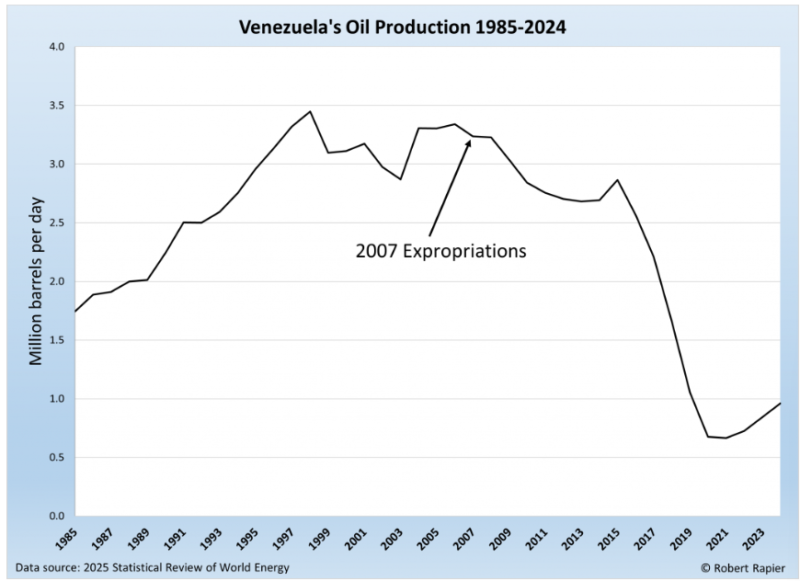
Venezuela’s oil decline traces back to the 2007 expropriations under President Hugo Chávez. That year, the government forced foreign operators into minority positions and seized assets when companies such as ConocoPhillips and ExxonMobil rejected the new terms.
These were not simple oil fields. The Orinoco Belt is among the most technically demanding heavy oil regions in the world. Sustaining production requires advanced reservoir management, steady diluent supply, and multi-billion-dollar upgrading facilities.
When foreign operators exited, they took with them investment capital, technical expertise, operational discipline, and project management systems. Venezuela’s national oil company, PDVSA, retained the assets — but not the capabilities.
Maintenance deteriorated. Equipment failed. Skilled workers left. Production declined years before oil sanctions were imposed, a trend clearly visible in production data.
This damage cannot be reversed quickly. Rebuilding infrastructure and restoring technical capacity is a multi-year effort even under stable political conditions.
Sanctions Hit Later and Accelerated the Decline
The second layer arrived in January 2019, when the United States imposed direct sanctions on PDVSA. Earlier sanctions targeted individuals and had little impact on production. The 2019 measures were fundamentally different.
They cut off Venezuela’s largest customer, restricted payments, blocked diluent imports, and complicated shipping and insurance. Heavy oil that could have been produced became stranded almost overnight.
By late 2025, sanctions and interdictions had sharply reduced exports. Reuters reported tanker movements nearly halted, while Vortexa data showed a 36% drop in December alone.
This portion of the decline, however, could reverse more quickly. Wells shut in for commercial reasons can restart. Joint ventures can normalize operations. Diluent flows can resume. While this would not restore Venezuela to historic production levels, it could produce a meaningful short-term increase.
Chevron’s Structural Advantage
If sanctions ease, Chevron stands apart. It is the only major U.S. oil company that never fully exited Venezuela.
Through exemptions, Chevron maintained joint ventures, preserved operational continuity, and kept personnel on the ground. That continuity matters. Unlike peers, Chevron does not need to rebuild relationships — only a clearer commercial framework.
ConocoPhillips and the Compensation Question
ConocoPhillips occupies a different position. After being expropriated in 2007, it later secured an $8.7 billion arbitration award, plus interest.
The ongoing Citgo sale represents one recovery pathway. However, ConocoPhillips today is a fundamentally different company than it was in 2007. After spinning off Phillips 66 in 2012, it became a pure-play upstream producer and redirected heavy-oil investment toward Canada.
As a result, re-entry into Venezuela remains uncertain, even if compensation is secured.
Why Sanctions Still Matter Most
How quickly Venezuela’s oil sector rebounds depends on which layer is being discussed.
Structural damage will take years — potentially a decade or more — to repair. Sanctions relief cannot change that.
But barrels shut in for logistical and commercial reasons could return much faster if restrictions ease. That is why the Venezuela Oil Sanctions Impact remains decisive in the near term.
Venezuela’s immediate oil future hinges less on geology than on whether the sanctions landscape changes.
Forbes Attribution Note
This article was written by Robert Rapier, Senior Contributor to Forbes and Editor in Chief of SHALE Magazine. The original version of this article appeared on Forbes.com here.
Subscribe to get more posts from Robert Rapier
Keep In Touch with Shale Magazine
As the new era of energy unfolds, you can bet we’ll be the boots on the ground to keep you informed. Subscribe to Shale Magazine for sharp insight into the arenas that matter most to your life. And don’t forget to listen to our riveting podcast, The Energy Mixx Radio Show, where our very own Kym Bolado interviews the most extraordinary thought leaders, business innovators, and industry experts of our time.[vc_raw_html css=””]JTdCJTBEJTBBJTIwJTIwJTIyJTQwY29udGV4dCUyMiUzQSUyMCUyMmh0dHBzJTNBJTJGJTJGc2NoZW1hLm9yZyUyMiUyQyUwRCUwQSUyMCUyMCUyMiU0MGdyYXBoJTIyJTNBJTIwJTVCJTBEJTBBJTIwJTIwJTIwJTIwJTdCJTBEJTBBJTIwJTIwJTIwJTIwJTIwJTIwJTIyJTQwdHlwZSUyMiUzQSUyMCUyMk5ld3NNZWRpYU9yZ2FuaXphdGlvbiUyMiUyQyUwRCUwQSUyMCUyMCUyMCUyMCUyMCUyMCUyMiU0MGlkJTIyJTNBJTIwJTIyaHR0cHMlM0ElMkYlMkZzaGFsZW1hZy5jb20lMkYlMjNvcmdhbml6YXRpb24lMjIlMkMlMEQlMEElMjAlMjAlMjAlMjAlMjAlMjAlMjJuYW1lJTIyJTNBJTIwJTIyU0hBTEUlMjBPaWwlMjAlMjYlMjBHYXMlMjBCdXNpbmVzcyUyME1hZ2F6aW5lJTIyJTJDJTBEJTBBJTIwJTIwJTIwJTIwJTIwJTIwJTIydXJsJTIyJTNBJTIwJTIyaHR0cHMlM0ElMkYlMkZzaGFsZW1hZy5jb20lMjIlMkMlMEQlMEElMjAlMjAlMjAlMjAlMjAlMjAlMjJwYXJlbnRPcmdhbml6YXRpb24lMjIlM0ElMjAlN0IlMEQlMEElMjAlMjAlMjAlMjAlMjAlMjAlMjAlMjAlMjIlNDB0eXBlJTIyJTNBJTIwJTIyT3JnYW5pemF0aW9uJTIyJTJDJTBEJTBBJTIwJTIwJTIwJTIwJTIwJTIwJTIwJTIwJTIybmFtZSUyMiUzQSUyMCUyMkVuZXJneSUyME5ldHdvcmslMjBNZWRpYSUyMEdyb3VwJTIyJTBEJTBBJTIwJTIwJTIwJTIwJTIwJTIwJTdEJTJDJTBEJTBBJTIwJTIwJTIwJTIwJTIwJTIwJTIybG9nbyUyMiUzQSUyMCU3QiUwRCUwQSUyMCUyMCUyMCUyMCUyMCUyMCUyMCUyMCUyMiU0MHR5cGUlMjIlM0ElMjAlMjJJbWFnZU9iamVjdCUyMiUyQyUwRCUwQSUyMCUyMCUyMCUyMCUyMCUyMCUyMCUyMCUyMnVybCUyMiUzQSUyMCUyMmh0dHBzJTNBJTJGJTJGc2hhbGVtYWcuY29tJTJGd3AtY29udGVudCUyRnVwbG9hZHMlMkYyMDIzJTJGMTAlMkZTaGFsZS1Mb2dvLUhpZ2gtUmVzLnBuZyUyMiUwRCUwQSUyMCUyMCUyMCUyMCUyMCUyMCU3RCUyQyUwRCUwQSUyMCUyMCUyMCUyMCUyMCUyMCUyMmVtYWlsJTIyJTNBJTIwJTIya3ltJTQwc2hhbGVtYWcuY29tJTIyJTJDJTBEJTBBJTIwJTIwJTIwJTIwJTIwJTIwJTIyYWRkcmVzcyUyMiUzQSUyMCU3QiUwRCUwQSUyMCUyMCUyMCUyMCUyMCUyMCUyMCUyMCUyMiU0MHR5cGUlMjIlM0ElMjAlMjJQb3N0YWxBZGRyZXNzJTIyJTJDJTBEJTBBJTIwJTIwJTIwJTIwJTIwJTIwJTIwJTIwJTIyc3RyZWV0QWRkcmVzcyUyMiUzQSUyMCUyMjUxNTAlMjBCcm9hZHdheSUyMCUyMzQ5MyUyMiUyQyUwRCUwQSUyMCUyMCUyMCUyMCUyMCUyMCUyMCUyMCUyMmFkZHJlc3NMb2NhbGl0eSUyMiUzQSUyMCUyMlNhbiUyMEFudG9uaW8lMjIlMkMlMEQlMEElMjAlMjAlMjAlMjAlMjAlMjAlMjAlMjAlMjJhZGRyZXNzUmVnaW9uJTIyJTNBJTIwJTIyVFglMjIlMkMlMEQlMEElMjAlMjAlMjAlMjAlMjAlMjAlMjAlMjAlMjJwb3N0YWxDb2RlJTIyJTNBJTIwJTIyNzgyMDklMjIlMkMlMEQlMEElMjAlMjAlMjAlMjAlMjAlMjAlMjAlMjAlMjJhZGRyZXNzQ291bnRyeSUyMiUzQSUyMCUyMlVTJTIyJTBEJTBBJTIwJTIwJTIwJTIwJTIwJTIwJTdEJTJDJTBEJTBBJTIwJTIwJTIwJTIwJTIwJTIwJTIydGVsZXBob25lJTIyJTNBJTIwJTIyJTJCMS0yMTAtMjQwLTcxODglMjIlMkMlMEQlMEElMjAlMjAlMjAlMjAlMjAlMjAlMjJmb3VuZGVyJTIyJTNBJTIwJTdCJTBEJTBBJTIwJTIwJTIwJTIwJTIwJTIwJTIwJTIwJTIyJTQwdHlwZSUyMiUzQSUyMCUyMlBlcnNvbiUyMiUyQyUwRCUwQSUyMCUyMCUyMCUyMCUyMCUyMCUyMCUyMCUyMm5hbWUlMjIlM0ElMjAlMjJLeW0lMjBCb2xhZG8lMjIlMEQlMEElMjAlMjAlMjAlMjAlMjAlMjAlN0QlMkMlMEQlMEElMjAlMjAlMjAlMjAlMjAlMjAlMjJmb3VuZGluZ0RhdGUlMjIlM0ElMjAlMjIyMDEzJTIyJTJDJTBEJTBBJTIwJTIwJTIwJTIwJTIwJTIwJTIyc2FtZUFzJTIyJTNBJTIwJTVCJTBEJTBBJTIwJTIwJTIwJTIwJTIwJTIwJTIwJTIwJTIyaHR0cHMlM0ElMkYlMkZ3d3cuZmFjZWJvb2suY29tJTJGc2hhbGVtYWdhemluZSUyMiUyQyUwRCUwQSUyMCUyMCUyMCUyMCUyMCUyMCUyMCUyMCUyMmh0dHBzJTNBJTJGJTJGd3d3LmxpbmtlZGluLmNvbSUyRmNvbXBhbnklMkZzaGFsZS1tYWdhemluZSUyMiUyQyUwRCUwQSUyMCUyMCUyMCUyMCUyMCUyMCUyMCUyMCUyMmh0dHBzJTNBJTJGJTJGc291bmRjbG91ZC5jb20lMkZzaGFsZS1tYWdhemluZSUyMiUyQyUwRCUwQSUyMCUyMCUyMCUyMCUyMCUyMCUyMCUyMCUyMmh0dHBzJTNBJTJGJTJGeC5jb20lMkZTaGFsZW1hZyUyMiUyQyUwRCUwQSUyMCUyMCUyMCUyMCUyMCUyMCUyMCUyMCUyMmh0dHBzJTNBJTJGJTJGd3d3LnlvdXR1YmUuY29tJTJGY2hhbm5lbCUyRlVDN1ptelJ6RlQzaWpMMi0tNWhvRk83QSUyMiUwRCUwQSUyMCUyMCUyMCUyMCUyMCUyMCU1RCUwRCUwQSUyMCUyMCUyMCUyMCU3RCUyQyUwRCUwQSUyMCUyMCUyMCUyMCU3QiUwRCUwQSUyMCUyMCUyMCUyMCUyMCUyMCUyMiU0MHR5cGUlMjIlM0ElMjAlMjJOZXdzQXJ0aWNsZSUyMiUyQyUwRCUwQSUyMCUyMCUyMCUyMCUyMCUyMCUyMiU0MGlkJTIyJTNBJTIwJTIyaHR0cHMlM0ElMkYlMkZzaGFsZW1hZy5jb20lMkZ2ZW5lenVlbGEtb2lsLXNhbmN0aW9ucy1pbXBhY3QlMkYlMjNhcnRpY2xlJTIyJTJDJTBEJTBBJTIwJTIwJTIwJTIwJTIwJTIwJTIybWFpbkVudGl0eU9mUGFnZSUyMiUzQSUyMCU3QiUwRCUwQSUyMCUyMCUyMCUyMCUyMCUyMCUyMCUyMCUyMiU0MHR5cGUlMjIlM0ElMjAlMjJXZWJQYWdlJTIyJTJDJTBEJTBBJTIwJTIwJTIwJTIwJTIwJTIwJTIwJTIwJTIyJTQwaWQlMjIlM0ElMjAlMjJodHRwcyUzQSUyRiUyRnNoYWxlbWFnLmNvbSUyRnZlbmV6dWVsYS1vaWwtc2FuY3Rpb25zLWltcGFjdCUyRiUyMiUwRCUwQSUyMCUyMCUyMCUyMCUyMCUyMCU3RCUyQyUwRCUwQSUyMCUyMCUyMCUyMCUyMCUyMCUyMmhlYWRsaW5lJTIyJTNBJTIwJTIyVmVuZXp1ZWxhJTIwT2lsJTIwU2FuY3Rpb25zJTIwSW1wYWN0JTIwUmVjb3ZlcnklMjBUaW1lbGluZSUyMiUyQyUwRCUwQSUyMCUyMCUyMCUyMCUyMCUyMCUyMmRlc2NyaXB0aW9uJTIyJTNBJTIwJTIyQW5hbHlzaXMlMjBvZiUyMGhvdyUyMFUuUy4lMjBzYW5jdGlvbnMlMjBhbmQlMjBzdHJ1Y3R1cmFsJTIwZGVjYXklMjBpbmZsdWVuY2UlMjBWZW5lenVlbGElMjdzJTIwb2lsJTIwcHJvZHVjdGlvbiUyMHJlY292ZXJ5LiUyMEV4cGVydCUyMGluc2lnaHQlMjBpbnRvJTIwUERWU0ElMkMlMjBDaGV2cm9uJTI3cyUyMHJvbGUlMkMlMjBhbmQlMjB0aGUlMjBPcmlub2NvJTIwQmVsdC4lMjIlMkMlMEQlMEElMjAlMjAlMjAlMjAlMjAlMjAlMjJpbWFnZSUyMiUzQSUyMCUyMmh0dHBzJTNBJTJGJTJGc2hhbGVtYWcuY29tJTJGd3AtY29udGVudCUyRnVwbG9hZHMlMkYyMDI0JTJGMDElMkZ2ZW5lenVlbGEtb2lsLXNhbmN0aW9ucy5qcGclMjIlMkMlMEQlMEElMjAlMjAlMjAlMjAlMjAlMjAlMjJkYXRlUHVibGlzaGVkJTIyJTNBJTIwJTIyMjAyNi0wMS0wN1QwOCUzQTAwJTNBMDAlMkIwMCUzQTAwJTIyJTJDJTBEJTBBJTIwJTIwJTIwJTIwJTIwJTIwJTIyZGF0ZU1vZGlmaWVkJTIyJTNBJTIwJTIyMjAyNi0wMS0wN1QwOCUzQTAwJTNBMDAlMkIwMCUzQTAwJTIyJTJDJTBEJTBBJTIwJTIwJTIwJTIwJTIwJTIwJTIyYXV0aG9yJTIyJTNBJTIwJTdCJTBEJTBBJTIwJTIwJTIwJTIwJTIwJTIwJTIwJTIwJTIyJTQwdHlwZSUyMiUzQSUyMCUyMlBlcnNvbiUyMiUyQyUwRCUwQSUyMCUyMCUyMCUyMCUyMCUyMCUyMCUyMCUyMm5hbWUlMjIlM0ElMjAlMjJSb2JlcnQlMjBSYXBpZXIlMjIlMkMlMEQlMEElMjAlMjAlMjAlMjAlMjAlMjAlMjAlMjAlMjJqb2JUaXRsZSUyMiUzQSUyMCUyMkVkaXRvci1pbi1DaGllZiUyMiUyQyUwRCUwQSUyMCUyMCUyMCUyMCUyMCUyMCUyMCUyMCUyMmFmZmlsaWF0aW9uJTIyJTNBJTIwJTdCJTBEJTBBJTIwJTIwJTIwJTIwJTIwJTIwJTIwJTIwJTIwJTIwJTIyJTQwaWQlMjIlM0ElMjAlMjJodHRwcyUzQSUyRiUyRnNoYWxlbWFnLmNvbSUyRiUyM29yZ2FuaXphdGlvbiUyMiUwRCUwQSUyMCUyMCUyMCUyMCUyMCUyMCUyMCUyMCU3RCUyQyUwRCUwQSUyMCUyMCUyMCUyMCUyMCUyMCUyMCUyMCUyMmtub3dzQWJvdXQlMjIlM0ElMjAlNUIlMEQlMEElMjAlMjAlMjAlMjAlMjAlMjAlMjAlMjAlMjAlMjAlMjJodHRwcyUzQSUyRiUyRnd3dy53aWtpZGF0YS5vcmclMkZ3aWtpJTJGUTg2MjU3MSUyMiUyQyUwRCUwQSUyMCUyMCUyMCUyMCUyMCUyMCUyMCUyMCUyMCUyMCUyMmh0dHBzJTNBJTJGJTJGd3d3Lndpa2lkYXRhLm9yZyUyRndpa2klMkZRNDA4NTglMjIlMkMlMEQlMEElMjAlMjAlMjAlMjAlMjAlMjAlMjAlMjAlMjAlMjAlMjJodHRwcyUzQSUyRiUyRnd3dy53aWtpZGF0YS5vcmclMkZ3aWtpJTJGUTEyNzA1JTIyJTBEJTBBJTIwJTIwJTIwJTIwJTIwJTIwJTIwJTIwJTVEJTBEJTBBJTIwJTIwJTIwJTIwJTIwJTIwJTdEJTJDJTBEJTBBJTIwJTIwJTIwJTIwJTIwJTIwJTIycHVibGlzaGVyJTIyJTNBJTIwJTdCJTBEJTBBJTIwJTIwJTIwJTIwJTIwJTIwJTIwJTIwJTIyJTQwaWQlMjIlM0ElMjAlMjJodHRwcyUzQSUyRiUyRnNoYWxlbWFnLmNvbSUyRiUyM29yZ2FuaXphdGlvbiUyMiUwRCUwQSUyMCUyMCUyMCUyMCUyMCUyMCU3RCUyQyUwRCUwQSUyMCUyMCUyMCUyMCUyMCUyMCUyMmFib3V0JTIyJTNBJTIwJTVCJTBEJTBBJTIwJTIwJTIwJTIwJTIwJTIwJTIwJTIwJTdCJTBEJTBBJTIwJTIwJTIwJTIwJTIwJTIwJTIwJTIwJTIwJTIwJTIyJTQwdHlwZSUyMiUzQSUyMCUyMlBsYWNlJTIyJTJDJTBEJTBBJTIwJTIwJTIwJTIwJTIwJTIwJTIwJTIwJTIwJTIwJTIybmFtZSUyMiUzQSUyMCUyMlZlbmV6dWVsYSUyMiUyQyUwRCUwQSUyMCUyMCUyMCUyMCUyMCUyMCUyMCUyMCUyMCUyMCUyMnNhbWVBcyUyMiUzQSUyMCUyMmh0dHBzJTNBJTJGJTJGd3d3Lndpa2lkYXRhLm9yZyUyRndpa2klMkZRNzE3JTIyJTBEJTBBJTIwJTIwJTIwJTIwJTIwJTIwJTIwJTIwJTdEJTJDJTBEJTBBJTIwJTIwJTIwJTIwJTIwJTIwJTIwJTIwJTdCJTBEJTBBJTIwJTIwJTIwJTIwJTIwJTIwJTIwJTIwJTIwJTIwJTIyJTQwdHlwZSUyMiUzQSUyMCUyMk9yZ2FuaXphdGlvbiUyMiUyQyUwRCUwQSUyMCUyMCUyMCUyMCUyMCUyMCUyMCUyMCUyMCUyMCUyMm5hbWUlMjIlM0ElMjAlMjJQRFZTQSUyMiUyQyUwRCUwQSUyMCUyMCUyMCUyMCUyMCUyMCUyMCUyMCUyMCUyMCUyMnNhbWVBcyUyMiUzQSUyMCUyMmh0dHBzJTNBJTJGJTJGd3d3Lndpa2lkYXRhLm9yZyUyRndpa2klMkZRNzE4MTk0JTIyJTBEJTBBJTIwJTIwJTIwJTIwJTIwJTIwJTIwJTIwJTdEJTJDJTBEJTBBJTIwJTIwJTIwJTIwJTIwJTIwJTIwJTIwJTdCJTBEJTBBJTIwJTIwJTIwJTIwJTIwJTIwJTIwJTIwJTIwJTIwJTIyJTQwdHlwZSUyMiUzQSUyMCUyMk9yZ2FuaXphdGlvbiUyMiUyQyUwRCUwQSUyMCUyMCUyMCUyMCUyMCUyMCUyMCUyMCUyMCUyMCUyMm5hbWUlMjIlM0ElMjAlMjJDaGV2cm9uJTIyJTJDJTBEJTBBJTIwJTIwJTIwJTIwJTIwJTIwJTIwJTIwJTIwJTIwJTIyc2FtZUFzJTIyJTNBJTIwJTIyaHR0cHMlM0ElMkYlMkZ3d3cud2lraWRhdGEub3JnJTJGd2lraSUyRlEzMTk2NDIlMjIlMEQlMEElMjAlMjAlMjAlMjAlMjAlMjAlMjAlMjAlN0QlMkMlMEQlMEElMjAlMjAlMjAlMjAlMjAlMjAlMjAlMjAlN0IlMEQlMEElMjAlMjAlMjAlMjAlMjAlMjAlMjAlMjAlMjAlMjAlMjIlNDB0eXBlJTIyJTNBJTIwJTIyVGhpbmclMjIlMkMlMEQlMEElMjAlMjAlMjAlMjAlMjAlMjAlMjAlMjAlMjAlMjAlMjJuYW1lJTIyJTNBJTIwJTIyRWNvbm9taWMlMjBTYW5jdGlvbnMlMjIlMkMlMEQlMEElMjAlMjAlMjAlMjAlMjAlMjAlMjAlMjAlMjAlMjAlMjJzYW1lQXMlMjIlM0ElMjAlMjJodHRwcyUzQSUyRiUyRnd3dy53aWtpZGF0YS5vcmclMkZ3aWtpJTJGUTEyNDgyNTglMjIlMEQlMEElMjAlMjAlMjAlMjAlMjAlMjAlMjAlMjAlN0QlMEQlMEElMjAlMjAlMjAlMjAlMjAlMjAlNUQlMkMlMEQlMEElMjAlMjAlMjAlMjAlMjAlMjAlMjJhYnN0cmFjdCUyMiUzQSUyMCUyMlJvYmVydCUyMFJhcGllciUyMGFuYWx5emVzJTIwdGhlJTIwZHVhbC1sYXllcmVkJTIwY29sbGFwc2UlMjBvZiUyMFZlbmV6dWVsYSUyN3MlMjBvaWwlMjBpbmR1c3RyeSUyQyUyMGRpc3Rpbmd1aXNoaW5nJTIwYmV0d2VlbiUyMGxvbmctdGVybSUyMHN0cnVjdHVyYWwlMjBkYW1hZ2UlMjBmcm9tJTIwMjAwNyUyMGV4cHJvcHJpYXRpb25zJTIwYW5kJTIwdGhlJTIwc2hvcnQtdGVybSUyMGltcGFjdCUyMG9mJTIwMjAxOSUyMFUuUy4lMjBzYW5jdGlvbnMuJTIyJTBEJTBBJTIwJTIwJTIwJTIwJTdEJTBEJTBBJTIwJTIwJTVEJTBEJTBBJTdE[/vc_raw_html][/vc_column][/vc_row]