[vc_row][vc_column][vc_column_text css=””]Gulf Coast energy dominance defines the current era of global commodity markets. While the headlines of the last decade focused on the prolific output of the Permian Basin, a quiet but massive realignment of capital and infrastructure has shifted the center of gravity from the wellhead to the shoreline. This phenomenon, increasingly known as the Gulf Coast Pivot, represents more than a regional expansion. It signals a fundamental change in how global energy giants view the U.S. landscape, prioritizing logistical security and export capacity over speculative exploration.
Recent moves by European majors and domestic developers provide the clearest evidence of this trend. For years, the narrative suggested that traditional hydrocarbons would slowly yield to renewable alternatives. However, the economic reality of 2026 tells a different story. The Gulf Coast has become the ultimate hedge against global instability, offering a combination of deep-water access, existing pipeline connectivity, and a regulatory environment that still values industrial growth.
TotalEnergies and the $928 Million Capital Realignment
One of the most significant indicators of the Gulf Coast Pivot arrived when TotalEnergies announced a major redirection of its investment portfolio. The French energy giant recently confirmed it would move approximately $928 million originally earmarked for offshore wind projects into its Gulf Coast oil and liquefied natural gas (LNG) operations. This decision highlights a growing trend among diversified energy companies: the pursuit of higher, more immediate returns in a volatile global market.
While TotalEnergies remains committed to a long-term energy transition, the company’s internal data suggests that the demand for American LNG and crude remains the most reliable driver of cash flow. According to recent IEA outlooks, the demand for natural gas as a “bridge fuel” and a primary source for manufacturing power continues to outpace the deployment of offshore wind in certain sectors. By pivoting these funds to the U.S. Gulf Coast, TotalEnergies is essentially betting on the region’s ability to remain the world’s premier energy supermarket.
This capital shift also reflects the rising costs and supply chain bottlenecks that have plagued the offshore wind industry. In contrast, the infrastructure for oil and gas in the Gulf is mature and highly efficient. The company is not merely abandoning green energy; it is acknowledging that, in 2026, the Gulf Coast provides a more stable environment for massive capital deployment.

Brownsville’s Industrial Revival and America First Refining
For nearly half a century, the U.S. refining sector operated on a philosophy of consolidation and “de-bottlenecking” existing facilities. The idea of building a brand-new, greenfield refinery seemed like a relic of the 1970s. However, the Gulf Coast Pivot has shattered that assumption. In Brownsville, Texas, the developer America First Refining is moving forward with the first major new refinery project in the United States in over 50 years.
The choice of Brownsville is strategic. Located at the southernmost tip of Texas, the Port of Brownsville offers a unique gateway for both domestic shale production and international export routes. The refinery aims to process light sweet crude from the Permian and Eagle Ford basins, turning it into high-value products like diesel and jet fuel. This project addresses a critical gap in the U.S. energy value chain: while we produce record amounts of crude, our refining capacity has often struggled to keep pace, leading to price volatility at the pump and in the industrial sector.
The Brownsville refinery is designed with modern environmental standards in mind, utilizing advanced carbon capture and waste heat recovery technologies. It represents the new face of the industry: high-output, high-efficiency, and strategically located to serve a global market. This development reinforces the idea that the Gulf Coast is no longer just a source of raw materials; it is an industrial powerhouse capable of high-level manufacturing.
Geopolitical Security and the Gulf Coast Logistics Hub
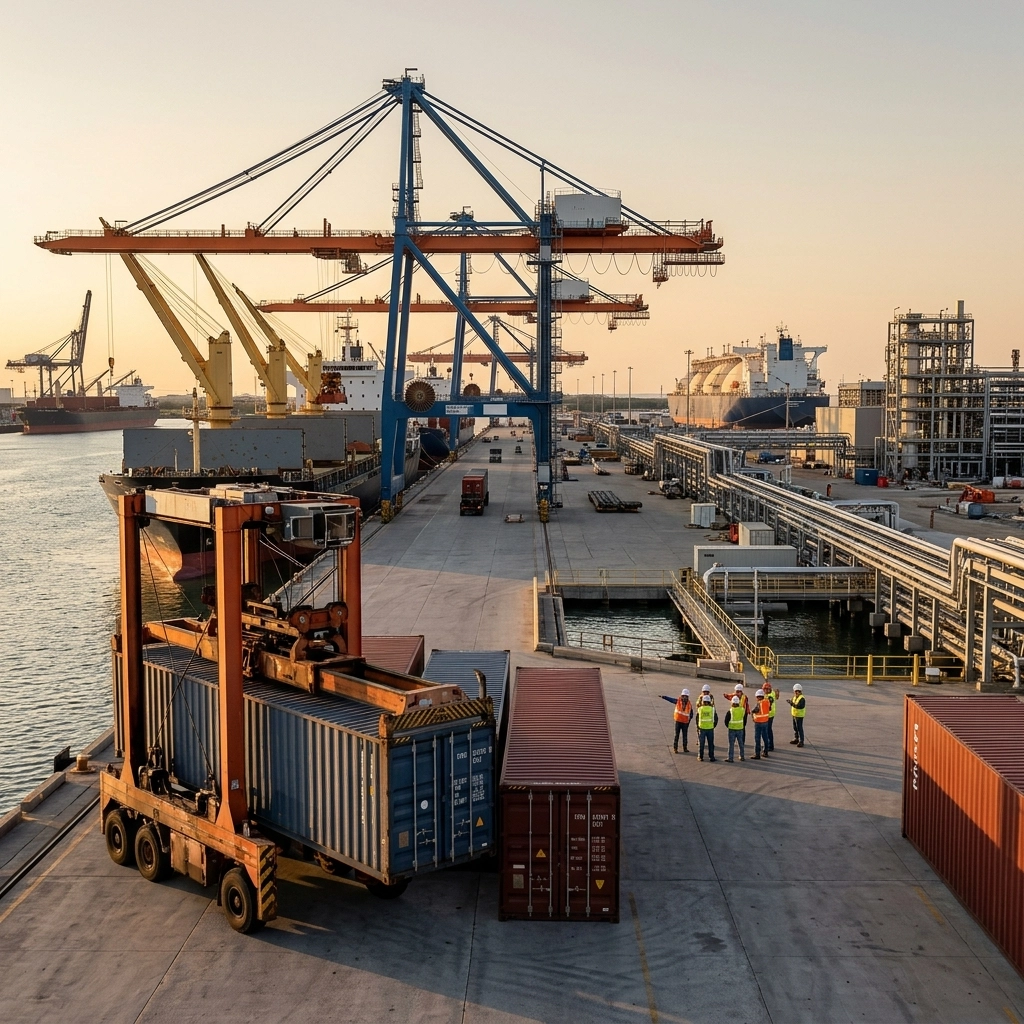
If the capital shifts and refinery projects are the bones of the Gulf Coast Pivot, then logistics are the lifeblood. As of late April 2026, satellite data and port authority reports indicate that more than 121 tankers are currently lined up or anchored in the Gulf of Mexico. This massive queue is not a sign of inefficiency; rather, it is a response to severe disruptions in the Middle East and the Red Sea.
Ongoing geopolitical tensions in the Strait of Hormuz and the Bab el-Mandeb Strait have forced global shippers to seek safer routes and more reliable sources. The Gulf Coast has become the world’s “safe harbor.” Shippers are increasingly opting to load American crude and LNG rather than risking the transit of traditional flashpoints. This surge in activity has pushed the ports of Houston, Corpus Christi, and Beaumont to their operational limits, sparking a new wave of investment in dredging and terminal expansion.
The presence of over 100 vessels waiting to load or discharge signifies the U.S. Gulf’s role as the “swing producer” and “swing provider” for the world. When the Middle East becomes unstable, the world looks to the Texas and Louisiana coastlines to keep the lights on in Europe and Asia. This reality has fundamentally changed the conversation around national security and energy policy.
The Canadian Midstream Migration to South Texas
The pivot is also drawing significant interest from our neighbors to the north. Canadian midstream companies, long frustrated by regulatory gridlock and pipeline delays in their home country, are increasingly moving their capital southward. Gibson Energy’s recent focus on Gulf Coast infrastructure serves as a prime example of this “Southern Migration.”
By acquiring major export terminals like the South Texas Gateway Terminal in Ingleside, Gibson and similar firms are diversifying their portfolios away from the bottlenecked Canadian market. They see the U.S. Gulf Coast as a more hospitable environment for “utility-like” business models that rely on long-term contracts and steady export volumes. This influx of Canadian capital further solidifies the region’s infrastructure, ensuring that the massive volumes of oil and gas coming out of the Bakken and Permian have a clear path to the water.
This migration highlights a broader economic truth: capital flows where it is treated best. While other regions around the world implement restrictive policies on energy development, the Gulf Coast continues to build. This building boom is not just about oil; it includes massive investments in hydrogen, carbon sequestration, and power grid reliability.
Navigating the Future of the Global Energy Market
The Gulf Coast Pivot is not a temporary trend or a market fluke. It is a structural realignment driven by the collision of technological prowess, geopolitical necessity, and massive capital availability. From TotalEnergies’ billion-dollar reallocations to the historic refinery project in Brownsville, the evidence of this shift is everywhere.
As we move further into 2026, the region’s ability to integrate traditional energy production with new-age grid management and environmental tech will determine its long-term dominance. The sheer volume of maritime traffic currently sitting off the coast proves that the world has already voted with its feet: or rather, its tankers. The Gulf Coast is the cornerstone of global energy security, and for anyone involved in the business, policy, or economics of energy, it is the only place that matters right now.

Keep In Touch with Shale Magazine
As the new era of energy unfolds, you can bet we’ll be the boots on the ground to keep you informed. Subscribe to Shale Magazine for sharp insight into the arenas that matter most to your life. And don’t forget to listen to our riveting podcast, The Energy Mixx Radio Show, where our very own Kym Bolado interviews the most extraordinary thought leaders, business innovators, and industry experts of our time.
Subscribe to get more posts from Amanda Jenkins[/vc_column_text][/vc_column][/vc_row]