United States President Donald Trump has said that tech companies may be required to pay a premium for their electricity use, as several firms invest heavily in the rollout of power-hungry data centers. The move responds to consumer frustration over rising energy prices in the lead-up to the mid-term elections in November.
Data Centers and Energy Use
As tech firms invest heavily in the rollout of giant data centers, to power complex technologies, such as artificial intelligence (AI), consumers are growing increasingly worried about the potential impact of an energy shortage driven by this trend on their energy bills.
Data centers are extremely energy-intensive. One report from consulting firm McKinsey estimates that in the United States, data centers could contribute up to 12% of total electricity use by 2030. This figure will vary from state to state, with the figure rising much higher in states where there is a high concentration of data centers, such as Virginia and Arizona.
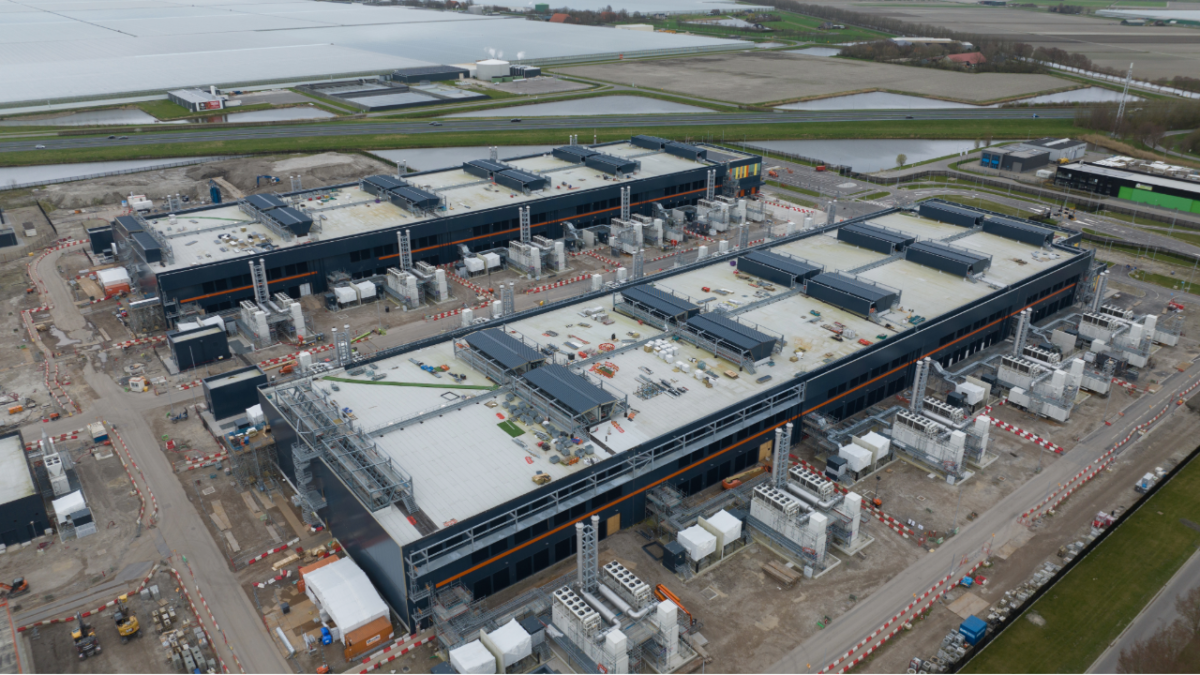
To bring modern data centers online, companies must invest in large new transmission lines, power plants, and other expensive upgrades to allow them to be connected to the local electric grid. Many require the same amount of energy to power as a small city. In the past, utilities have spread billions of dollars in upgrades across customers in a specific region, rather than charging the cost of the upgrade to the company developing the project.
Across the mid-Atlantic region of the U.S., a boom in data center growth has driven consumer electricity bills up, with some regions seeing electricity costs rise by as much as 267% compared to five years ago, according to a 2025 Bloomberg News analysis.
Data centers also use lots of water, with the average mid-size data center using around 1.4 million liters of water a day for cooling servers, according to consulting firm Verisk Maplecroft.
This has raised concerns about the heavy environmental impact of these facilities. “Data centres have become super-users of fresh water at a time when globally, demand for fresh water is expected to outstrip supply by 40% by the end of the decade,” a recent report by NatureFinance states.
Trump Says Tech Companies to Pay More for Electricity
In late February, Trump announced plans during his State of the Union speech to make tech firms pay more for energy costs associated with new data centers.
“We’re telling the major tech companies they have the obligation to provide for their own power needs and can build their own power plants so no one’s prices will go up,” said Trump. The President called the move a “ratepayer protection pledge.” However, he did not explain exactly how the higher rate would be implemented.
White House spokesperson Taylor Rogers said that several tech companies would be meeting with Trump at the White House in early March to sign a pledge to put the initiative into action.
Multiple politicians have called for tech companies to foot the energy bill of their data centers, with both Democrats and Republicans generally in agreement on the issue. David Primo, a professor of political science and business administration at the University of Rochester in New York, said that Big Tech has “scrambled the typical ideological alignments of the left and the right.” Primo added, “Conservatives and liberals are saying, ‘Well, here’s an opportunity for us to stop what we think is a problem.’”
Support from Tech Firms
Both Microsoft and Anthropic have already publicly pledged to pay higher electricity bills to cover the cost of their data center power consumption. “We absolutely want to pay our fair share of all costs associated with serving us,” the head of energy market innovation at Google, Briana Kobor, stated during a gathering of utility regulators in Washington.
Seven tech firms: Google, Amazon, Microsoft, Meta, Coreweave, Equinix, and Digital Realty, have all been requested by senators to respond to questions over their data center pipeline, including questions such as how much power their facilities require and how they plan to procure and pay for that power. This has prompted several of the companies to pledge to pay more than the average consumer for their power.
While several tech companies appear open to paying higher electricity prices, so long as it allows them to gain approval for new data centers, few have provided a clear insight into how this might work. Ari Peskoe, director of the Harvard Law School’s electricity law initiative, explained just how difficult it is to understand how much major tech firms are paying for their electricity bills, as they often sign secret contracts with utilities to power data centers. “The devil is really in the details here,” and consumers don’t have much protection with the current system, said Peskoe.
Keep In Touch with Shale Magazine
As the new era of energy unfolds, you can bet we’ll be the boots on the ground to keep you informed. Subscribe to Shale Magazine for sharp insight into the arenas that matter most to your life. And don’t forget to listen to our riveting podcast, The Energy Mixx Radio Show, where our very own Kym Bolado interviews the most extraordinary thought leaders, business innovators, and industry experts of our time.