
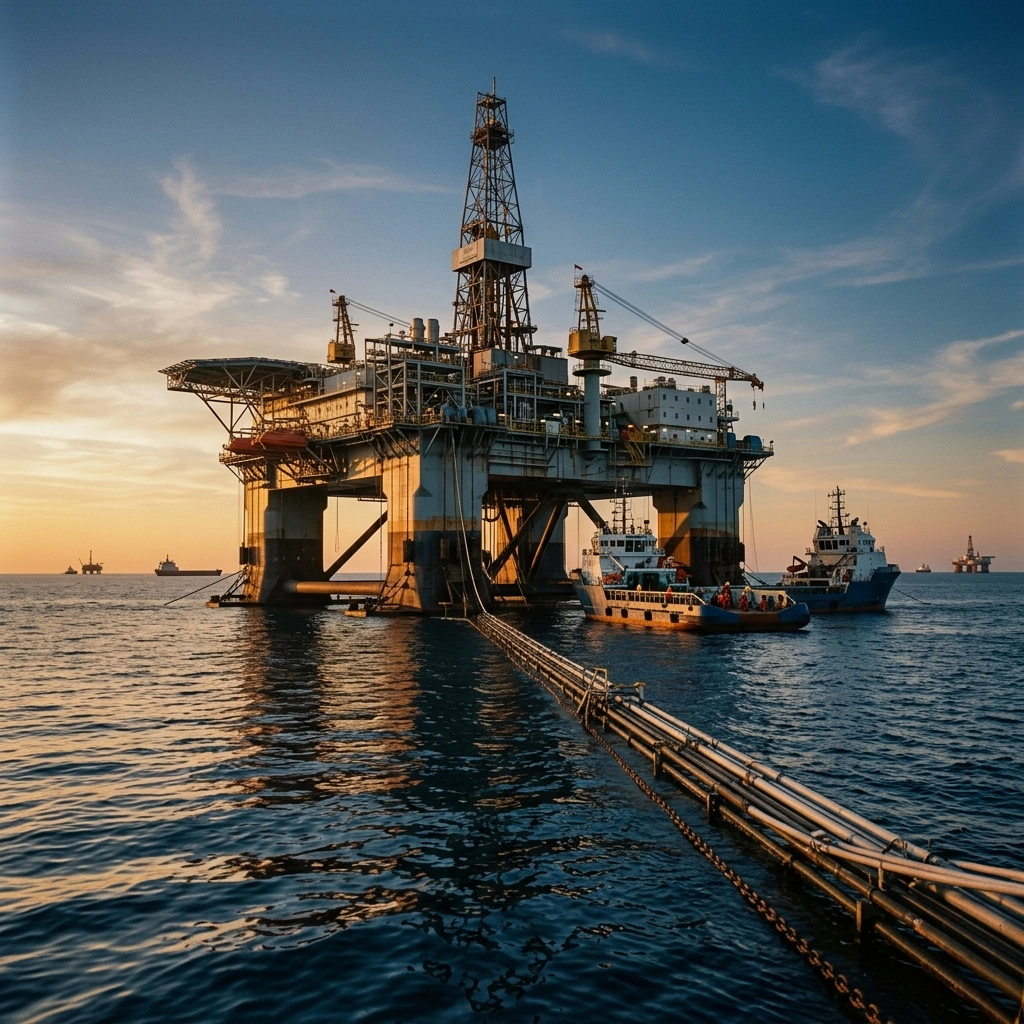
[vc_row][vc_column][vc_column_text css=””]The energy landscape of the United States just received a roadmap for the next decade. On April 30, 2026, the American Petroleum Institute (API) and the National Ocean Industries Association (NOIA) released a joint report that identifies the South-Central Gulf of America as the next critical frontier for domestic energy production. This report, titled the API-NOIA Report, suggests that expanding access to what is known as Program Area B could fundamentally alter the trajectory of American energy security and economic growth through 2040.
As global energy market volatility continues to define the mid-2020s, this proposal arrives at a pivotal moment. The Department of the Interior is currently considering its next five-year offshore leasing program, and the industry is making a clear case: predictable access to new acreage is not just a corporate preference but a national necessity.
Gulf energy expansion outlook: Measuring the economic impact
The data compiled by Energy and Industrial Advisory Partners (EIAP) for this report paints a picture of massive economic revitalization. When we look at oil and gas investments, we often focus on the immediate rig count or the price per barrel. However, the South-Central expansion is a long-term play that supports the entire industrial backbone of the Gulf Coast.
By the year 2040, the expansion into Program Area B is projected to support over 133,000 jobs. These are not just roles on offshore platforms; they include supply chain activity, logistics, engineering, and broader economic growth in coastal communities. The report estimates that this development will contribute roughly $11.3 billion to the U.S. GDP annually by 2040.
Total capital investment and industry spending are expected to reach $13.1 billion in that same year. This level of spending trickles down through the economy, supporting everything from local manufacturing to high-tech service providers in the NexGen energy space. Furthermore, the government stands to gain nearly $1.5 billion in annual revenue from lease bids, rents, and royalties, providing a significant boost to federal and state coffers.

Energy market trends and the push for domestic supply
The timing of this report is no accident. We have seen how geopolitical instability can weaponize energy supplies, leaving nations that rely on imports vulnerable to price spikes and shortages. Dustin Meyer, API Senior Vice President of Policy, Economics and Regulatory Affairs, noted that the United States currently occupies a position of strength due to past investments in domestic supply. He emphasized that expanding access to the South-Central Gulf creates a new source of secure energy, helping meet growing demand while strengthening national security.
The production numbers are substantial. The report forecasts that the region could produce more than 470,000 barrels of oil equivalent per day by 2040. To put that in perspective, this new production would supplement the existing 2 million barrels per day already coming out of the Gulf. This isn’t just about adding volume; it is about replacing the natural decline of mature fields and ensuring that the United States remains a leader in the global energy market.
This expansion also aligns with current oil and gas news regarding the buildout of midstream infrastructure. We have recently seen massive pipeline additions in the South-Central region, such as the Evangeline Pass Expansion and the East Lateral Xpress, which were designed to move feedgas to LNG terminals like Plaquemines. Offshore production in Program Area B would utilize this existing infrastructure, creating a more efficient and integrated energy ecosystem.
Oil and gas investments in the South-Central Gulf
Predictability is the lifeblood of the offshore industry. Unlike onshore shale projects, which can be spun up relatively quickly, offshore developments require billions of dollars in upfront capital and years of planning. Erik Milito, President of NOIA, pointed out that the South-Central Gulf represents a natural extension of a proven ecosystem. It offers direct access to the specialized workforce and infrastructure that already exist in the region.
The industry is calling for a predictable offshore leasing program that provides long-term visibility. Without a consistent schedule of lease sales starting in 2029, companies cannot justify the massive capital outlays required for deepwater exploration. When the federal government provides a clear path for leasing, it ensures that capital stays in the United States rather than migrating to offshore basins in Guyana, Brazil, or West Africa.
Maintaining the Gulf as a premier destination for investment also involves recognizing its role as a low-carbon intensity basin. According to industry data, the Gulf of America produces some of the least carbon-intensive barrels of oil in the world. As global energy market trends increasingly prioritize environmental performance, the South-Central expansion offers a way to meet global demand with a lower environmental footprint compared to many international alternatives.
Sustaining the offshore energy ecosystem
The South-Central expansion is not a replacement for current operations but a necessary addition. Like any mature basin, the Gulf of America needs new resource areas to complement ongoing production. The Gulf currently supports hundreds of thousands of jobs and is a cornerstone of American energy dominance. To let it stagnate would be to ignore one of the country’s most valuable strategic assets.
API and NOIA emphasize that this expansion goes hand-in-hand with a commitment to safety and environmental stewardship. A predictable leasing program allows companies to invest in best-in-class technologies, from advanced subsea monitoring to automated drilling systems. These innovations ensure that as we move into “The Gulf’s Next Frontier,” we do so with the highest standards of community engagement and environmental protection.
The ripple effects of this decision will be felt far beyond the water’s edge. From the manufacturing plants in the Midwest that build the valves and turbines to the tech hubs in Texas developing the AI that optimizes flow rates, the entire American economy benefits from a robust offshore sector.
As we move toward the 2029 leasing window, the conversation will likely focus on balancing production with other ocean uses. However, the EIAP report makes one thing clear: the cost of inaction is high. Without expanding into Program Area B, the U.S. risks a slow decline in offshore production, a loss of high-paying jobs, and an increased reliance on energy from less stable parts of the world.
The API-NOIA report serves as a definitive argument for why the South-Central Gulf of America must remain central to the nation’s energy strategy. By securing 133,000 jobs and nearly half a million barrels of daily production, the expansion of Program Area B ensures that the Gulf remains a powerhouse of American prosperity for decades to come. The question now is whether the regulatory framework will rise to meet the opportunity.
Keep In Touch with Shale Magazine
As the new era of energy unfolds, you can bet we’ll be the boots on the ground to keep you informed. Subscribe to Shale Magazine for sharp insight into the arenas that matter most to your life. And don’t forget to listen to our riveting podcast, The Energy Mixx Radio Show, where our very own Kym Bolado interviews the most extraordinary thought leaders, business innovators, and industry experts of our time.
Subscribe to get more posts from Amanda Jenkins[/vc_column_text][/vc_column][/vc_row]



The eastern Gulf/South Central Gulf, is essential for U.S. National Security.
As American citizens have watched U.S. airpower dominate the skies during the war in Iran, it’s worth noting where the munitions were developed, where the aircraft were tested, and where our warfighters trained: the Eastern Gulf Test and Training Range. The Eastern Gulf Test and Training Range (EGTTR) is the largest military range in the continental United States; it connects military capabilities across the eastern Gulf of America from Northwest Florida south to Key West, and it supports varying surface and subsurface exercises. The range provides a safe environment for water-to-land transitions, high-altitude air combat training, air-to-air missile testing, air-to-ground targeting, and other activities. The EGTTR is vital for developing and testing the air armaments for today and our next generation, and for personnel training in realistic combat-surrogate conditions.
The 96th Test Wing is located at Eglin Air Force Base in Northwest Florida. It is the installation’s host unit and the test and evaluation organization for Air Force air-delivered weapons, navigation and guidance systems, command and control systems, and Air Force Special Operations Command systems. The weapons being shot from aircraft and hitting their targets with precision were developed and tested at Eglin and in the EGTTR. If America loses the military test and training capabilities of the EGTTR, we lose significant capabilities vital to our nation’s defense.
Oil drilling and related infrastructure development is not compatible with military missions; whether in Florida or in California. There are other areas available for oil exploration that do not threaten our military capabilities — or compromise our warfighters’ success. The Bureau of Ocean Energy Management’s November 2025 proposed draft plan included a large section of the EGTTR’s western quadrant; the South Central Gulf. It is imperative that we protect this military range and protect our warfighting capabilities.
It is critical that American leaders understand the relevance of the eastern Gulf to our nation’s security, and that they choose to support our warfighters and to provide them with the best that the United States has to offer as they train to defend us all. President Donald Trump executed a memorandum in 2020 to protect this national asset — and that protection needs to continue.