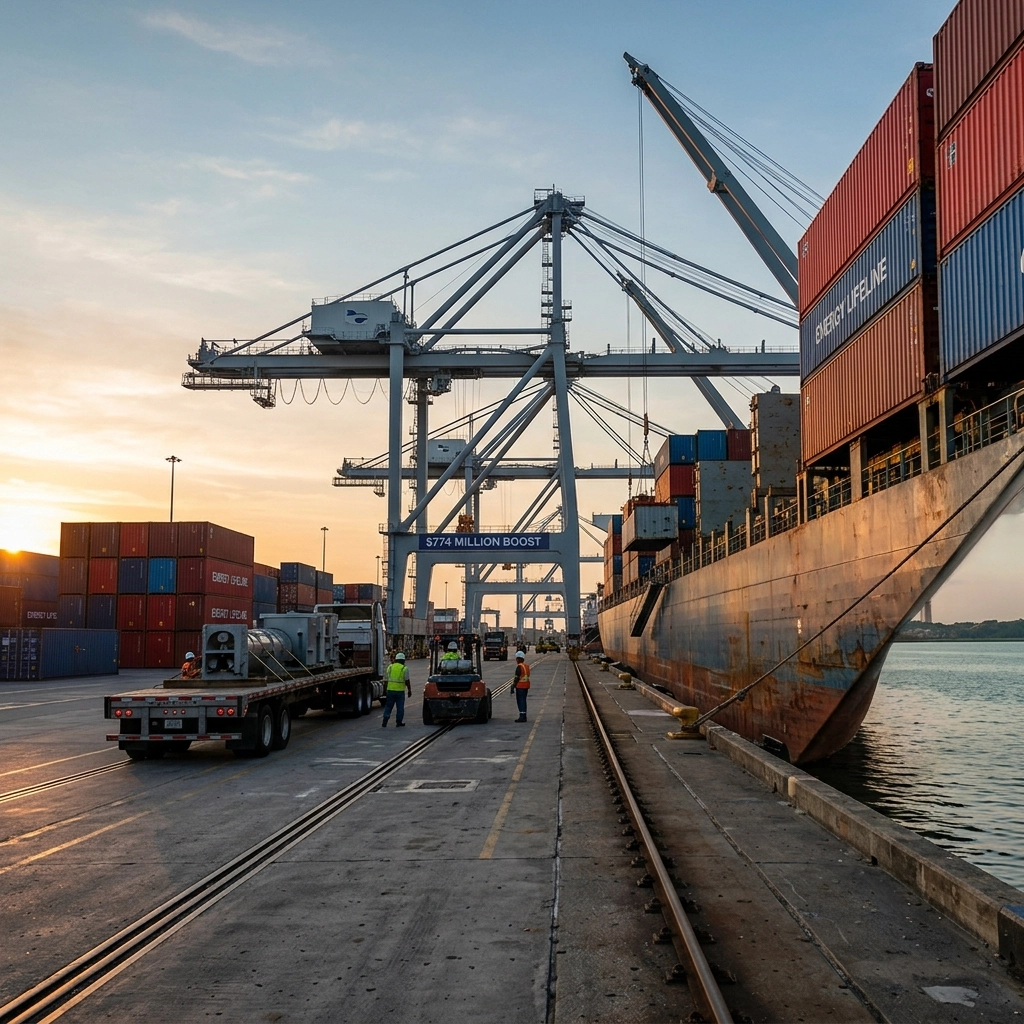
[vc_row][vc_column][vc_column_text css=””]US Port Infrastructure Investment has reached a historic milestone. The American Association of Port Authorities (AAPA) recently confirmed that 37 award recipients will receive over $774 million in Port Infrastructure Development Program (PIDP) grants for the Fiscal Year 2025 cycle. This announcement, coming directly from the U.S. Department of Transportation’s Maritime Administration (MARAD), represents the highest single-year distribution in the program’s history. For those following oil and gas news, this surge in funding is more than just a bureaucratic win; it is a fundamental shift in how the United States secures its position in the global energy market.
The previous record, set in 2022 at $703 million, has been officially eclipsed. This massive capital injection arrives at a critical juncture for the domestic energy sector. As energy market trends lean toward increased export capacity and infrastructure resilience, these grants provide the necessary liquidity to modernize terminals, upgrade multimodal exchanges, and implement state-of-the-art equipment across the nation’s coastlines.
US Port Infrastructure Investment: A New Standard for Efficiency
The scope of this funding covers a diverse array of projects designed to streamline the movement of goods and energy products. The $774 million total includes not only the original appropriations but also a significant win for industry advocacy: the re-awarding of rescinded funds from previous cycles. AAPA successfully argued to Congress and the USDOT that these dollars must remain within the port ecosystem rather than disappearing into the general treasury.
John Bressler, AAPA Vice President of Government Relations, noted that these projects act as an economic lifeline. By connecting manufacturers, farmers, and energy producers to international consumers, ports serve as the primary gateway for American commerce. This investment strategy aligns closely with the current administration’s focus on a revitalized maritime industry, ensuring that domestic infrastructure can handle the rigorous demands of 2026 and beyond.
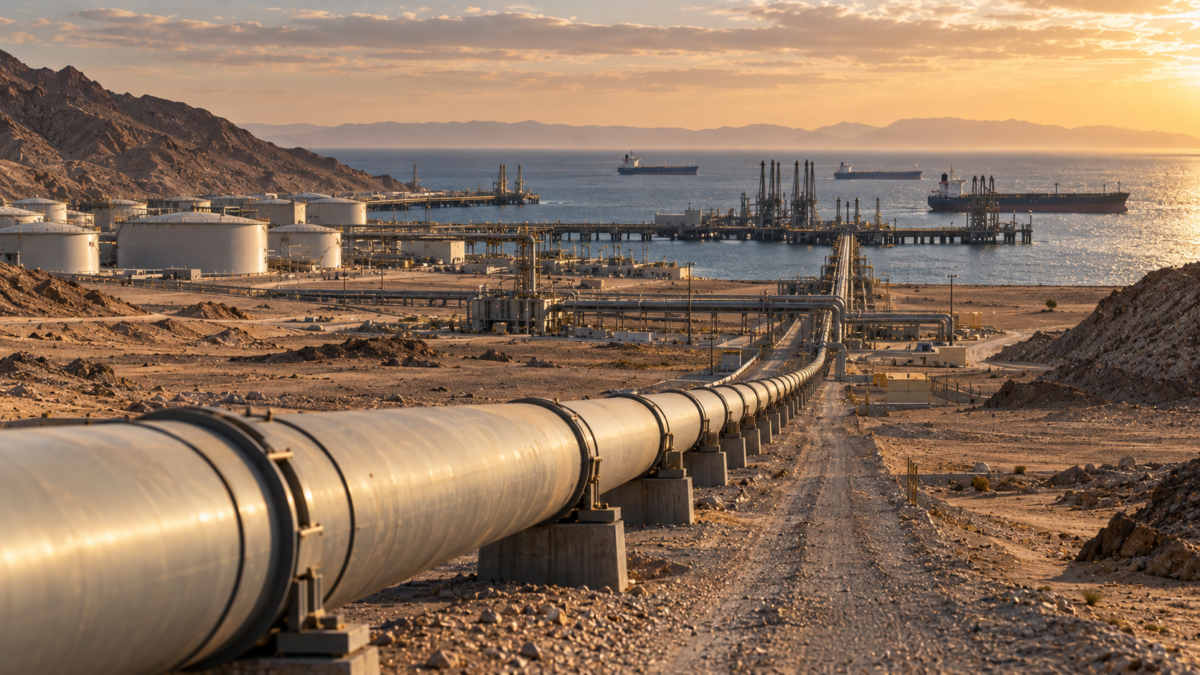
Among the 37 awardees, 18 are prominent AAPA member ports that serve as essential hubs for the energy industry. Locations such as Houston, Beaumont, Freeport, and Greater Baton Rouge are central to the American energy narrative. These ports do not just move containers; they facilitate the flow of crude, LNG, and refined products that dictate global energy market prices.
Connecting Domestic Energy Producers to the Global Energy Market
Infrastructure is the silent partner in the American energy dominance story. Without efficient ports, even the most prolific shale basins face bottlenecks that can stifle growth. The FY2025 PIDP grants target these exact pressure points. By funding refurbished terminals and upgraded rail-to-ship interfaces, the federal government is effectively lowering the cost of doing business for American exporters.
U.S. Transportation Secretary Sean P. Duffy emphasized that investing in ports is a direct investment in national security. Under the America First agenda, the priority is to keep grocery store shelves stocked and energy supply chains resilient. For the energy sector, this means creating a more predictable and robust export environment. When a port like Beaumont or Houston receives upgrades, the entire midstream sector benefits from reduced dwell times and increased throughput capacity.
According to latest reports on https://shalemag.com/category/business, the integration of advanced logistics and physical infrastructure is becoming a primary driver of regional economic development. These grants act as a catalyst, often unlocking additional state, local, and private investment that far exceeds the initial federal contribution.
The list of recipients reads like a who’s who of maritime powerhouses:
- Port of Houston (Texas)
- Port of Beaumont (Texas)
- Port of Freeport (Texas)
- Port of Greater Baton Rouge (Louisiana)
- Port of Virginia (Virginia)
- Port of Baltimore (Maryland)
- Port of Gulfport (Mississippi)
- Port of Tampa (Florida)
These ports represent the front lines of the American export economy. As global demand for reliable energy sources remains high, the ability of these facilities to operate at peak efficiency is a matter of both economic and geopolitical importance.
Strategic Wins in the 2025 Energy Market Trends
One of the most noteworthy aspects of this record-breaking year is the inclusion of rescinded funds. In many federal programs, if money is not spent within a specific timeframe, it is clawed back. AAPA’s advocacy ensured that these funds were instead recycled back into the FY2025 cycle. This move effectively maximized the impact of every dollar Congress appropriated, leading to the record-breaking $774 million total.
From a financial perspective, this level of investment is crucial for maintaining the U.S. competitive edge. When the federal government signals long-term support for maritime infrastructure, it encourages private equity and energy companies to commit to long-term projects in those regions.

The grants are not just about large-scale concrete and steel. They also fund cargo screening systems and digital infrastructure that improve the speed of transactions. In the modern energy market, data is as valuable as the commodity itself. Faster processing at the port means more accurate forecasting for traders and more reliable delivery schedules for international partners.
Future-Proofing Supply Chains for 2026 and Beyond
While the FY2025 awards are a cause for celebration, the window for future funding is already closing. The FY2026 PIDP application cycle is currently open, with a deadline of Monday, June 1st, 2026. There is roughly $488 million available for the next round. However, industry experts warn of a potential “funding cliff” in FY2027 as the Bipartisan Infrastructure Law’s current provisions begin to sunset.
AAPA is currently advocating for advanced appropriations in the upcoming Surface Transportation Reauthorization bill. The goal is to prevent the volatility in funding that can derail multi-year infrastructure projects. For port directors and energy executives, long-term visibility is essential. Without it, the risk profiles of major terminal expansions become much harder to manage.
For those ports that were unsuccessful in the FY2025 round, MARAD is offering 30-minute debriefs to help refine future applications. This collaborative approach ensures that the “next in line” projects are ready to hit the ground running as soon as new capital becomes available. With only a month remaining until the June 1st deadline, the race is on for the next half-billion dollars in maritime investment.
The record-breaking $774 million distribution is a clear signal that the U.S. government views maritime infrastructure as a cornerstone of its energy and economic strategy. By reinforcing the ports that handle our most critical exports, the nation is not just building docks; it is reinforcing its status as a global leader in the energy market. For anyone tracking oil and gas news, these infrastructure wins are the foundation upon which future production and export records will be built.
Keep In Touch with Shale Magazine
As the new era of energy unfolds, you can bet we’ll be the boots on the ground to keep you informed. Subscribe to Shale Magazine for sharp insight into the arenas that matter most to your life. And don’t forget to listen to our riveting podcast, The Energy Mixx Radio Show, where our very own Kym Bolado interviews the most extraordinary thought leaders, business innovators, and industry experts of our time.
Subscribe to get more posts from Amanda Jenkins[/vc_column_text][/vc_column][/vc_row]