[vc_row][vc_column][vc_column_text css=””]Global crude benchmark shifts. The recent announcement from the Gulf Mercantile Exchange regarding historic trading activity offers a distinct perspective on the evolving architecture of international energy finance. During the week of May 11, 2026, the exchange recorded a milestone of 69,052 contracts traded, representing approximately 69 million barrels of Oman crude oil. While such figures are often relegated to the technical reports of commodity traders, the implications of this surge in liquidity signal a deeper transition in how global energy is priced, sold, and hedged.
This record setting volume is not an isolated event but rather a symptom of a larger movement toward the Middle East and Asia as the primary drivers of price discovery. For decades, the energy sector has relied heavily on Western benchmarks such as West Texas Intermediate and Brent. However, as demand growth centers continue to migrate toward industrializing nations in the East, the relevance of regional benchmarks like Oman crude is reaching a critical mass.
The Ascension of the Oman Crude Benchmark
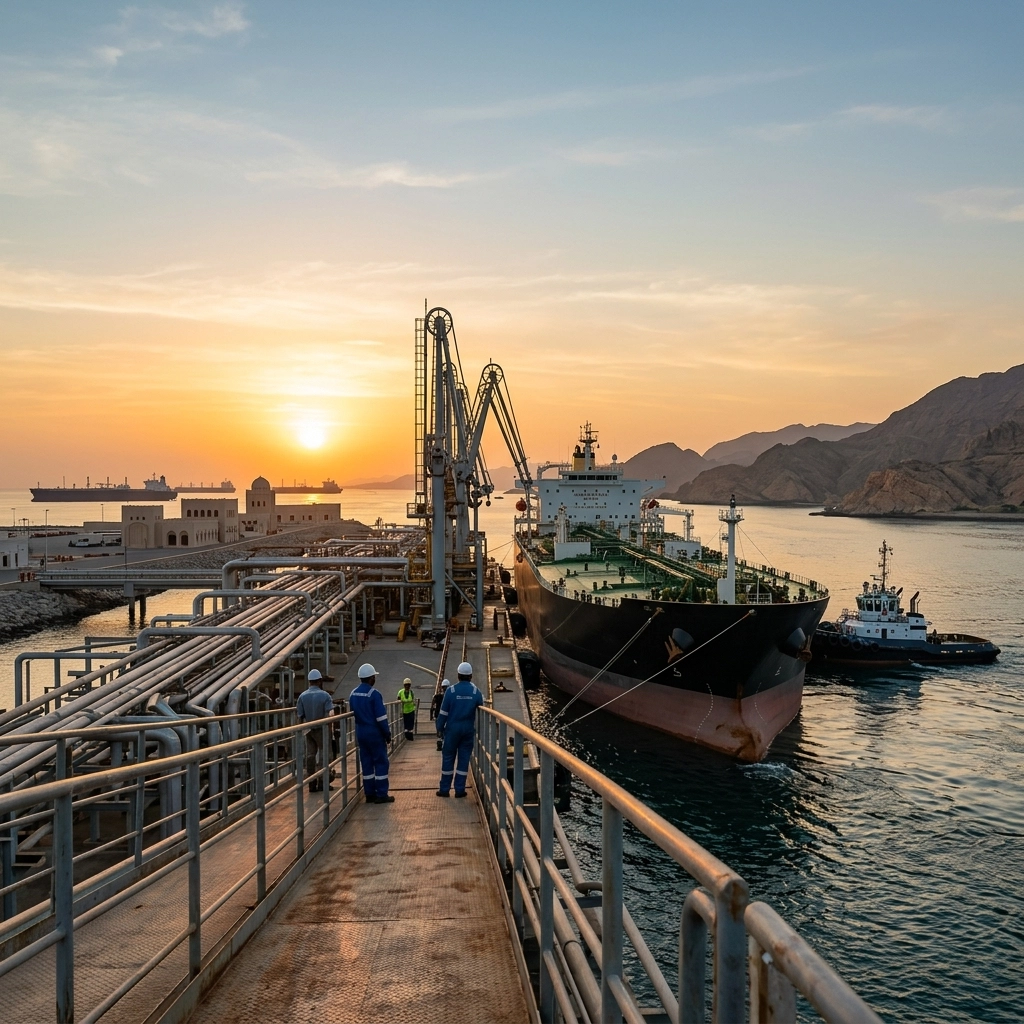
The significance of Oman crude lies in its role as the primary pricing mechanism for Middle Eastern oil flowing into Asian markets. Unlike domestic benchmarks that reflect North American supply and demand dynamics, Oman futures provide a direct reflection of the physical trade between the Gulf producers and the major consumers in China, India, Japan, and South Korea. The recent spike in trading volume suggests that institutional participation from global trading houses and hedge funds is intensifying, seeking exposure to the specific economic realities of the Eastern hemisphere.
Increased liquidity in the Oman contract provides a higher degree of price transparency. When 69 million barrels change hands in a single week, it indicates that the market has reached a level of maturity where large scale producers and refiners can hedge their positions with minimal slippage. This transparency is essential for the long term stability of energy markets, especially as the influence of traditional OPEC supply management undergoes its own period of transformation.
According to market data, the cash futures spread in the Dubai and Oman markets has shown significant volatility recently, often signaling a tight, back-war-dated market. This technical setup attracts speculative interest, but more importantly, it serves as a risk management tool for physical players. As Asian economies expand their petrochemical production and power generation capacity, the need for a reliable, liquid regional benchmark becomes a matter of national economic security.
Interconnectivity with American Energy Export Markets
The surge in Middle Eastern trading activity has direct consequences for the United States, particularly across the Gulf Coast industrial corridor. Under the energy policies of Donald Trump, the United States has successfully transformed into a leading global exporter of crude oil, liquefied natural gas, and refined products. This status as a net exporter means that American energy companies are no longer insulated from the pricing signals generated in overseas hubs.
Companies operating in the Permian Basin or managing export terminals in Corpus Christi must monitor the Oman benchmark to understand arbitrage opportunities. If Middle Eastern crude becomes more expensive relative to American grades, it opens a window for U.S. exports to capture a larger share of the Asian market. Conversely, high liquidity in the Gulf Mercantile Exchange allows American traders to hedge their international cargoes more effectively against regional price swings.
The infrastructure required to support these flows: ranging from pipeline systems to deep-water ports: is increasingly tied to the pricing dynamics of the Oman crude futures. Port infrastructure and marine transportation firms utilize these benchmarks to forecast demand and set contract pricing for long term shipping lanes. The interconnectedness of the global supply chain means that a record breaking week in Dubai is just as relevant to a refinery manager in Louisiana as it is to a trader in Singapore.

Structural Changes in Global Energy Finance
The movement toward what analysts describe as multipolar energy finance is perhaps the most profound long term shift indicated by the record volumes at the Gulf Mercantile Exchange. For much of the modern industrial era, global energy transactions were centered in Western financial hubs like London and New York. This centralization was supported by the dominance of the U.S. dollar and Western banking institutions.
However, the current trend shows a concerted effort by Gulf nations to diversify their financial sectors and create regional hubs capable of supporting massive volumes of international trade. Cities like Dubai, Abu Dhabi, and Riyadh are investing heavily in the digital and physical infrastructure necessary to host world class commodity exchanges. The goal is to move beyond being mere producers of raw materials and become centers of financial influence that can dictate the terms of trade.
This shift is partly driven by the necessity of risk management in an era of geopolitical uncertainty. With potential disruptions to the Strait of Hormuz often factoring into market pricing, having a liquid, regional exchange allows participants to price that risk directly. The Oman contract, given its logistical profile, effectively embeds regional security considerations into its price, providing a more accurate barometer of supply stability for Asian buyers than a distant benchmark in the North Sea.
This diversification of energy finance is also a response to the evolving global trade landscape. As nations seek to insulate themselves from the impact of unilateral sanctions or shifts in Western monetary policy, the rise of regional exchanges provides a level of autonomy. It creates a more resilient global energy system where the failure or volatility of one hub can be balanced by the stability of another.
The Evolution of Global Demand Centers
The dominance of Asia in global energy demand is no longer a future projection; it is a current reality. The record trading in Oman crude reflects the fact that the most important conversations regarding energy consumption are happening in the East. As these nations continue to build out their infrastructure and expand their middle classes, their demand for reliable energy sources remains the primary factor in global price discovery.
For U.S. producers, particularly those involved in the NGL and LNG sectors, understanding the Asia focused pricing mechanisms is vital for long term investment strategies. The ability to navigate the complexities of these shifting benchmarks will define the winners and losers in the next decade of the energy transition.
The record breaking volumes at the Gulf Mercantile Exchange are a clear signal that the center of gravity in the energy world is shifting. It is a transition away from a unipolar market dominated by Western benchmarks toward a more diversified, multipolar system that reflects the true geographic distribution of production and consumption. For executives and investors, the message is clear: the future of energy is increasingly global, increasingly Asian, and more interconnected than ever before.
Monitoring these trends is critical for anyone involved in the energy value chain, from upstream production to downstream distribution. As the industry adapts to this new reality, the ability to synthesize data from multiple global hubs will be the key to maintaining market competitiveness in a rapidly changing landscape.
Keep In Touch with Shale Magazine
As the new era of energy unfolds, you can bet we’ll be the boots on the ground to keep you informed. Subscribe to Shale Magazine for sharp insight into the arenas that matter most to your life. And don’t forget to listen to our riveting podcast, The Energy Mixx Radio Show, where our very own Kym Bolado interviews the most extraordinary thought leaders, business innovators, and industry experts of our time.
Subscribe to get more posts from Amanda Jenkins[/vc_column_text][/vc_column][/vc_row]