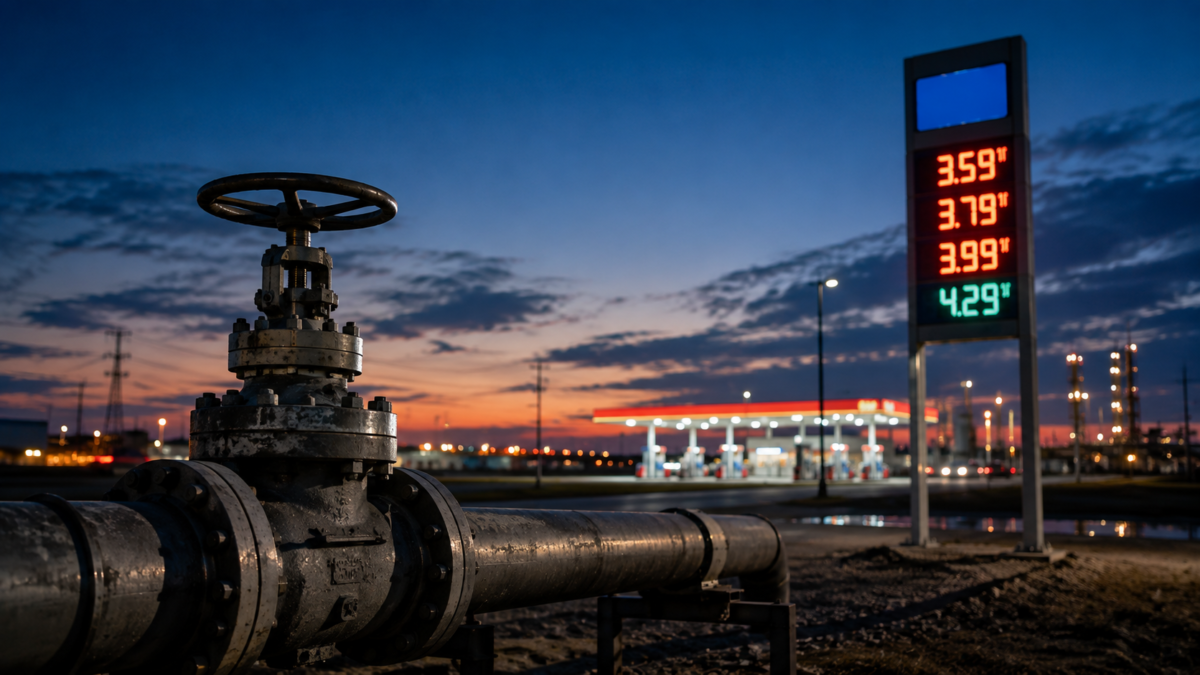

[vc_row][vc_column][vc_column_text css=””]The American energy landscape is currently navigating a period of intense volatility as the national average for regular gasoline reaches $4.52 per gallon. This represents a significant escalation from the $2.98 per gallon benchmark seen just days before the onset of the conflict with Iran. As energy prices continue to impact every sector of the domestic economy, the White House is signaling an openness to a policy maneuver that was once considered a last resort: a temporary suspension of the federal gas tax.
Energy Secretary Chris Wright recently addressed the growing pressure on American consumers, indicating that the Trump administration is exploring all available measures to provide relief at the pump. While a tax holiday offers immediate visibility to the public, the underlying economics and the resulting impact on infrastructure funding remain subjects of rigorous debate within the Department of Energy and the Treasury.
The Geopolitical Catalyst: Hormuz and the Iran Conflict
The primary driver behind the current price surge is not domestic production capacity, which remains robust, but rather the acute risk premium associated with Middle Eastern supply chains. The ongoing war involving Iran has placed the Strait of Hormuz: a chokepoint through which approximately one-fifth of the world’s total oil consumption passes: under constant threat.
Market analysts at Rystad Energy and reports from the Energy Information Administration (EIA) suggest that as long as the “free flow of traffic” through the Strait remains compromised, global Brent prices will maintain a floor well above historical norms. Secretary Wright has noted that while domestic energy dominance is a long-term priority, the immediate price of crude is tethered to these geopolitical disruptions.
The administration’s consideration of a gas tax pause is a direct response to this “war premium.” By potentially removing the federal levy, the administration seeks to create a buffer for consumers while broader diplomatic and military strategies aimed at stabilizing the region take effect.
Dissecting the Federal Gas Tax Suspension
To understand the impact of a potential pause, one must look at the specific figures currently baked into the price of every gallon sold in the United States. The federal government currently collects:
- 18.4 cents per gallon on gasoline.
- 24.4 cents per gallon on diesel fuel.
If the administration were to enact a total suspension, the national average would theoretically drop from $4.52 to approximately $4.34 overnight. While an 18-cent reduction may seem marginal when compared to the nearly $1.50 increase seen over the last several months, for heavy-duty logistics and low-income commuters, the cumulative savings are non-trivial.
However, Secretary Wright has been transparent about the fact that “everything has trade-offs.” The federal gas tax is the primary revenue source for the Highway Trust Fund, which provides the vast majority of funding for federal highway and transit projects. A temporary pause would necessitate a secondary strategy to backfill this fund to ensure that national infrastructure projects do not stall.
The Infrastructure Trade-off: The Highway Trust Fund
The most significant hurdle to a federal gas tax suspension is the legislative and fiscal structure of the Highway Trust Fund (HTF). Historically, the HTF has struggled with insolvency as vehicle fuel efficiency has improved and the tax rate hasn’t been raised since 1993. A suspension would immediately halt the inflow of billions of dollars.
Proponents of the pause, including those backing the Gas Prices Relief Act of 2026 in Congress, argue that the general fund could be used to reimburse the HTF, essentially shifting the burden from the consumer at the pump to the federal deficit. This approach aligns with the administration’s “Defense First” mindset, where energy affordability is viewed as a pillar of national security.

Critics, however, warn that temporary tax holidays often lead to market distortions. There is also the concern that retailers may not pass the full 18.4-cent saving to the consumer, instead absorbing a portion of it to offset their own rising operational costs. In states like Georgia and Indiana, where state-level gas taxes were recently suspended, the results were mixed; while prices did drop, they did not always fall by the exact amount of the tax, as local supply constraints continued to dictate retail pricing.
Strategic Alternatives and Regulatory Relief
While the gas tax pause is the most discussed “quick fix,” the Department of Energy is simultaneously pursuing a multi-pronged approach to supply management. This includes:
- Strategic Petroleum Reserve (SPR) Releases: Continued drawdowns from the SPR to increase domestic supply.
- EPA Regulatory Waivers: The administration is coordinating with the EPA to revise regulations regarding summer gasoline blends. By allowing the continued sale of winter-grade fuel or easing certain volatility requirements, refiners can maintain higher output levels during the transition months.
- Refinery Coordination: Engaging with domestic refiners to maximize utilization rates, which are currently stretched thin as diesel prices spike faster than gasoline.
The relationship between regulatory relief and pump prices is critical. For example, recent discussions regarding EPA routine flaring relief highlight the administration’s desire to reduce the operational costs of production, which eventually trickles down to the refined product market.
The Middle East Plus One Sourcing Strategy
The White House is also looking at the long-term structural changes required to insulated the U.S. from Middle Eastern volatility. This involves a “Middle East Plus One” sourcing strategy, encouraging domestic producers and allies in the Western Hemisphere to fill the void left by Iranian and regional disruptions.
Secretary Wright’s comments reflect a broader push for “National Energy Dominance,” a theme that has been a cornerstone of the current administration’s platform. This involves not just drilling, but the streamlining of the entire energy value chain: from the wellhead to the gas station. Efforts like the National Energy Dominance Council Tiger Team are tasked with identifying bottlenecks in the permit process that prevent new supply from reaching the market.
Economic Implications of Persistent High Prices
The risk of a “wage-price spiral” is a concern for the Federal Reserve and the White House alike. As fuel costs rise, the cost of transporting goods increases, leading to higher prices for groceries, consumer goods, and industrial materials. This inflationary pressure can stifle GDP growth and reduce consumer spending power.
A federal gas tax suspension serves as a psychological and economic “circuit breaker.” By signaling that the government is willing to forfeit its own revenue to protect the consumer, it can help stabilize inflation expectations. However, the move is ultimately a temporary bandage. The permanent solution remains the restoration of stable global supply routes and the continued expansion of domestic production.
As we look toward the second half of 2026, the trajectory of fuel prices will likely depend more on the resolution of the conflict in the Strait of Hormuz than on any single policy change in Washington. Yet, for the American family seeing $4.52 on the marquee, the 18.4 cents currently on the table represents a necessary acknowledgement of the “pump pressure” facing the nation.
Looking Ahead
The administration’s openness to a tax holiday underscores the severity of the current energy crisis. Whether it manifests as a total suspension or a partial reduction, the move would be a historic intervention in the domestic fuel market.
As these policies develop, staying informed on the intersection of energy policy and global economics is essential. From the impact of diesel price spikes to the nuances of a defense-first energy budget, the shifts occurring in the White House today will define the industrial landscape of tomorrow.
The decision on the gas tax is expected to be finalized in the coming weeks as the Department of Energy continues to monitor the “free flow” of global oil and the resilience of the American consumer. For now, the focus remains on balancing the immediate need for relief with the long-term necessity of infrastructure integrity.
Keep In Touch with Shale Magazine
As the new era of energy unfolds, you can bet we’ll be the boots on the ground to keep you informed. Subscribe to Shale Magazine for sharp insight into the arenas that matter most to your life. And don’t forget to listen to our riveting podcast, The Energy Mixx Radio Show, where our very own Kym Bolado interviews the most extraordinary thought leaders, business innovators, and industry experts of our time.
Subscribe to get more posts from Amanda Jenkins[/vc_column_text][/vc_column][/vc_row]