On January 3, President Trump carried out a unilateral military operation in Venezuela, capturing President Nicolás Maduro and transporting him to the United States, essentially bringing an end to his 13-year dictatorship. Trump has since stated his intention for the United States to play a strong role in Venezuela’s oil industry.
Oil-Rich Venezuela
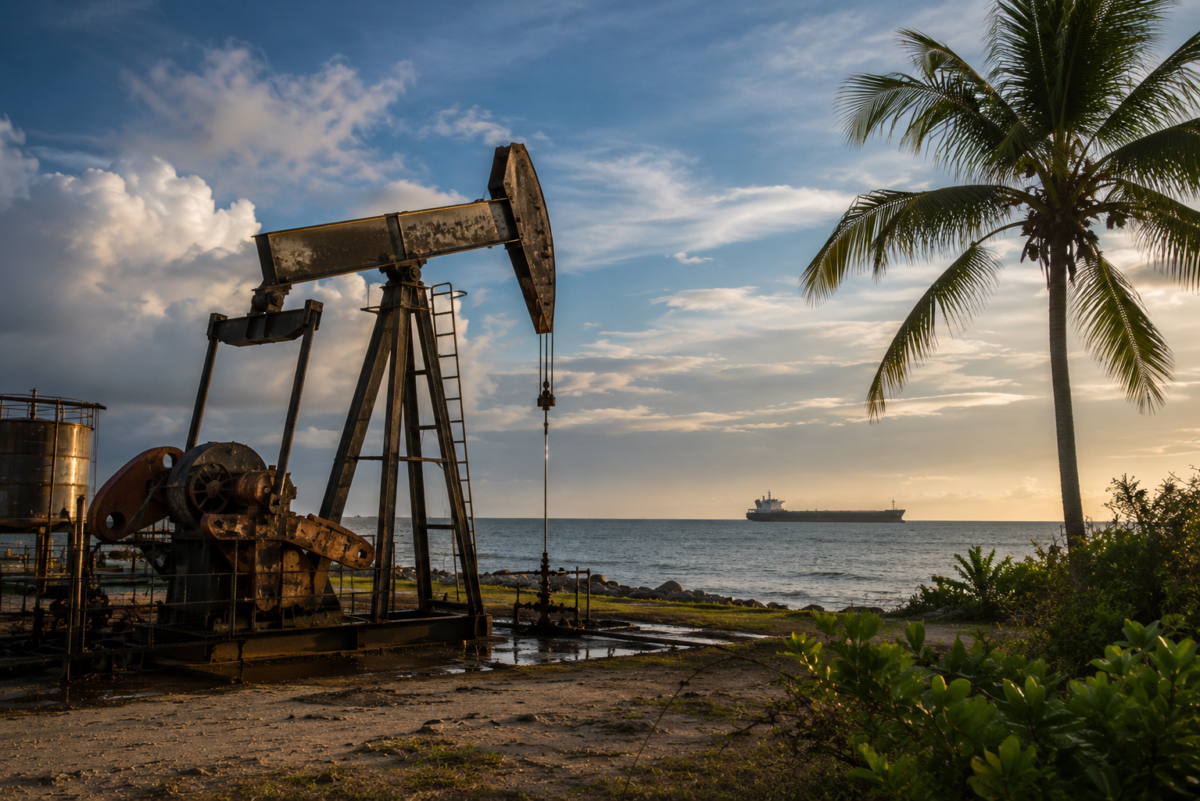
Venezuela holds approximately 17% of the world’s oil reserves, with over 300 billion barrels. It was responsible for around 5% of the world’s crude production during the 1990s. However, years of mismanagement, underinvestment, and U.S. sanctions (imposed in 2015) have significantly reduced production, to just 1% of the global total.
Various energy experts have warned that redeveloping Venezuela’s oil industry will be a slow and expensive process, largely owing to the country’s severely weakened energy infrastructure. In addition, Venezuelan crude is extremely heavy and difficult to extract, making production expensive and carbon-intensive.
The U.S. Takeover of Venezuelan Oil
Just after the U.S. operation in Venezuela, Trump announced that oil companies would spend at least $100 billion to redevelop the South American country’s energy sector, supported by U.S. security and protection.
Venezuela’s state-owned PDVSA has said it will support efforts to boost crude output. Meanwhile, the interim government, which the Trump administration has been working closely with, aims to attract foreign investment to the industry.
Between January and July, the U.S. exerted control over Venezuela’s oil exports, collecting over $13 billion from the sale of Venezuelan crude oil, according to President Trump.
Trump said the funds are being used to run Venezuela. “We’re taking in a lot of money — billions and billions of dollars from Venezuela,” the president said. However, no official figure has been disclosed, nor has information about how the funds are being spent.
In April, Energy Secretary Chris Wright told Semafor that the U.S. had sold approximately 150 million barrels of Venezuelan crude since January. Meanwhile, in June, U.S. Secretary of State Marco Rubio told Congress that the oil sales are audited by KPMG and the funds from the oil sales are held in a Citibank account.
Progress Too Slow
While President Trump has praised the progress seen in Venezuela’s oil industry recovery in recent months, others are more critical of the situation. Several months after Trump predicted that U.S. companies would “rapidly rebuild Venezuela’s dilapidated oil industry,” no new agreements have been completed with U.S. oil firms.
“We have no new concessions. No new deals. It is absolutely a problem,” one senior U.S. official told the news outlet Axios. “The Energy Department is in charge of this, and they have some explaining to do,” the official added.
The Department of Energy (DoE) has responded by saying that it expects new oil deals to be signed in the coming weeks. However, several U.S. oil majors were clear in January that they were extremely cautious about entering Venezuela, given previous instability in the country.
At the time, Exxon’s CEO, Darren Woods, said Venezuela was “uninvestable” without “significant changes” to commercial frameworks and the legal system.
A July article in the Wall Street Journal also criticized the slow pace of progress. The article said that Exxon, Chevron and other major oil companies were competing for a small number of Venezuela’s most promising drilling areas, but that the talks with Venezuelan leaders had hit an impasse, according to people familiar with the negotiations.
Nevertheless, the Trump administration is putting increased pressure on Venezuela’s interim President Delcy Rodriguez to accelerate the increase in oil output, before the end of Trump’s second term.
Potential for Broader International Investment
In late July, around 200 people from the energy industry met to discuss the possibility of investing in Venezuelan oil, despite the significant challenges to rebuilding the industry.
Event speakers discussed the barriers facing foreign companies looking to invest in Venezuela, such as the decaying infrastructure, political uncertainty, and the instability caused by the devastating earthquake in June.
However, the CEO of the investment firm Apertura Energy, Greig Gilbert, stressed that “The time is now.” Gilbert said, “There is a window opening. There is an opportunity right now, and we can’t afford to miss that.”
Just a few foreign oil companies and investment firms have so far committed to investing in or expanding their existing operations in Venezuela. However, the interim government is attempting to encourage more investment, having scrapped the longstanding requirement that PDVSA holds a majority stake in joint projects.
“Private companies can now operate fields directly, hold bigger stakes, and keep more of the profit,” Claire Jungman, the director of maritime risk and intelligence at energy data firm Vortexa, told CNN.
However, many investors are not willing to take the risk due to the high investment and long timeframe required to address years of underinvestment and decayed infrastructure.
Homayoun Falakshahi, the head of crude oil analysis at the intelligence firm Kpler, explained, “We’re talking something between, I would say, 50 (billion) and 100 billion (dollars) of investment over the next five to 10 years.”
With such vast reserves, international oil companies could see a significant return on their investment in redeveloping Venezuela’s oil sector. However, there are significant economic risks involved with investment, largely owing to the ongoing political uncertainty.
In addition, the long timeframe required to redevelop the industry is a concern during a time when the International Energy Agency and other organizations are pushing for an end to new fossil fuel development, in favor of renewable alternatives.
Keep In Touch with Shale Magazine
As the new era of energy unfolds, you can bet we’ll be the boots on the ground to keep you informed. Subscribe to Shale Magazine for sharp insight into the arenas that matter most to your life. And don’t forget to listen to our riveting podcast, The Energy Mixx Radio Show, where our very own Kym Bolado interviews the most extraordinary thought leaders, business innovators, and industry experts of our time.
Subscribe to get more posts from Amanda Jenkins