President Donald Trump has criticized U.S. oil firms, ExxonMobil and Chevron, for taking advantage of the high price of oil following news of their record second-quarter profits. The comments may come as a surprise to many, given Trump’s critique of windfall taxes on oil and gas companies in other parts of the world.
In addition, it raises the question of whether governments can reasonably expect oil companies to absorb geopolitical price shocks instead of passing market prices through.
Trump Criticizes Oil Companies’ Profits
On August 3, President Trump criticized ExxonMobil and Chevron for making “too much money” on increasing crude prices, driven up because of the ongoing Iran War. “They’re making too much money based on a shortage,” Trump told reporters at the White House. “I don’t like it, and I should be the last one to say because I’m a big free enterprise guy — nobody bigger.”
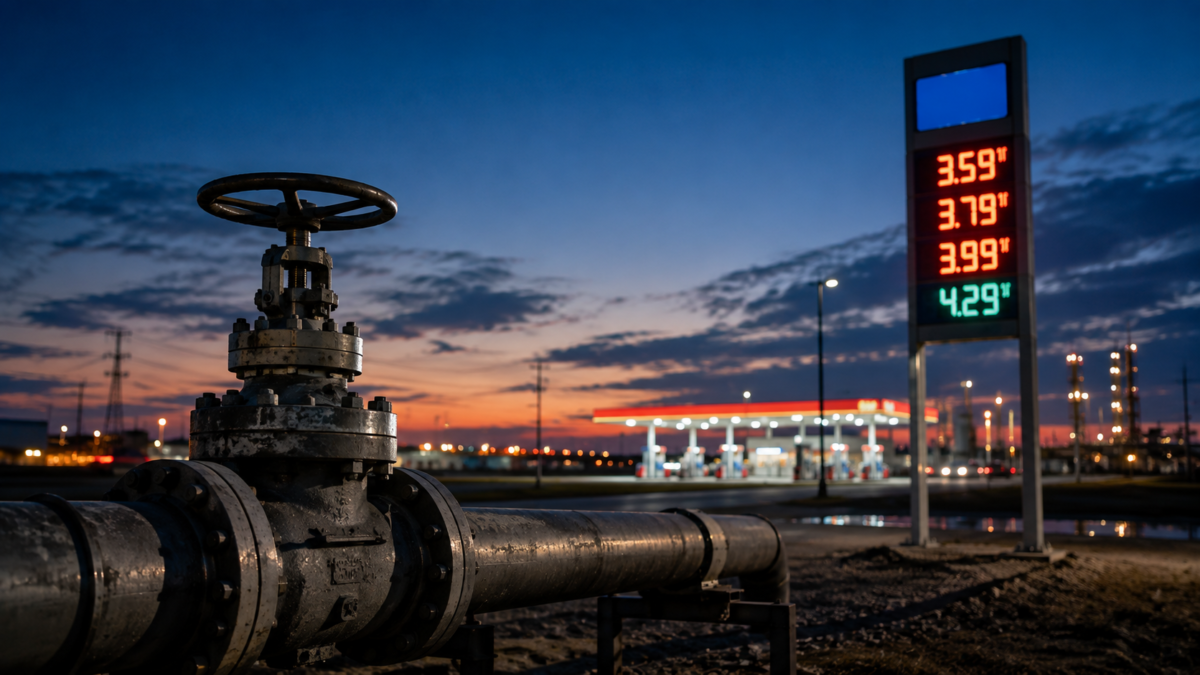
Since the U.S.-Israeli attack on Iran on February 28 and the subsequent conflict, oil prices have risen by around 20%. U.S. gasoline prices have also increased by around 40%, from $2.98 per gallon that drivers paid in February, before the start of the war, to $4.10 per gallon nationwide at the beginning of August, according to AAA data.
The price increase is due to Iran’s near-total closure of the Strait of Hormuz, a key trade corridor connecting Asia and Europe that is responsible for around 20% of global oil trade when fully operational.
The situation also led Trump to order the Justice Department to investigate major oil companies in June for not bringing gasoline prices down fast enough as crude oil prices fell. However, prices at the pump are typically established by the retailers rather than major oil producers.
At the end of July, Exxon and Chevron reported record profits for the second quarter of the year. Chevron’s earnings rose by almost 400%, from $2.5 billion in Q2 2025 to $12 billion in the same period this year. Meanwhile, Exxon’s profits increased more than twofold to $14.5 billion, up from $7.1 billion in the same period in 2025.
“Chevron, too much money. ExxonMobil, too much money,” Trump stated. “They’re going to give some of that back to the public, and they better cut the retail price, the consumer price.”
The same day as Trump commented negatively on the profits, Chevron’s shares dropped by almost 2%.
Trump also criticized Chevron CEO Mike Wirth in a social media post on August 3 for not acknowledging the administration’s role in driving fossil fuel expansion.
“The only thing he conveniently forgot to mention is that, without the genius, foresight, strength, and stability of the TRUMP Administration, the Oil Industry, and our Country itself, would be DEAD!” Trump wrote. “Get your consumer (retail!) Oil Prices DOWN, NOW!” he added.
What’s the Alternative to High Profits?
Trump’s comments raise questions over whether oil companies are responsible for the high cost of energy products to the consumer, particularly when the global supply is constrained. For this reason, the United Kingdom and other countries have introduced energy profits levies, known as windfall taxes.
A windfall tax is a charge imposed on firms that have benefited from something they were not responsible for – otherwise known as a windfall. The U.K.’s windfall tax was introduced in 2022 to address the high profits being made by oil and gas companies following the Russian invasion of Ukraine, and to redistribute these funds to help reduce consumer energy bills.
The windfall tax has been praised by several environmental groups who argue that oil companies’ profits should be capped and hope the tax may disincentivize them from investing in new operations, thereby encouraging energy diversification beyond fossil fuels.
However, it has been criticized by some industry groups, as well as oil and gas companies, for deterring investment in U.K. oil and gas, which could lead to fossil fuel shortages and job losses.
Before coming into office in January 2025, President Trump called on the U.K. to “open up” the North Sea and accused the country’s Labour government of “making a very big mistake” with its energy tax policy.
Constrained Supplies and High Oil Prices – the Broader Picture
The price of oil and other energy products has been rising due to global supply constraints caused by the closure of the Strait of Hormuz. With some oil powers in the Middle East unable to export normal levels of oil, other regions of the world have stepped in to fill the gap, such as the United States. This has led several companies to experience record profits in the months following the Iran War.
The shortage of fossil fuels has led several countries to scramble to find alternative suppliers, to dip into strategic fuel reserves, and to ration energy use. It has also shown that several countries must be better prepared for geopolitical disruptions to energy trade by reducing reliance on specific oil-rich regions, such as the Middle East.
To achieve this, countries could either invest in ramping up oil and gas production in other parts of the world or could accelerate energy diversification efforts to reduce reliance on fossil fuels overall.
Keep In Touch with Shale Magazine
As the new era of energy unfolds, you can bet we’ll be the boots on the ground to keep you informed. Subscribe to Shale Magazine for sharp insight into the arenas that matter most to your life. And don’t forget to listen to our riveting podcast, The Energy Mixx Radio Show, where our very own Kym Bolado interviews the most extraordinary thought leaders, business innovators, and industry experts of our time.
Subscribe to get more posts from Amanda Jenkins