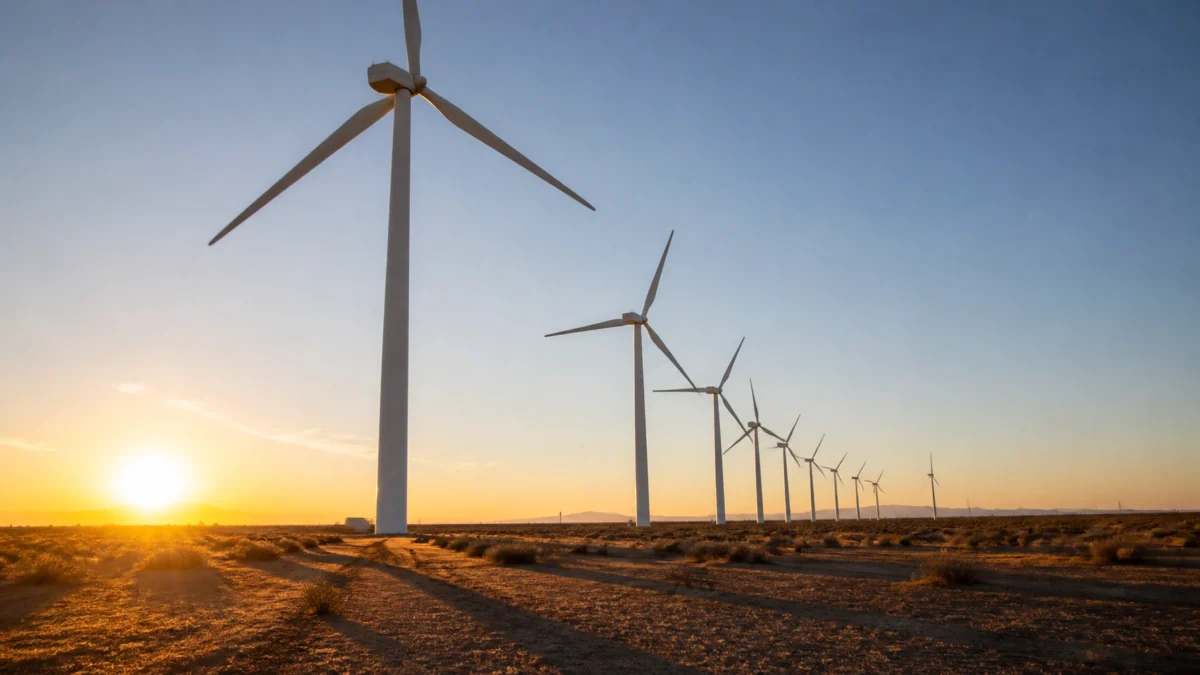
Texas wind project freeze has become the latest hurdle for the domestic energy sector as the U.S. Department of Defense (DoD) has effectively halted the progress of 54 wind projects in the Lone Star State.
This regulatory logjam is not isolated to Texas; it reflects a broader nationwide pause affecting approximately 165 onshore wind projects. For an industry that has historically been a leader in renewable deployment, this sudden friction between energy infrastructure and military readiness represents a significant shift in federal permitting dynamics.
The core of the issue lies in the Siting Clearinghouse process, a mechanism within the DoD designed to evaluate whether tall structures: those exceeding 200 feet: interfere with military operations. While these reviews are traditionally a routine part of the Federal Aviation Administration (FAA) permitting cycle, reports indicate that the DoD has not cleared a single wind project since August 2025. This de facto moratorium has caught developers off guard, threatening billions of dollars in planned investment and raising questions about the future of renewable energy policy at the federal level.
Analyzing the Texas wind project freeze and industry impact

The impact of the Texas wind project freeze is particularly acute because of the state’s unique position in the global energy market. Texas produces more wind power than any other state in the nation. The 54 projects currently stalled represent a massive segment of the state’s future capacity, many of which were designed to bolster a grid that has faced increasing scrutiny over reliability in recent years.
According to data tracked by industry experts and the American Clean Power Association, the DoD began slowing its review process in late 2025, eventually culminating in the cancellation of several key meetings with wind developers in April. This shift has created a backlog that extends beyond mere paperwork. When a project is frozen at this stage, it often triggers a domino effect of financial and operational delays:
- Financing agreements often require proof of federal permitting progress.
- Interconnection agreements with grid operators like ERCOT may lapse if project timelines are not met.
- Turbine supply contracts may incur penalties due to shipping and logistics rescheduling.
The Department of Defense argues that these reviews are inherently complex. They must weigh the necessity of expanding domestic energy production against the primary mission of maintaining national security and military readiness. In Texas, where numerous Air Force bases and naval training ranges coexist with vast wind farms, the technical challenges are real. Turbines can create radar clutter, which mimics the signature of aircraft or weather patterns, potentially blinding air traffic controllers and defense personnel to actual threats or training maneuvers.
How national security and renewable energy policy collide

The tension surrounding the Texas wind project freeze highlights a fundamental friction in current energy policy. On one hand, there is a federal push for energy independence and the modernization of the power grid through diverse generation sources. On the other, the Department of Defense is tasked with protecting the integrity of military training routes and critical radar installations.
The technical interference caused by wind turbines is well-documented in military literature. The rotating blades of a turbine can interfere with Doppler radar systems used for weather forecasting and flight safety. Furthermore, the physical height of modern turbines, which can now reach nearly 700 feet, places them directly in the paths used for low-level flight training. In Texas, the vast expanses used for these training routes are often the same areas with the highest wind resource potential.
Industry analysts note that this shift in permitting speed appears to be a broader re-evaluation of how renewable energy projects interact with national security. While previous administrations sought to streamline these reviews, current signals from the DoD suggest a more cautious approach. This caution has led to a national total of 165 projects being sidelined, suggesting that the “Texas logjam” is actually a bellwether for the entire onshore wind industry.
The economic stakes are high. These projects are not just about environmental goals; they are significant drivers of local tax revenue and job creation in rural counties. For companies focused on reliable dividend utility stocks, the uncertainty introduced by federal permitting delays can impact long-term valuation and investor confidence.
The path forward for the Texas wind project freeze and grid stability
Addressing the Texas wind project freeze will require a collaborative technical effort between the DoD, the FAA, and wind developers. Solutions such as radar-mitigation software, infrared lighting for turbines, and adjusted flight paths are often discussed, but they require time and capital to implement. The current impasse suggests that the “easy” sites for wind development: those far from military operations: have largely been utilized, leaving developers to navigate more contested airspace.
From a grid perspective, the delay of 54 projects in Texas comes at a time when the state is actively seeking more “dispatchable” and “reliable” generation. While wind is variable, its role in the total energy mix is vital for meeting peak summer demand. Any significant delay in new capacity could force a reliance on older, less efficient units to maintain the required reserve margins.
Stakeholders are looking to the White House and the Secretary of Defense for clarity. If the current pause is part of a permanent shift in renewable energy policy, the industry may need to pivot its development strategies toward different regions or alternative technologies like geothermal or nuclear energy. However, for the billions of dollars already committed to these Texas projects, a pivot is not a simple or inexpensive option.
As the situation develops, the energy sector will be watching for any signs of movement in the Siting Clearinghouse. Until then, the 165 projects nationwide remain in a state of regulatory limbo, highlighting the delicate balance between powering the nation and protecting it.
Keep In Touch with Shale Magazine
As the new era of energy unfolds, you can bet we’ll be the boots on the ground to keep you informed. Subscribe to Shale Magazine for sharp insight into the arenas that matter most to your life. And don’t forget to listen to our riveting podcast, The Energy Mixx Radio Show, where our very own Kym Bolado interviews the most extraordinary thought leaders, business innovators, and industry experts of our time.