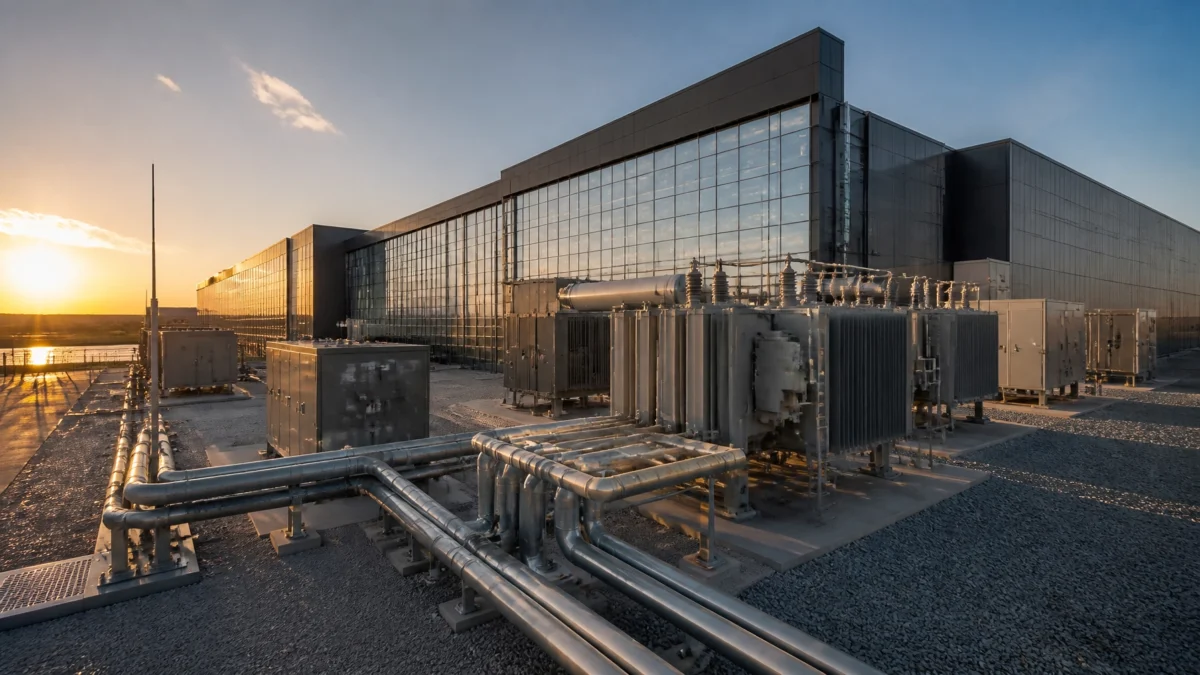
The Department of Energy has taken an unprecedented step to safeguard Mid-Atlantic grid reliability by issuing an emergency order on July 14, 2026, aimed at stabilizing the regional power system. As a record-breaking heat wave settles over the Eastern Seaboard, Energy Secretary Chris Wright invoked Section 202(c) of the Federal Power Act to ensure that PJM Interconnection can maintain the delicate balance between surging electricity demand and available generation capacity. This move marks the first time the current administration has utilized this specific emergency authority, signaling a proactive shift in federal grid management strategy during periods of extreme meteorological stress.
The Mechanics of Section 202(c) and Grid Stabilization
Under the Federal Power Act, Section 202(c) provides the Secretary of Energy with the temporary authority to direct the generation, delivery, and transmission of electricity during a declared emergency. The current order, which remains in effect from July 14 through July 21, 2026, was prompted by internal forecasts suggesting that the PJM Interconnection: the nation’s largest regional transmission organization: could face peak loads exceeding 160,000 MW. When temperatures soar, the cooling demand from residential, commercial, and industrial sectors creates a load profile that can quickly outpace synchronized generation, leading to potential instability or the need for controlled load shedding.
By issuing this order, the Department of Energy (DOE) is allowing PJM to dispatch specific units and activate backup generation resources before the grid reaches the critical Energy Emergency Alert (EEA) Level 3 status. Traditionally, EEA 3 is the final stage before firm load shedding, or rolling blackouts, must be implemented to prevent a total system collapse. The Secretary’s directive essentially provides a regulatory “cushion,” allowing the grid operator to bypass certain environmental constraints and activate standby power sources that would otherwise remain dormant due to permitting or operational limits.

Leveraging 35 GW of Unused Backup Generation
One of the most significant data points highlighted in the DOE’s recent press release is the existence of approximately 35 GW of unused backup generation capacity across the United States. In the PJM territory specifically, a substantial portion of this capacity is located at large-scale industrial sites and data centers. As Energy Network Media Group has previously analyzed in our Energy Abundance Roadmap Analysis, the integration of these “behind-the-meter” resources is becoming a cornerstone of modern grid resilience strategies.
The July 14 order specifically targets large load centers, typically those with a peak demand of 50 MW or greater, such as hyperscale data centers and major manufacturing hubs. Under the directive, PJM is authorized to:
- Request that large commercial and industrial consumers switch to their onsite backup generation within a 15-minute window upon receiving an emergency signal.
- Relax specific environmental permit limits, such as nitrogen oxide (NOx) emission caps or restricted operating hours, for critical thermal units that are required to stay online to maintain voltage stability.
- Coordinate with Transmission Owners and Electric Distribution Companies to synchronize standby units that are not typically part of the daily wholesale market dispatch.
This strategy effectively removes large blocks of demand from the bulk power system and replaces them with localized generation, freeing up the remaining grid capacity for essential services and residential cooling. However, certain facilities deemed critical to public safety: including hospitals, 911 dispatch centers, and water treatment plants: are explicitly exempt from these curtailment requests to ensure that essential life-safety infrastructure remains on the primary grid.
Implications for Long-Term Mid-Atlantic Grid Reliability
The decision to invoke emergency powers underscores a broader conversation regarding the aging infrastructure and shifting generation mix within the PJM footprint. While the region has historically relied on a robust fleet of coal and nuclear baseload power, the transition toward intermittent renewables and the rapid expansion of energy-intensive AI infrastructure has tightened the margin for error during extreme weather events. The need for legislative solutions, such as those discussed in the American Energy Velocity Act, highlights the urgency of streamlining energy permitting to bring more reliable capacity online.
According to data from the Energy Information Administration (EIA) and recent FERC filings, the Mid-Atlantic region is seeing an unprecedented surge in data center development, particularly in Northern Virginia. These facilities require constant, high-density power, often pushing the limits of existing transmission corridors. When a heat wave increases the ambient temperature of transmission lines, their physical capacity to carry electricity actually decreases due to thermal expansion and increased resistance, creating a “perfect storm” of high demand and reduced delivery capability.

The DOE’s intervention serves as a temporary bridge while the industry grapples with long-term reliability challenges. Industry experts suggest that the successful deployment of these 35 GW of backup resources could serve as a proof-of-concept for more permanent “demand response” programs. If data centers and industrial hubs can be effectively incentivized to function as “virtual power plants,” the regional grid could gain a level of flexibility that reduces the need for expensive and environmentally taxing “peaker” plants.
Strategic Coordination and Federal Oversight
The effectiveness of the July 14 order relies heavily on the coordination between federal regulators and local utilities. Secretary Wright’s directive emphasizes that while environmental standards are being temporarily relaxed to prevent blackouts, operators must still maintain rigorous monitoring and record-keeping. The goal is not to abandon environmental stewardship but to prioritize human safety and economic stability during a defined statutory emergency.
The current heat wave is a reminder that the energy economy is deeply intertwined with national security. A widespread blackout in the Mid-Atlantic would disrupt not only the lives of millions of citizens but also the operations of federal agencies and global financial markets headquartered in the region. As the industry looks toward the future, the focus remains on building a diversified energy portfolio that includes everything from advanced nuclear to optimized hydrocarbons. Our recent coverage of the AI Energy Workforce Demand further explores how technical expertise is being redirected to manage these increasingly complex grid dynamics.

As the order remains in effect through July 21, all eyes will be on PJM’s control rooms. The successful navigation of this heat wave without firm load shedding would validate the DOE’s proactive stance and provide a blueprint for future grid management in an era of climatic volatility and soaring electrical demand.
Keep In Touch with Shale Magazine
As the new era of energy unfolds, you can bet we’ll be the boots on the ground to keep you informed. Subscribe to Shale Magazine for sharp insight into the arenas that matter most to your life. And don’t forget to listen to our riveting podcast, The Energy Mixx Radio Show, where our very own Kym Bolado interviews the most extraordinary thought leaders, business innovators, and industry experts of our time.
Subscribe to get more posts from Amanda Jenkins