
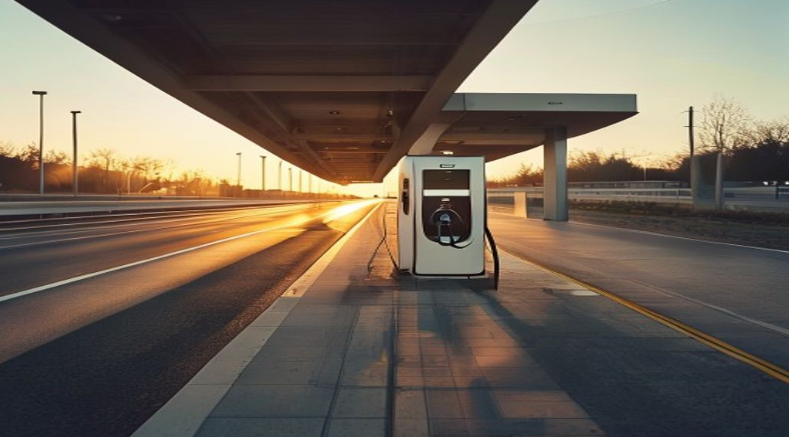
The Department of Energy has recently finalized a massive $3 billion funding initiative designed to solidify the National EV charging backbone across the United States. This strategic move, announced in early May 2026, aims to bridge the gap between battery production and the physical infrastructure required to support a growing fleet of electric vehicles. While previous federal efforts focused heavily on the supply chain, this latest unlocking of capital targets the actual deployment of high-speed charging corridors, ensuring that the transition to electrified transport is supported by a reliable and accessible network.
State Progress and the National EV Charging Backbone
The push for a robust National EV charging backbone has found its primary momentum in the Midwest and the Pacific Northwest. Ohio, Washington, and Michigan have emerged as the frontrunners in unlocking National Electric Vehicle Infrastructure (NEVI) funds that were previously caught in administrative limbo. These states are now aggressively deploying fast-charging stations every 50 miles along major interstate corridors, adhering to the federal mandate to create a “spine” of charging accessibility.
According to recent Department of Transportation reports, Michigan has successfully integrated over $110 million in NEVI formula funding into its 2026 infrastructure plan. This comes after a significant period of regulatory uncertainty that stalled projects throughout 2025. The restoration of these funds allows for a more cohesive network that links the industrial hubs of Detroit to the logistics corridors of the broader Great Lakes region. In Washington, the focus has shifted toward rural connectivity, ensuring that the geographic divide does not become a bottleneck for EV adoption.
The technical requirements for these stations remain stringent. Each site must feature at least four 150 kW Direct Current Fast Chargers (DCFC) capable of simultaneous charging. This ensures that the infrastructure is not merely symbolic but provides the high-throughput capability required for commercial and long-distance travel. By prioritizing these high-traffic corridors, the DOE and state agencies are attempting to solve the “range anxiety” that has historically hampered widespread market penetration.

The Build America 250 Act and Infrastructure Fees
While federal grants provide the initial capital for the National EV charging backbone, the long-term sustainability of the highway fund remains a point of intense discussion in Congress. The introduction of the Build America 250 Act has introduced a proposed $130 annual EV fee for all registered electric vehicle owners. This fee is designed to offset the loss of gasoline tax revenue, which has traditionally funded the maintenance of the nation’s roads and bridges.
Proponents of the Act argue that a flat fee is the most equitable way to ensure that all road users contribute to the infrastructure they utilize. Critics, however, point out that a $130 surcharge could disincentivize entry-level EV buyers. The fiscal reality, as noted by the Congressional Budget Office, is that the Highway Trust Fund faces a widening deficit as internal combustion engine efficiency improves and EV market share grows.
- Current proposed EV registration fee: $130 annually
- Estimated revenue for Highway Trust Fund: $2.1 billion by 2028
- Focus of the Act: Bridge and road maintenance adjacent to charging hubs
This legislative shift highlights the tension between promoting a new energy economy and maintaining the fiscal structures that supported the old one. As the DOE continues to pour billions into the charging network, the federal government is simultaneously seeking ways to ensure that the “backbone” of the system does not lead to a collapse in general infrastructure funding.

Navigating the National EV Charging Backbone Regulatory Landscape
The journey toward a fully realized National EV charging backbone has been complicated by a series of federal court rulings that have challenged the executive branch’s authority to reallocate infrastructure funds. In June 2025, the U.S. District Court for the Western District of Washington issued a pivotal ruling that blocked the administration’s attempt to pause NEVI funding. This legal victory for state attorneys general paved the way for the current 2026 surge in construction.
However, the legal landscape remains volatile. Congressional budget shifts have recently targeted the “One Big Beautiful Bill” (OBBB) provisions, which provided the 30C tax credit for alternative fuel refueling property. The current legislature has moved the deadline for these credits to June 30, 2026. This creates a high-pressure environment for developers who must have their charging stations in service before the deadline to remain financially viable.
This “deadline pressure” is a double-edged sword. On one hand, it has accelerated the pace of installations across Ohio and Michigan, as private partners race to secure the 30% tax credit. On the other hand, it has led to supply chain bottlenecks for high-capacity transformers and switchgear. According to industry analysis from the Federal Energy Regulatory Commission (FERC), the demand for grid-edge equipment has reached an all-time high, leading to lead times that often exceed 14 months.
The integration of the National EV charging backbone is not merely a logistical challenge but a profound shift in how the nation manages its energy distribution. As the DOE’s $3 billion begins to manifest in physical hardware, the focus must shift toward grid reliability. The addition of thousands of high-draw charging points requires a more sophisticated approach to load management and peak demand. This is where the intersection of grid reliability and traditional energy assets becomes critical. Without a stable baseload: often provided by nuclear or natural gas: the EV backbone risks being a bridge to nowhere.
As we move toward the second half of 2026, the success of this $3 billion unlock will be measured not by the number of chargers installed, but by the uptime and reliability of the network. The tension between federal mandates, state execution, and private sector profitability continues to define the evolution of the American energy landscape.
Keep In Touch with Shale Magazine
As the new era of energy unfolds, you can bet we’ll be the boots on the ground to keep you informed. Subscribe to Shale Magazine for sharp insight into the arenas that matter most to your life. And don’t forget to listen to our riveting podcast, The Energy Mixx Radio Show, where our very own Kym Bolado interviews the most extraordinary thought leaders, business innovators, and industry experts of our time.