
Oak Ridge Lab Speeds Uranium Cleanup and Isotope Delivery
A new analytical laboratory at Oak Ridge National Laboratory is linking two objectives that are rarely discussed together: disposing of legacy nuclear material and improving the supply chain for an isotope being studied in cancer treatment.
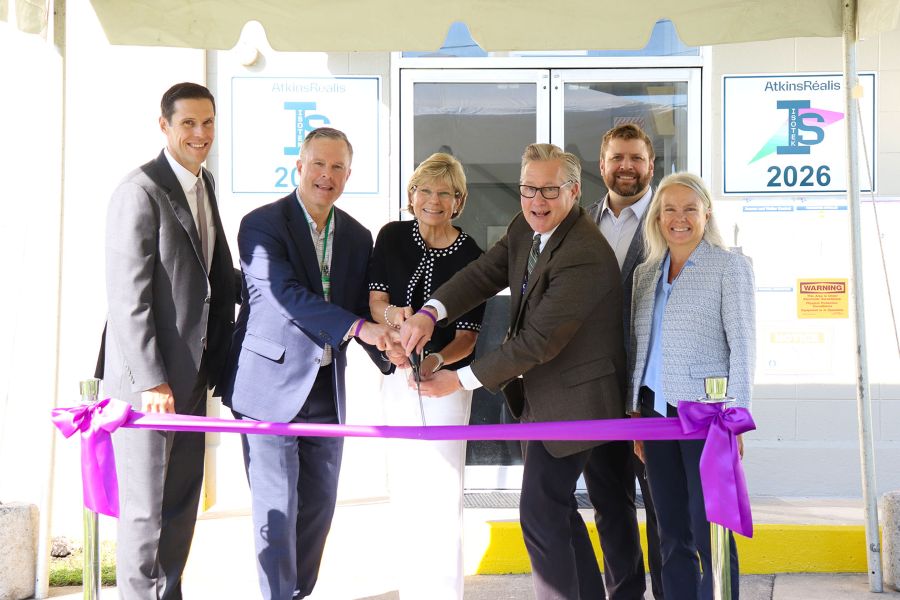
The laboratory in ORNL’s Building 2026 was officially opened by the Department of Energy’s Oak Ridge Office of Environmental Management (OREM) and its contractor, Isotek Systems, in August 2026. The Department of Energy announced the laboratory’s completion on August 25, following an August 21 report by ANS Nuclear Newswire. Teledyne Brown Engineering equipped the facility.
Its immediate purpose is practical. By analyzing samples on site, the laboratory can reduce delays in processing Oak Ridge’s uranium-233 inventory and speed the transfer of thorium-229, a parent material used by TerraPower Isotopes to produce actinium-225.
The project is therefore not a new reactor or a new source of nuclear electricity. It is a legacy cleanup operation that may also support the emerging medical-isotope economy.
A Legacy Uranium Inventory With a New Role
Uranium-233 was created during nuclear research programs in the 1950s and 1960s for potential use as reactor fuel. DOE later determined that the material was not viable as a commercial nuclear fuel source. The inventory remained at Oak Ridge, where it requires long-term security, monitoring, handling and eventual disposal.
DOE describes the Uranium-233 Disposition Project as OREM’s highest-priority cleanup project at ORNL. The agency has cited the material’s fissile properties, its storage in an aging nuclear facility and the cost of maintaining it safely as reasons for prioritizing the work.
Isotek Systems, an AtkinsRéalis subsidiary, is responsible for processing and disposing of the inventory under its agreement with OREM.
Reported project milestones
| Metric | Reported status | Source and significance |
|---|---|---|
| U-233 disposition | About 75% completed | ANS reported that Isotek has disposed of approximately three-fourths of the inventory |
| Thorium-229 extracted by April 2025 | More than 15 grams | DOE said the amount represented a major increase in the supply available outside Oak Ridge |
| Thorium-229 expected by the end of the project | About 40 grams | DOE reported that Isotek expects to extract this amount for cancer-treatment research |
| U-233 program origin | 1950s and 1960s | DOE says the material was created for potential reactor use |
| New analytical laboratory | Building 2026 at ORNL | Supports faster sample analysis, material disposition, and isotope shipments |
The available progress figures describe different stages of the project. DOE reported in August that Isotek had passed the halfway point in its processing campaign. ANS Nuclear Newswire reported that approximately three-fourths of the inventory had been disposed of. Processing and disposal are related but distinct milestones, so the percentages should not be treated as measurements of precisely the same activity.
Reported U-233 disposition progress
Disposed       ██████████████████████████████  About 75%
Remaining      ██████████                     About 25%
The remaining material is not necessarily uniform. Some portions can be disposed of directly, while other material must first be converted into a form that is safer and more practical to transport and dispose of. That difference makes analytical testing an important part of the schedule.
Why the New Oak Ridge Laboratory Matters
Nuclear-material processing does not end when material leaves a glovebox or hot cell. Samples must be analyzed to determine their composition, confirm that they meet specifications and support decisions about whether material can proceed to disposal or transfer.
Before the new laboratory opened, some samples had to be sent elsewhere for analysis. That created a bottleneck between processing, testing and shipment.
The Building 2026 facility brings more of that work inside the Oak Ridge operation. DOE says employees should now receive analytical results in approximately two weeks instead of waiting as long as four months for results from outside laboratories.
OREM Manager Erik Olds said the laboratory provides employees with more data and faster results as they make decisions about material for disposal. In practical terms, faster analytical turnaround can help processing crews make adjustments sooner, release shipments more quickly and avoid having material wait for laboratory capacity at another location.
Isotek President and Project Manager Sarah Schaefer said the laboratory should allow the company to transfer thorium-229 to TerraPower Isotopes more quickly. She also said faster results could help the processing team adjust its methods and improve thorium recovery.
Those improvements do not eliminate the technical and regulatory requirements associated with radioactive materials. They reduce one logistical delay within a highly controlled process.
How U-233 Supports the Actinium-225 Supply Chain
The medical-isotope opportunity comes from the decay products associated with the legacy uranium inventory.
Oak Ridge’s U-233 stockpile is described by DOE and ANS as the only major source of thorium-229 in the world. Before Isotek processes the U-233 for disposal, it extracts thorium-229 from the material.
TerraPower Isotopes has been contracted to recover actinium-225 from the thorium-229 using a radioisotope decay-based process. The resulting supply chain has three distinct stages:
- OREM oversees the environmental-management mission at Oak Ridge.
- Isotek processes U-233, extracts thorium-229 and prepares the remaining material for disposal.
- TerraPower Isotopes uses thorium-229 to produce actinium-225 for research and potential medical applications.

Isotek began by processing lower-radiation U-233 canisters in gloveboxes before moving to higher-dose material in hot cells. Image courtesy of the U.S. Department of Energy.
This arrangement turns part of a costly legacy-management obligation into a feedstock for medical research. It does not mean that all nuclear waste has commercial value, nor does it remove the need for permanent disposal. It means that a specific material stream contains a rare isotope that can be recovered before the remaining material is treated and disposed of.
DOE reported in April 2025 that Isotek had extracted more than 15 grams of thorium-229. The agency said only about one gram was available outside Oak Ridge at that time and that Isotek expected to provide approximately 40 grams by the end of the project.
The Oak Ridge project fits within a broader effort to find productive applications for certain materials inherited from earlier federal nuclear programs. ENMG has also examined how DOE is converting Cold War plutonium into next-generation nuclear fuel, although the materials, processing methods and intended applications differ from the U-233 disposition project.

Isotek employees load thorium-229 canisters for shipment to TerraPower to support cancer-treatment research. Image courtesy of the U.S. Department of Energy.
Why Actinium-225 Matters to Cancer Research
Actinium-225 is an alpha-emitting radionuclide under investigation for targeted alpha therapy. In this approach, Ac-225 is attached to a targeting molecule designed to bind to cancer cells. The molecule carries the isotope to the intended site, where alpha emissions can damage nearby cancerous tissue.
The approach remains subject to clinical research, regulatory review and the development of approved drug products. Ac-225 is not itself a complete cancer treatment. It is a starting material that pharmaceutical and biotechnology companies may use in developing radiopharmaceuticals.
TerraPower Isotopes describes its material as research-grade actinium-225 intended for use as starting material in further manufacturing processes. The company says it is working to increase supply for pharmaceutical research and development.
TerraPower Isotopes President Scott Claunch said, “The future of precision medicine relies on having a dependable supply of Ac-225.” He added that faster processing of the isotope’s parent material could strengthen the global supply chain and expand access to cancer therapies if those therapies are successfully developed and approved.
The supply challenge is partly physical. Ac-225 has a relatively short half-life, which complicates production, quality control, transportation and delivery. A dependable system must produce material consistently, meet customer specifications and move shipments through the supply chain without unnecessary delays.
The new Oak Ridge laboratory addresses the analytical portion of that challenge. It does not by itself create commercial demand, complete clinical trials or guarantee that any particular therapy will reach patients.

Targeted alpha therapy uses a carrier molecule to deliver an alpha-emitting isotope toward cancer cells. Image courtesy of TerraPower Isotopes.
A Different Nuclear Story From Reactor Deployment
The Oak Ridge project also broadens the way the nuclear industry is being viewed.
Much current nuclear-policy discussion focuses on reactor construction, small modular reactors, advanced fuels, grid reliability and the role of firm power in meeting rising electricity demand.
The Building 2026 laboratory represents a different part of the nuclear system. It involves:
- Legacy-material stewardship
- Radiochemical processing
- Nuclear security and waste disposition
- Specialized laboratory equipment
- Medical-isotope production
- Pharmaceutical supply-chain development
- Public-private contracting
That combination matters because nuclear infrastructure produces value in more than one way. Reactors and fuel facilities support electricity and industrial applications, while specialized nuclear laboratories can support medicine, research and national cleanup obligations.
For OREM, the primary objective remains cleanup and risk reduction. For Isotek, faster analysis can improve processing efficiency and material recovery. For TerraPower Isotopes and pharmaceutical developers, a more reliable thorium-229 stream could support Ac-225 research. Patients may ultimately benefit if clinical development and regulatory approval lead to new treatments, although that outcome remains uncertain.
What to Watch Next
The most important indicators will be operational rather than promotional.
Readers should watch for the pace of remaining U-233 processing, the volume and consistency of thorium-229 transfers and evidence that the new laboratory reduces shipment turnaround times. Additional milestones from TerraPower Isotopes will show whether the recovered material translates into larger quantities of research-grade Ac-225.
DOE has said the first commercial treatments using material derived from the Oak Ridge inventory are expected in 2028. That remains a projected milestone dependent on pharmaceutical development, manufacturing execution and applicable regulatory approvals.
The medical side also requires careful attention. Clinical-trial results, manufacturing standards, regulatory decisions and the economics of radiopharmaceutical distribution will determine whether targeted alpha therapy becomes broadly available.
The Oak Ridge laboratory is an enabling project, not the final step. Its significance lies in improving the connection between a decades-old cleanup obligation and a modern isotope supply chain. The success of that model will depend on whether faster analysis leads to measurable gains in cleanup performance, material recovery and dependable delivery to legitimate research and medical-development programs.
Keep In Touch with Shale Magazine
As the new era of energy unfolds, you can bet we’ll be the boots on the ground to keep you informed. Subscribe to Shale Magazine for sharp insight into the arenas that matter most to your life. And don’t forget to listen to our riveting podcast, The Energy Mixx Radio Show, where our very own Kym Bolado interviews the most extraordinary thought leaders, business innovators, and industry experts of our time.




Many people would like to know specifically what “disposition” entails. 233U is both fissile and rare. It should be made available to some of the advanced reactors currently under development.
The FLIBe salt was sent to Natura in Texas and I’m happy about the alpha-therapy opportunity, but this U233 was never waste. Yet it is being wasted.