ENMG Analysis
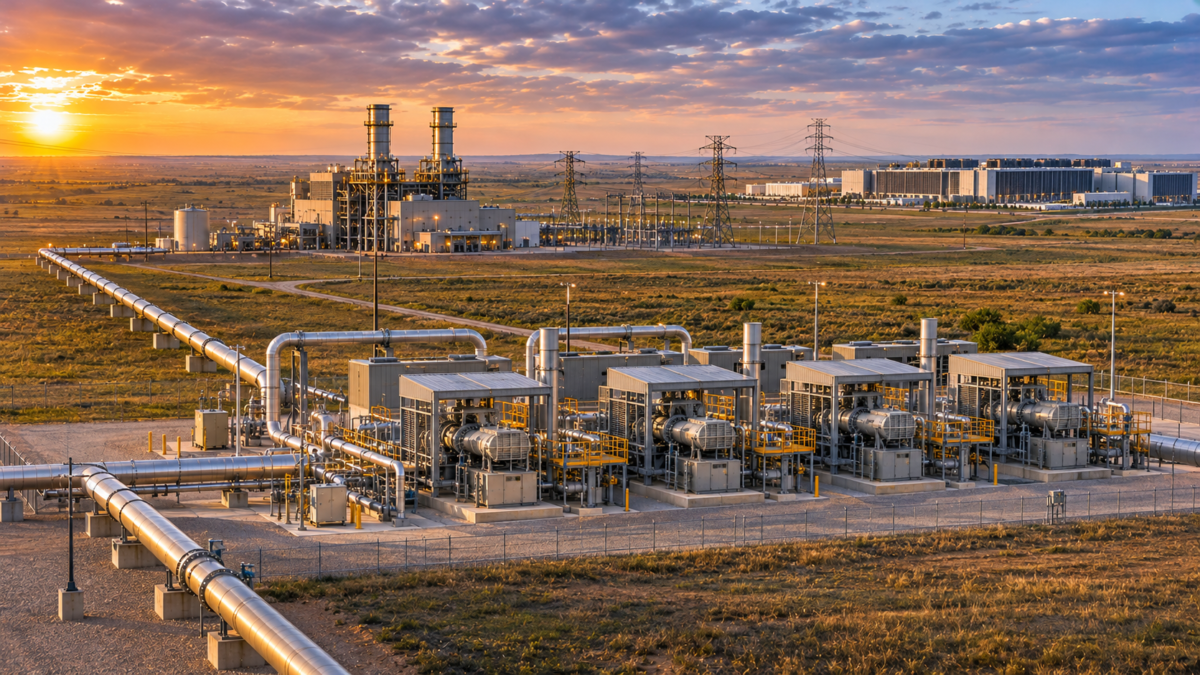
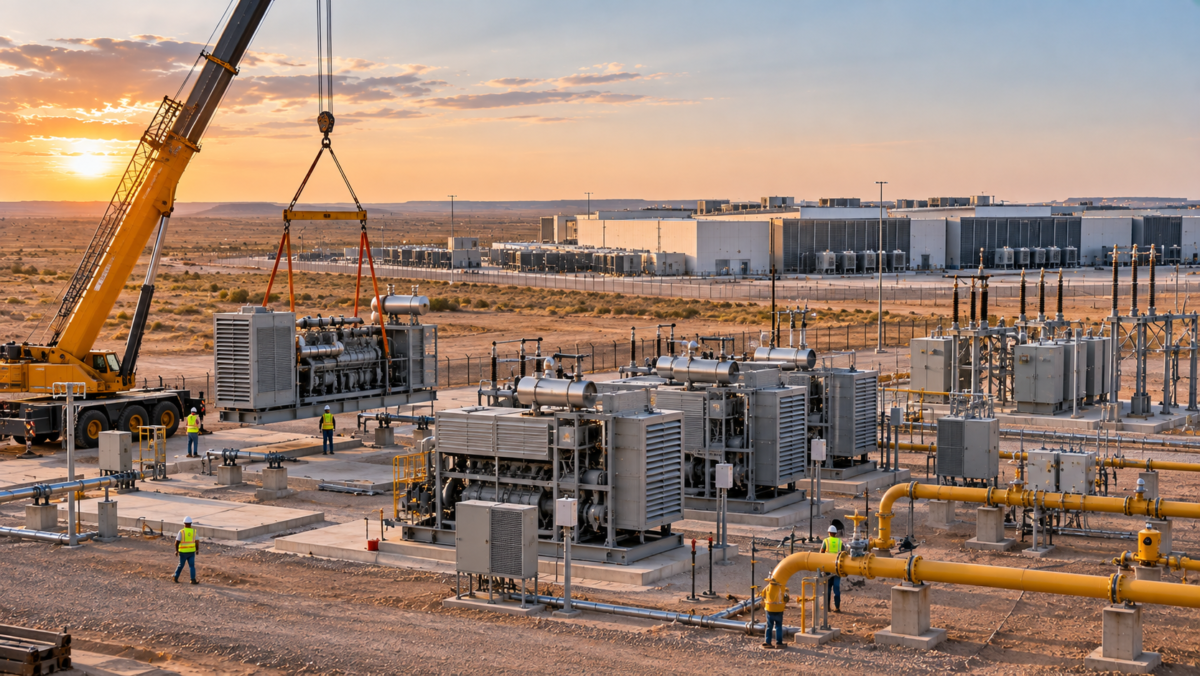
Kodiak Gas Services says it has begun initial site work and started setting equipment for a West Texas data center power project. The disclosure moves the development beyond a contract announcement, but it does not mean the complete 76-megawatt system is operating or supplying electricity.
The Woodlands-based company reported the construction milestone in its November 9 earnings release filed with the Securities and Exchange Commission. Kodiak did not identify the customer, disclose the project’s precise location, specify how many generating units have been installed, or provide a commissioning date.
Those missing details matter because site preparation, equipment installation, commissioning, and commercial operation are separate stages. Setting a generator at the site does not establish that it has been connected to fuel, synchronized with the customer’s electrical system, tested under load, or cleared to begin commercial service.
What Kodiak Has Contracted To Deliver
Kodiak announced the project in September under a six-year agreement to provide 76 MW of behind-the-meter baseload capacity, including the equipment and supporting systems needed to operate the plant.
According to the original power-supply announcement, Kodiak expects to deploy approximately 40 natural gas-fueled reciprocating generating units. Deployment was scheduled to begin during the fourth quarter of 2026 and expand into the first quarter of 2027, with revenue recognition anticipated to start during that quarter.
The November disclosure confirms that some physical work has begun. It does not confirm that the original schedule remains unchanged or that the entire system will enter service at the same time.
A generating capacity of 76 MW describes how much electrical power the system could supply at a particular moment under specified operating conditions. It does not describe how much electricity the generators will produce over a day, month, or year. Actual generation will depend on the data center’s load, equipment availability, maintenance, operating strategy, and the number of units running.
That distinction is especially important when comparing the project with utility-scale generating plants or data-center electricity forecasts. Capacity is measured in megawatts. Electricity produced or consumed over time is measured in megawatt-hours.
What Behind-The-Meter Power Means
Behind-the-meter generation generally refers to electricity produced on the customer’s side of its utility meter. The U.S. Energy Information Administration includes onsite generation within its explanation of distributed and behind-the-meter energy systems.
In this case, the generating units are intended to serve the data-center customer directly. That arrangement could allow the project to obtain power without waiting entirely for new utility-scale generation and transmission infrastructure.
However, “behind the meter” does not automatically mean the campus is isolated from the electric grid. Kodiak has not publicly disclosed whether the data center will maintain a grid connection, export electricity, use batteries, or operate the generators independently during a utility outage.
ENMG’s analysis of on-site natural gas generation for data centers explains why these projects require more than generating equipment. A complete system can also involve fuel transportation, substations, switchgear, transformers, cooling, emissions controls, backup capacity, electrical protection systems, and procedures for maintaining service when individual units are unavailable.
The use of approximately 40 generators could provide modularity because individual units may be started, stopped, or maintained separately. That does not eliminate reliability risk. The data center’s available capacity would still depend on generator performance, supporting equipment, fuel pressure, maintenance, and the design of the electrical system connecting the units to the computing load.
Gas Supply Remains An Open Question
Kodiak has not disclosed how natural gas will reach the site, whether the customer has secured firm pipeline service, or whether storage or an alternative fuel will be available during a disruption.
The 76 MW capacity figure also cannot be converted into a reliable gas-consumption estimate without additional engineering information. Fuel use depends on generator heat rate, operating load, runtime, ambient conditions, and the energy content of the delivered gas.
For Texas producers and midstream companies, the project could create another source of local natural gas demand if the facility is commissioned and operates regularly. ENMG has already examined how Texas data center gas demand is moving into pipeline contracts, but no specific pipeline or gas supplier has been publicly tied to Kodiak’s project.
The distinction between fuel availability and fuel deliverability is critical. West Texas may produce large amounts of natural gas, but a generating site still needs a physical connection, sufficient pipeline capacity, appropriate pressure, and commercial arrangements that can support its operating schedule.
Permits, Emissions, And Community Questions
Natural gas reciprocating engines produce emissions, including nitrogen oxides, carbon monoxide, carbon dioxide, and smaller amounts of other pollutants. Texas provides several potential authorization routes for stationary engines, depending on equipment type, emissions, size, and operating conditions.
The Texas Commission on Environmental Quality maintains a specific air-permitting framework for natural gas electric generating units. The project’s applicable authorization cannot be determined without knowing the site, engine specifications, emissions controls, and operating plan.
Local questions will depend heavily on where the equipment is located. Relevant issues can include engine noise, exhaust emissions, construction traffic, gas infrastructure, setbacks, water use, and the site’s emergency-response plan.
Texas officials are separately examining data centers’ dependence on grid power and onsite generation through an ERCOT request for information. Kodiak’s disclosure does not establish how this particular project will interact with ERCOT or a local utility.
Lower Spending Guidance Needs Careful Interpretation
Kodiak reduced its expected 2026 growth capital spending for the broader Power Infrastructure segment to between $350 million and $400 million. The company attributed the change to updated expectations for the timing of new equipment deliveries.
That adjustment should not be described as a confirmed delay or cost reduction for the West Texas project. The guidance covers the entire business segment, not this single installation. Kodiak did not specify which equipment deliveries changed or which projects were affected.
The revised guidance does create a reasonable reporting question: Does Kodiak still expect the 76 MW deployment to scale into the first quarter of 2027 as originally planned?
Until the company provides a project-specific update, the segment-wide spending change and the data center’s construction schedule should remain separate.
What Comes Next
The next meaningful milestone will be commissioning rather than additional equipment arriving at the site. Commissioning typically includes checking mechanical and electrical systems, confirming fuel delivery, testing controls and safety equipment, operating generators under load, and verifying that the combined system can serve the customer reliably.
Reporters and local stakeholders should watch for:
- The project’s county and precise location.
- The number of generators installed and commissioned.
- The applicable state and local permits.
- The pipeline or other infrastructure supplying natural gas.
- The project’s grid-connection and backup-power arrangements.
- The date the first unit begins supplying electricity.
- Confirmation that the complete 76 MW system has entered commercial service.
Kodiak’s disclosure represents measurable progress from contracting into construction. It does not yet demonstrate that the data center is receiving power, that all 40 generators are installed, or that the original deployment schedule will be met.
That is the useful distinction: the equipment is beginning to reach the ground, but the operating evidence still has to follow.
Keep In Touch with Shale Magazine
As the new era of energy unfolds, you can bet we’ll be the boots on the ground to keep you informed. Subscribe to Shale Magazine for sharp insight into the arenas that matter most to your life. And don’t forget to listen to our riveting podcast, The Energy Mixx Radio Show, where our very own Kym Bolado interviews the most extraordinary thought leaders, business innovators, and industry experts of our time.