
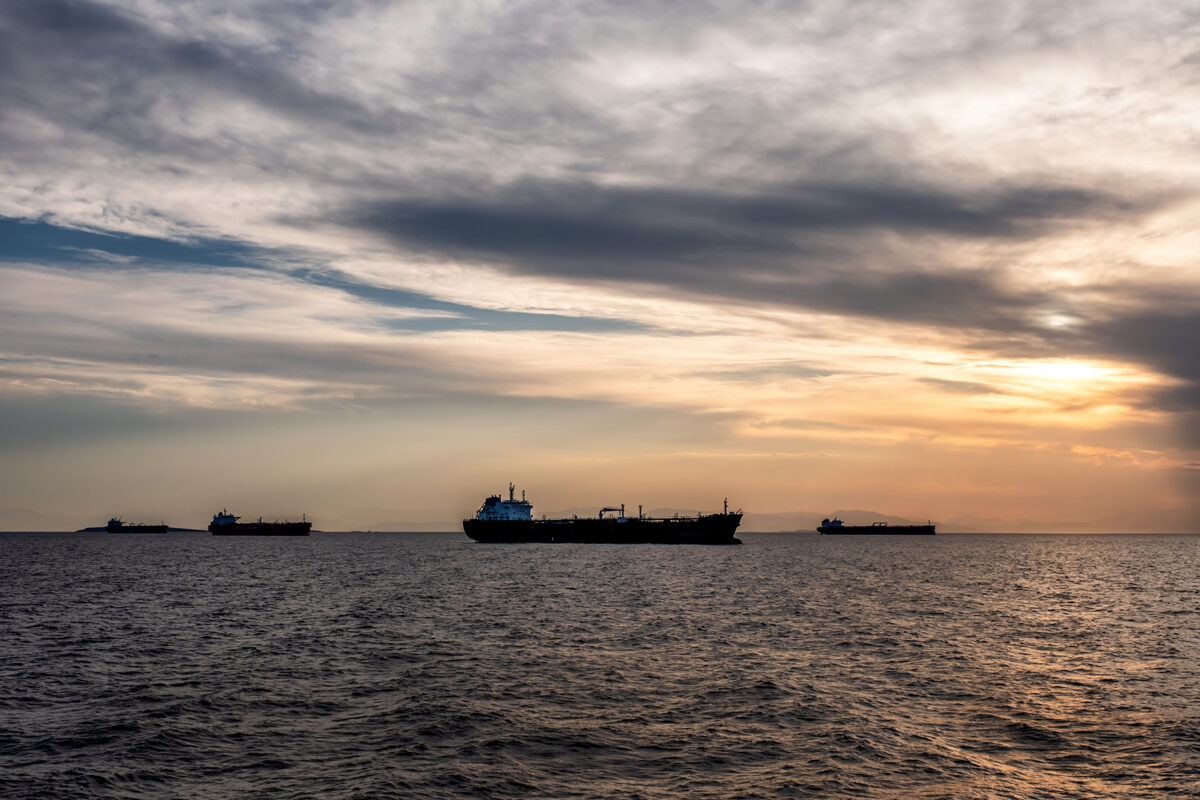
The New Energy Bottleneck
SHALE Magazine’s latest digital issue brings together timely reporting and analysis across Business, Policy, Industry, and Finance. Anchored by Editor-in-Chief Robert Rapier’s cover story, The New Energy Bottleneck, this edition examines how war, damaged refining capacity, constrained shipping routes, depleted inventories, and rising transportation costs are shifting the global energy crisis from a question of resource availability to one of energy deliverability.
Inside the Issue: Business, Policy, Industry, and Finance
This issue is organized into four core sections—Business, Policy, Industry, and Finance—featuring original reporting and expert analysis from Editor-in-Chief Robert Rapier, Washington Bureau Chief Amanda Jenkins, and energy writer Felicity Bradstock.
Cover Story: The New Energy Bottleneck
In this issue’s cover story, Robert Rapier examines the next phase of the global energy crisis and a critical shift in where pressure is building across the energy system.
The world still possesses enormous quantities of oil and natural gas, and crude exports from the Middle East have recovered substantially despite continued disruption surrounding the Strait of Hormuz. But solving one constraint has exposed others. Pressure has increasingly moved downstream into refining capacity, tanker availability, shipping insurance, storage, transportation infrastructure, and refined-product markets.
What began as a crude-supply crisis is increasingly becoming a crisis of deliverability.
Key Topics Include:
How global energy markets adapted to disrupted traffic through the Strait of Hormuz by expanding alternative pipelines, terminals, shipping arrangements, and trade routes
Why recovering crude exports have not returned the global energy system to normal
How tight diesel supplies and constrained refinery capacity demonstrate the difference between having crude oil and being able to turn it into usable fuels
Why damage and reduced activity at Russian and Middle Eastern refineries are putting additional pressure on global refined-product markets
How rising tanker rates, war-risk insurance, longer voyages, and increasingly complicated shipping routes are raising the cost of delivering energy
Why instability surrounding the Red Sea and Bab el-Mandeb Strait creates another major vulnerability for global energy transportation
How the energy industry is reconsidering decades of “just-in-time” efficiency in favor of greater “just-in-case” redundancy
Why pipelines, refineries, tanker fleets, ports, storage terminals, alternative export routes, and even insurance capacity are becoming increasingly strategic assets
How depleted inventories and emergency stock releases have reduced the cushion available to absorb another major disruption
Why the next phase of global energy security may depend as much on infrastructure and deliverability as on the amount of oil and natural gas countries possess
The New Energy Bottleneck builds on the themes introduced in The Great Energy Realignment. The global energy system proved more adaptable than many expected when normal flows through the Strait of Hormuz were disrupted. But that resilience came at a cost: inventories were drawn down, alternate routes were pushed harder, transportation costs increased, and surviving infrastructure was forced to carry more of the burden.
The result is a new strategic reality. Abundant energy resources alone do not guarantee energy security. Oil and natural gas must still be processed, transported, insured, stored, and delivered through an increasingly complex geopolitical environment.
The countries and companies best positioned for the next disruption may therefore be those willing to invest not only in energy production, but in the redundancy, infrastructure, storage, refining capacity, and transportation flexibility required to keep energy moving when part of the system fails.
Business
Deployable Energy Will Test a Nuclear Battery Inside DOME
Houston-based Deployable Energy is preparing to test its 1-megawatt-electric Nuclear Unity Battery at Idaho National Laboratory’s DOME facility in 2027, moving the transportable microreactor from an earlier criticality milestone toward higher-power testing. This article examines what the demonstration could reveal about sustained power production, heat removal, reactor controls, and system integration—and the regulatory, technical, security, and commercial hurdles that remain before nuclear batteries could become deployable sources of power.
Policy
House Committee Advances Six Nuclear Permitting Bills as Startup Reactor CEOs Testify on Pilot Gains
Congress is targeting several of the regulatory, workforce, and fuel-cycle bottlenecks facing advanced nuclear development as six bipartisan nuclear permitting reform bills move toward possible consideration by the full House. This article examines proposed changes to licensing procedures, NRC staffing, fuel recycling and uranium enrichment, as well as recent milestones from the DOE Reactor Pilot Program and the remaining challenges developers face in turning advanced reactor concepts into licensed, financed, and operating sources of power.
Industry
Texas Must Fix Power Supply Bottleneck to Meet Rising Electricity Demand
Texas electricity demand is expected to rise sharply as population growth, industrial expansion, and data center development place increasing pressure on the grid. This article examines how transmission constraints could become a critical barrier despite expanding generation capacity, as ERCOT moves forward with a multibillion-dollar grid expansion while Texas confronts massive interconnection queues, tightening reserve margins, and difficult decisions over how quickly new large-load customers can connect.
Finance
What the S&P 500 Is Hiding From Investors
The S&P 500 may be trading near record territory, but the headline index does not tell the full story of the market. This article examines how a small group of mega-cap companies can disproportionately influence index performance, why market breadth and equal-weight indexes reveal a more uneven picture, and what that means for investors whose diversified, income-oriented, or infrastructure-focused portfolios may not be keeping pace with a technology-heavy benchmark.
Thank you for reading our latest issue! Don’t miss a beat—Subscribe to SHALE Magazine for industry news, insights, and executive interviews delivered straight to your inbox.
Our other issues can be found below:


