




Nationwide E15 fuel expansion is moving from a policy debate to a literal pump reality this summer. On March 25, 2026, the Environmental Protection Agency (EPA) issued an emergency fuel waiver that fundamentally shifts the landscape for American gas stations and corn growers alike. Under the direction of the National Energy Emergency directive, EPA Administrator Lee Zeldin has cleared the way for gasoline blended with 15 percent ethanol to be sold throughout the 2026 summer driving season, effective May 1.
This move effectively bypasses the traditional summer volatility regulations that usually restrict E15 sales between June 1 and September 15. The justification is rooted in energy security and consumer relief, but as with any major shift in energy policy, the ripple effects move through the refining sector, the agricultural heartland, and eventually, the consumer’s wallet.
Nationwide E15 Fuel Expansion and the Regulatory Shift
The logic behind the emergency waiver rests on two pillars: supply volume and price stability. By allowing E15 to remain on the market during the months when it is traditionally sidelined, the EPA aims to increase the total volume of fuel available to American drivers. Historically, the concern with higher ethanol blends in the summer has been ground-level ozone and smog, particularly in warmer climates. However, the current administration is prioritizing the immediate economic pressure on domestic infrastructure and fuel costs.
Beyond just the ethanol percentage, this waiver includes a significant technical adjustment: the removal of federal barriers for E10 and the temporary suspension of state-level boutique fuel requirements. For decades, the U.S. fuel market has been fragmented by these boutique blends: specialized fuel recipes required by specific states or regions to meet local air quality standards. While well-intentioned, these requirements create logistical nightmares for refiners and midstream operators.
- The waiver creates a more uniform gasoline blend nationwide.
- It simplifies the distribution chain, allowing fuel to move more freely between regions.
- It mitigates the risk of localized shortages that often occur when a specific boutique blend is undersupplied.
- The initial waiver lasts 20 days, which is the statutory maximum under the Clean Air Act, though the EPA has already signaled its intent to issue successive waivers to cover the entire summer.
Economic Implications for Consumers and Refiners
When we talk about the impact on the pump, the story is more nuanced than a simple price drop. E15 is generally priced lower than standard E10 (10 percent ethanol) or E0 (pure gasoline). This discount often ranges from 5 to 25 cents per gallon, depending on the proximity to ethanol production hubs in the Midwest. For a consumer looking at the sign on the corner, E15 looks like a win.
However, from an analytical standpoint, we have to account for energy density. Ethanol contains about one-third less energy than gasoline. This means that while you pay less per gallon, your vehicle may see a slight decrease in fuel economy. The trade-off is often a wash for the consumer, but the psychological impact of a lower price at the pump cannot be underestimated in an election-heavy or economically sensitive climate.
On the other side of the equation sits the refining sector. While the EPA biofuel mandate surge is a boon for agriculture, it places a heavy burden on traditional refiners. These facilities must adjust their output to accommodate the higher blend levels, often at the expense of their own margins. We are essentially seeing a wealth transfer from the broader economy to the Midwest agricultural sector. The EPA estimates the new mandates will generate upwards of $10 billion for rural economies, but much of that cost is ultimately absorbed by the refining industry and passed through to consumers in other ways.
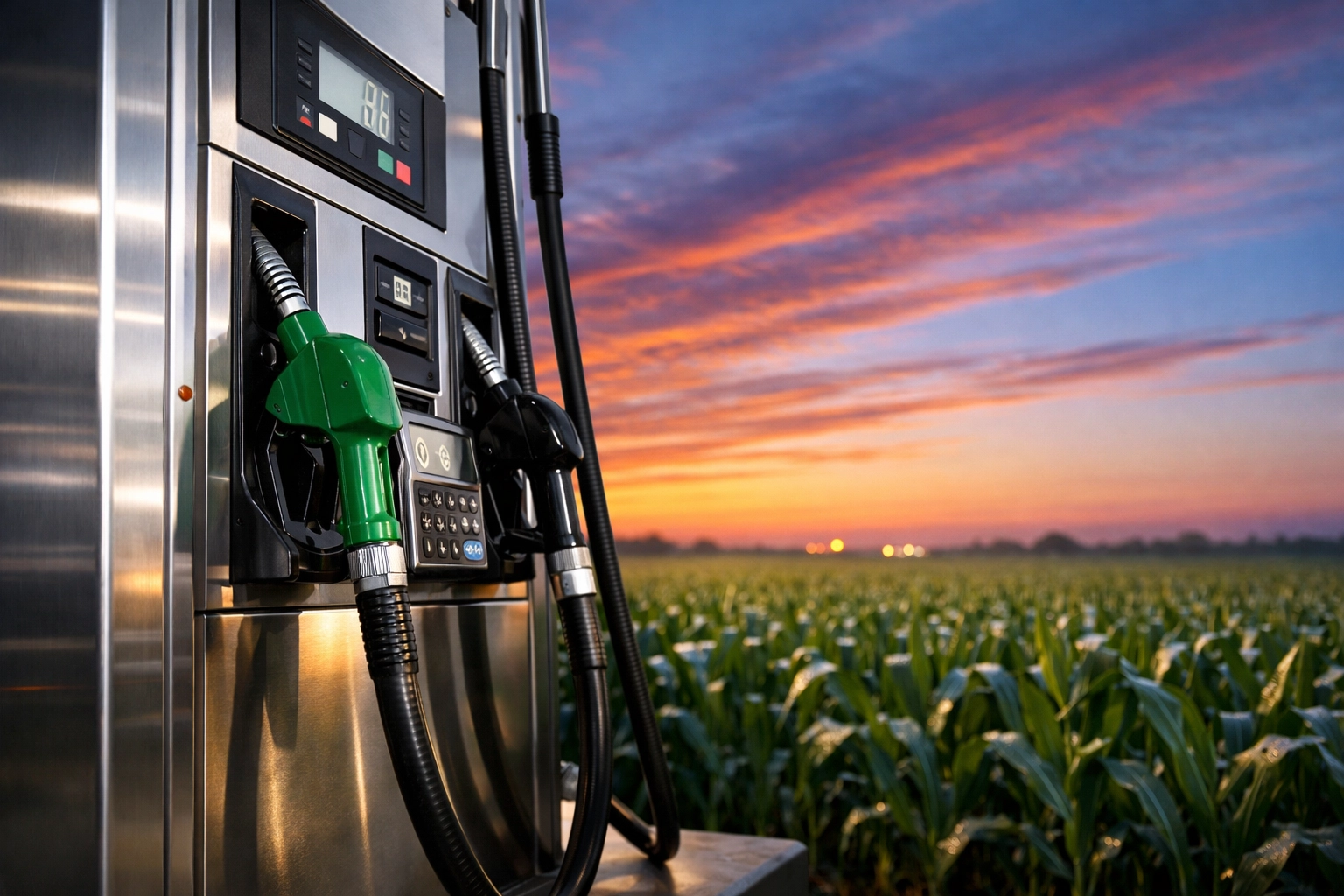
Nationwide E15 Fuel Expansion: Infrastructure and Technical Reality
One of the largest hurdles for E15 has always been the infrastructure. Unlike renewable diesel: which is a true drop-in replacement identical to petroleum diesel: ethanol has compatibility issues with older pipeline systems and certain storage tanks. This technical friction is why we only see E15 at roughly 3,000 of the 150,000+ gas stations in the United States.
However, the removal of the boutique fuel requirements helps ease some of this pressure. By standardizing the base fuel that ethanol is blended into, the EPA is making it easier for terminal operators to manage their inventory. This is similar to other federal efforts to shore up domestic energy infrastructure, such as the ones discussed in our report on 2026 methane regulatory deadlines at https://shalemag.com/2026-methane-regulatory-deadlines.
- Ethanol is highly corrosive to certain materials, requiring specialized dispensers and underground storage tanks (USTs).
- Most modern cars (2001 and newer) are approved for E15, but the infrastructure to deliver it lags behind.
- The EPA's move to simplify the market is a direct attempt to force more rapid adoption of this infrastructure by providing regulatory certainty.
The shift toward E15 also plays into the broader Renewable Identification Number (RIN) market. By increasing the volume of ethanol used, the demand for RINs: the credits used for compliance with the Renewable Fuel Standard: fluctuates significantly. This creates a volatile environment for merchant refiners who do not have their own blending facilities and must buy credits on the open market to meet federal mandates.
Domestic Energy Security and the Path to 2027
The push for E15 is not just about the summer of 2026. It is a precursor to the massive mandates set for the coming years. With total renewable volume obligations set at 26.81 billion RINs for 2026 and increasing to 27.02 billion for 2027, the EPA is locked into a strategy that requires maximum ethanol integration.
This strategy aims to reduce reliance on imported fossil fuels by substituting them with domestic, corn-based ethanol. While critics argue that the land-use changes and water intensive nature of corn production complicate the green narrative, the primary driver here is energy independence and economic support for the domestic fuel supply chain. By utilizing the 2026 emergency waiver, the administration is effectively running a massive pilot program to see if the grid and the refining sector can handle higher blend rates on a permanent basis.
If you are interested in how other sectors are handling these regulatory shifts, you might find our analysis on the NRC advanced reactor framework relevant to the broader conversation on energy policy at https://shalemag.com/nrc-advanced-reactor-framework.
Final Analysis of the Emergency Strategy
The EPA’s decision to allow nationwide E15 sales this summer is a calculated move to manage both the economy and the domestic energy supply. It provides a pressure valve for high gasoline prices while simultaneously satisfying the mandates of the Renewable Fuel Standard.
While the agricultural sector celebrates the guaranteed demand for corn, the energy sector must navigate a complex landscape of shifting regulations and infrastructure requirements. The removal of boutique fuels is perhaps the most pragmatic part of this waiver, as it recognizes that a fragmented fuel market is a vulnerable one. Whether this emergency strategy becomes a permanent fixture of the American energy landscape remains to be seen, but for the summer of 2026, the direction is clear: more ethanol, more domestic production, and a more uniform, albeit lower-energy-density, fuel supply.
As we move toward the May 1 implementation, the industry will be watching terminal operators and refiners closely to see how quickly the market can pivot to this new reality. For more insights into the business of energy, check out our latest discussions on energy economics at https://shalemag.com/category/business.