
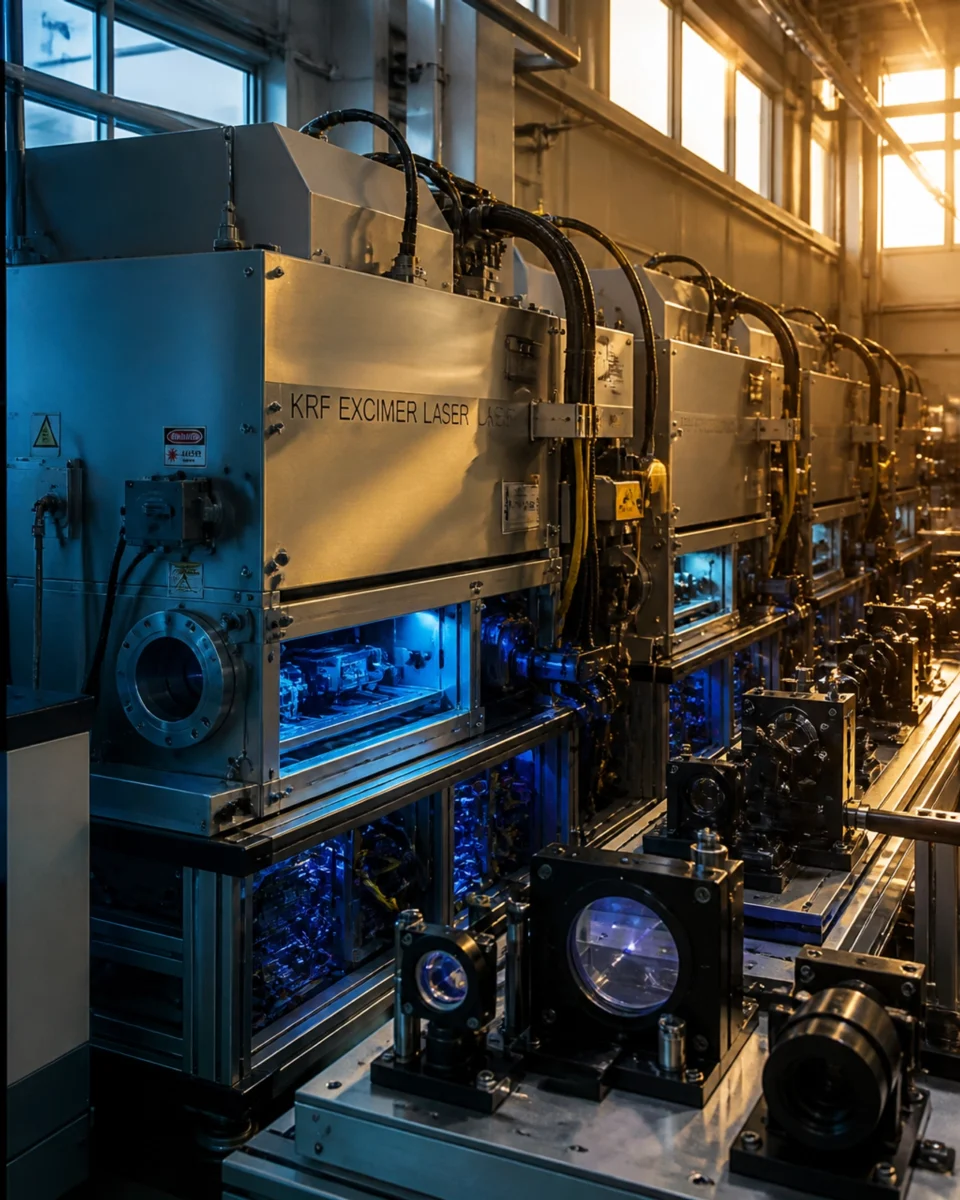
Commercial fusion energy viability represents the final frontier of the global energy transition, and recent developments from the U.S. Department of Energy (DOE) suggest that this frontier is moving closer to reality. In a series of landmark announcements during the summer of 2026, the DOE officially approved the preconceptual technical design and technology roadmap for Xcimer Energy’s Athena laser fusion power plant. This formal validation comes just weeks after Xcimer activated its Phoenix laser system in Denver, Colorado, which now holds the title of the largest privately owned laser in the world.
The approval of the Athena design marks a significant shift in the federal government’s approach to public-private partnerships in the nuclear sector. Following a rigorous 724-page submission by Xcimer, the DOE’s Milestone-Based Fusion Development Program has signaled that the company’s unconventional laser-driven inertial fusion architecture is not only scientifically sound but also economically promising. For industry analysts and decision-makers, this move underscores the accelerating pace of the Fusion Science and Technology Roadmap, which aims to transition from experimental physics to grid-scale power generation within the next decade.
Achieving commercial fusion energy viability with Athena
The DOE’s formal endorsement of the Athena project is more than a mere administrative hurdle; it is a technical validation of a specific fusion pathway that differs fundamentally from the National Ignition Facility (NIF) approach. While the NIF achieved the historic milestone of scientific breakeven using glass-based lasers, Xcimer is betting on krypton fluoride (KrF) excimer laser technology. The Athena design envisions a 400-MW power plant that utilizes these lasers to compress fusion fuel pellets, a process that the DOE has now vetted for its engineering feasibility and safety protocols.
According to the DOE’s review, the Athena roadmap provides a clear path for resolving the most complex challenges of inertial confinement fusion. These challenges include the development of a durable fusion chamber and the ability to sustain repetitive laser pulses at a frequency required for commercial operations. The approval specifically highlights the system-level engineering and environmental analysis provided by Xcimer, positioning the Athena plant as a leading candidate for the first generation of commercial fusion reactors.
This federal support is part of a broader strategy to ensure American leadership in the emerging fusion economy. As the global energy market looks toward decarbonization, the ability to deploy reliable, high-output fusion plants could fundamentally reorder the geopolitics of energy. For more on the strategic direction of the Department of Energy, our analysis of the current U.S. Secretary of Energy provides deeper context on the administration’s infrastructure priorities.
The Phoenix laser and the quest for commercial fusion energy viability
The technical foundation for the Athena plant is currently being tested at a 74,000-square-foot facility in Denver. The Phoenix laser, which began operations in June 2026, serves as an industrial-scale prototype designed to prove that KrF laser technology can be scaled efficiently. Unlike the massive, multi-billion-dollar government facilities of the past, Phoenix was built with private capital to demonstrate a low-cost, high-energy architecture.
The secret to Phoenix’s performance lies in its use of Stimulated Brillouin Scattering (SBS). This process allows the system to take microsecond-long pulses and compress them into nanosecond timescales suitable for triggering fusion. By achieving the highest-ever energy and largest spatial extent of SBS in an optical system, Xcimer has addressed one of the primary bottlenecks in laser fusion: cost per joule. KrF lasers are significantly more efficient than the solid-state glass lasers used in earlier research, offering a pathway toward a “wall-plug” efficiency that makes the energy math work for commercial utilities.
The Phoenix facility is the first integrated demonstration of excimer amplification and SBS pulse compression at this scale. Data from the current operational runs will feed directly into the design of Vulcan, a subsequent laser system intended to achieve energy gain, and eventually Athena itself. This tiered approach mirrors the development cycles seen in Small Modular Reactors, where iterative testing and licensing are essential for managing the risks of first-of-a-kind technology.

Scaling to 2035 and establishing commercial fusion energy viability
One of the most innovative aspects of the Athena design approved by the DOE is the liquid wall fusion chamber. Traditional fusion designs often struggle with the extreme heat and neutron radiation that degrade the solid materials of the reactor walls. Xcimer’s solution involves a flowing liquid wall (typically a molten salt) that protects the structural components of the chamber while simultaneously serving as the heat transfer medium to generate steam and electricity.
This engineering choice simplifies the maintenance of the reactor and extends its operational life, both of which are critical factors for achieving the necessary economic returns in a commercial setting. The liquid wall also plays a vital role in “breeding” tritium, a necessary component of the fusion fuel cycle, making the plant self-sufficient in its fuel requirements. The fuel itself: deuterium and tritium: is derived from water and lithium, ensuring an abundant and virtually inexhaustible supply.
The timeline for Athena is ambitious but increasingly tangible. With the DOE’s green light on the preconceptual design, Xcimer is targeting the mid-2030s for the deployment of its first 400-MW plant. The milestones ahead include:
- Wall-plug breakeven demonstration via the Vulcan system by 2031.
- Final site selection and construction licensing for Athena by 2032.
- Full-scale grid integration and commercial power delivery by 2035.
As this technology matures, it will likely be integrated alongside other advanced energy solutions. Organizations focused on the next generation of energy infrastructure are already looking at how fusion can provide the steady baseload power needed to balance increasingly complex grids.
The convergence of federal approval and successful private testing marks a turning point for the fusion industry. While fusion has often been described as being “thirty years away,” the current pace of development suggests that the mid-2030s is a realistic target for the first commercial electrons to hit the grid. The DOE’s commitment to the Athena roadmap confirms that the transition from laboratory science to industrial reality is well underway.

For professionals in the energy sector, the rise of laser fusion represents a massive opportunity for infrastructure investment and technological leadership. As Xcimer continues to push the boundaries of what is possible with the Phoenix system, the industry will be watching closely to see if this laser-driven approach can finally deliver on the promise of clean, safe, and abundant energy for the global economy.
Keep In Touch with Shale Magazine
As the new era of energy unfolds, you can bet we’ll be the boots on the ground to keep you informed. Subscribe to Shale Magazine for sharp insight into the arenas that matter most to your life. And don’t forget to listen to our riveting podcast, The Energy Mixx Radio Show, where our very own Kym Bolado interviews the most extraordinary thought leaders, business innovators, and industry experts of our time.
Subscribe to get more posts from Amanda Jenkins