
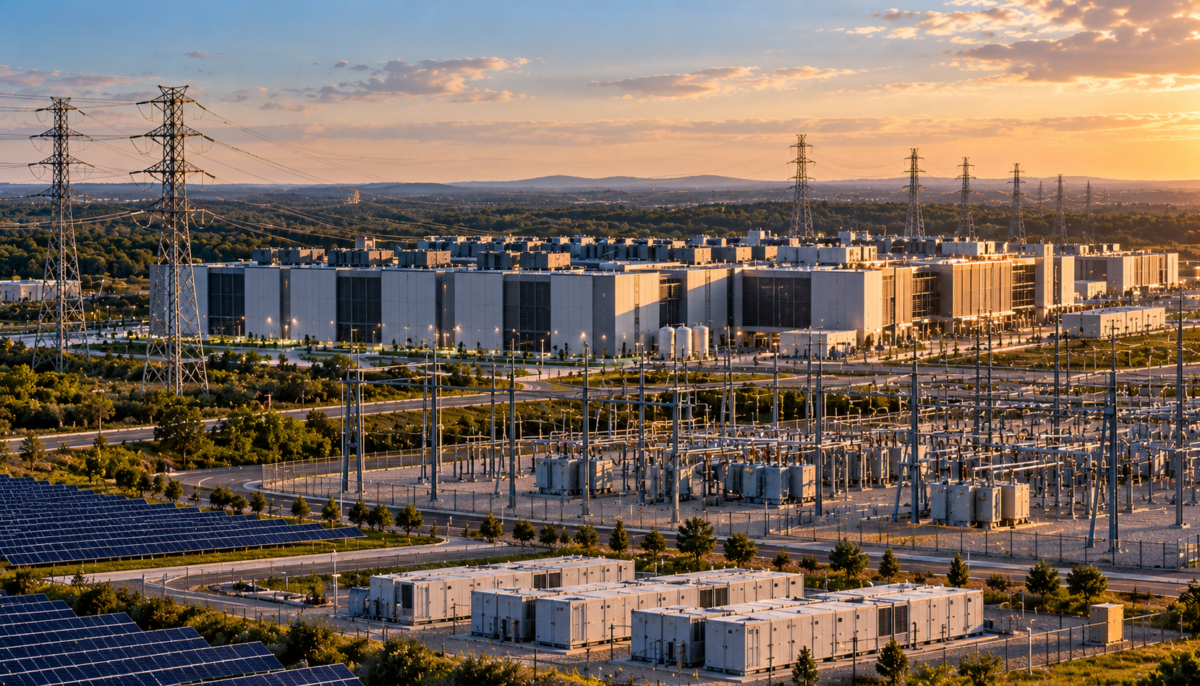
Virginia, the global data center hub, has unveiled a new energy plan aimed at balancing rapid data center growth with the state’s affordability, reliability, and clean-energy goals.
Virginia’s Data Center Market
According to the Data Center Map, there are 674 data centers across 25 markets in Virginia. Most are located in Northern Virginia, a region that is widely considered the data center capital of the world. The area has become popular among developers due to the presence of many cloud operators and networks, and it is a hub for much of the U.S. internet traffic.
Virginia has long been a digital infrastructure hub. In 1997, America Online (AOL) anchored its growth in Ashburn, northern Virginia, transforming the rural area. UUNET, one of the world’s first and largest commercial Internet service providers, also launched operations there, establishing a major internet exchange and traffic hub. Several other tech companies have since established operations across the region.
Virginia has also been home to numerous data centers for several decades. However, the artificial intelligence (AI) boom has accelerated demand for the facilities in Virginia and beyond. Several factors are attracting tech companies to Virginia, including its proximity to Washington, D.C., its vast areas of undeveloped land, and the passing of a sales and use tax exemption in 2008.
Virginia’s data center expansion has brought a wealth of economic benefits. In northern Virginia’s Loudoun County, data centers have generated over $100 million in annual tax revenue to support public investment. Data center revenue is expected to total around $1.3 billion in 2027, continuing to help reduce real estate tax rates for homeowners, according to county officials.
Balancing Climate Aims With Data Center Expansion
While data center expansion has supported Virginia’s economic growth, it has also brought challenges. Over the last year, consumer utility bills have risen significantly, owing to historic energy demand from data centers, infrastructure upgrades, and rising global fuel costs. This has led consumers to put pressure on lawmakers to rein in data center expansion until these issues are addressed.
Virginia’s Democratic Governor, Abigail Spanberger, has a new plan for the state’s data center development, aiming to leverage growth to achieve carbon neutrality. On October 1st, Spanberger unveiled a document that underscores the Virginia Clean Economy Act (VCEA), which requires utilities to produce energy that is wholly net-zero carbon by 2050 and participate in the Regional Greenhouse Gas Initiative, a multistate initiative to curb carbon emissions.
The document also outlines how the investor-owned utilities Dominion Energy and Appalachian Power can comply with those laws while supplying power to data centers and shifting the costs to operators. The state energy plan, which must be updated every four years, uses advanced planning software to model a range of energy-supply scenarios to ensure it is scientifically viable.
Spanberger’s chief energy officer Josephus Allmond explained, “There’s been a lot of speculation that our clean energy laws are too ambitious or out of reach. This modeling should put that notion to bed.”
Achieving Virginia’s ambitious climate aims while also expanding its data centers will rely on the accelerated development of several renewable energy projects. The state must expand its solar power capacity by an estimated 1.2-1.8 GW per year, supported by the rollout of battery storage to provide a more stable power supply. Greater flexibility will help ensure that consumers are not required to foot the bill for massive grid buildouts.
If successful, this blueprint could be adopted by other U.S. states to help continue working toward achieving climate ambitions and to support data center growth. However, it is worth noting that several challenges remain to developing “sustainable data centers”.
Opposition to Virginia’s Data Centers
A single data center uses up to 5 million gallons of water every day, as much water as that of around 16,000 average U.S. households, according to Environmental Protection Agency estimates, and that’s just for its direct cooling needs. Data center water use in Virginia increased by approximately 86% between 2019 and 2023, according to evidence from Northern Virginia utilities.
Several environmental organizations, including the Virginia chapter of the Sierra Club, have called for a moratorium on data center development due to their heavy reliance on the state’s power and resources, as well as concerns about long-term impacts.
Residents have also voiced concerns amid increasing energy demand and rising utility costs. Commercial electricity sales in Virginia increased by almost 30 million megawatt-hours between 2019 and 2025, a much faster rate of growth than in any other state except Texas, which is much larger, according to the U.S. Energy Information Administration. PJM Interconnection, the regional transmission organization, expects the Dominion zone, which covers Virginia, to experience the largest absolute increase in summer peak demand from 2026 through 2030, mainly due to growth in data center load.
The strain on resources has driven many residents across Virginia to call on lawmakers to pause new data center development to help limit growth in power demand and to fully assess the environmental impacts of such development.
So, while Virginia may have established a possible blueprint for data center development and state climate action, lawmakers will also need to consider other consumer issues such as rising energy bills and concerns over the broader environmental impact of data center expansion.
Keep In Touch with Shale Magazine
As the new era of energy unfolds, you can bet we’ll be the boots on the ground to keep you informed. Subscribe to Shale Magazine for sharp insight into the arenas that matter most to your life. And don’t forget to listen to our riveting podcast, The Energy Mixx Radio Show, where our very own Kym Bolado interviews the most extraordinary thought leaders, business innovators, and industry experts of our time.