The Government May Be Sitting on Critical Minerals at Its Own Cleanup Sites
ENMG Analysis
The U.S. Department of Energy is asking private industry whether materials remaining at five federal environmental cleanup sites could be transferred, processed, or reused in domestic supply chains. The initiative could create a pathway for recovering value from legacy nuclear and industrial infrastructure, but it is not a mining program, a subsidy, or a guaranteed commercial opportunity.
DOE said its Office of Environmental Management is seeking industry input on surplus critical minerals and other materials at sites in Paducah, Kentucky; Portsmouth, Ohio; Oak Ridge, Tennessee; the Nevada National Security Site; and Moab, Utah.
The materials inventory includes aluminum, cesium-137, chloride, copper, fluorine, lead, lithium hydride, platinum, selenium, silver, tungsten, and vanadium. Interested parties must submit responses by November 2, 2026, using the email address and instructions listed in DOE’s current SAM.gov notice. Responses must be submitted in Microsoft Word format, limited to five pages and follow the specified formatting requirements.
The department has emphasized that this is an early-stage information-gathering exercise. DOE is not offering funding, awarding a contract, or transferring title to the materials through the request. Any industry partner would be expected to provide its own equipment and expertise for material relocation, extraction or reprocessing. Depending on the site and material, the work could also require characterization, decontamination, packaging, transportation and regulatory compliance.
That cost structure will determine whether the materials move beyond an inventory document.
A nuclear legacy being evaluated as an industrial resource
The five sites reflect different chapters of the nation’s Cold War and early commercial nuclear history.
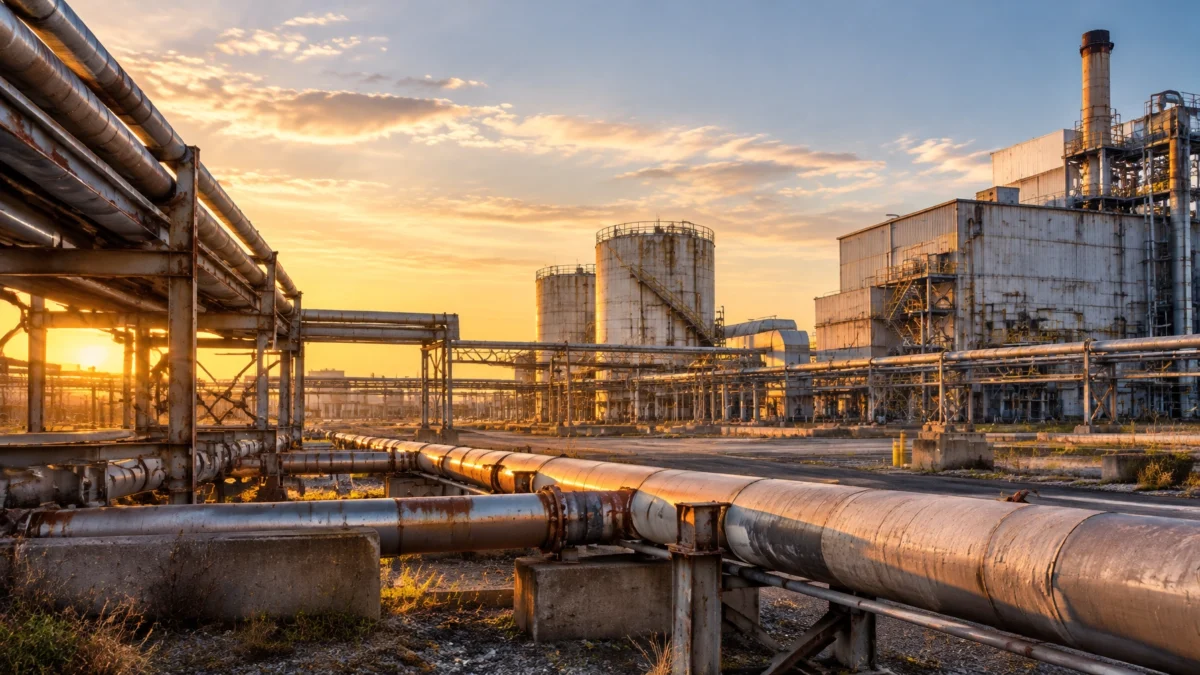
Paducah and Portsmouth were gaseous diffusion uranium enrichment plants. Their operations depended on extensive networks of process equipment, piping, electrical systems, structural steel, heat exchangers, shielding materials, and other industrial components. Oak Ridge hosted uranium enrichment and government research operations and remains one of the country’s most important nuclear science and technology centers.
The Nevada National Security Site was used for nuclear weapons testing and associated national security activities. Moab, Utah, is associated with uranium mill tailings remediation, where contaminated materials from uranium processing have required long-term management and disposal.
These facilities do not resemble conventional mines. Much of the potentially useful material is likely to be found in legacy infrastructure, process equipment, scrap metal, piping, structural components, and residues rather than in naturally occurring ore bodies. Copper, aluminum, lead, tungsten, vanadium, platinum, silver, and selenium in this context are largely associated with engineered systems or stored materials.
That distinction matters. Recovering metal from a dismantled industrial component is fundamentally different from mining and refining a mineral deposit. The material may already be concentrated and accessible, but it may also be contaminated, difficult to characterize, irregularly distributed, or expensive to remove safely.

The inventory is broader than conventional critical minerals
The list released by DOE includes both metals and other materials. That makes it important to avoid treating every item as a conventional critical-mineral resource.
Cesium-137, for example, is a radioactive isotope, not a conventionally recoverable industrial metal in the same way as copper or tungsten. Its inclusion signals that some materials in the inventory may carry radiological considerations and would require different handling, packaging, transportation, and regulatory controls.
The same caution applies to chloride, fluorine, and lithium hydride. Their potential value would depend on their chemical form, concentration, condition, contamination status, and suitability for a specific industrial application. A material appearing on an inventory list does not mean it is immediately usable as a commercial feedstock.
For industry, the first questions will likely involve characterization:
- What is the physical form of each material?
- How much is available at each location?
- Is the material contaminated, and if so, with what?
- Can it be decontaminated economically?
- What permits would be required for removal and transport?
- Can the recovered material meet commercial specifications?
- Who would accept the liability associated with processing or reuse?
Until those questions are answered, the inventory represents potential rather than supply.
Why above-ground recovery matters to manufacturers
The strategic argument for recovery is straightforward. New mines for copper, tungsten, vanadium and other industrial materials can require long development cycles, extensive permitting, substantial capital investment, and new transportation infrastructure. In some jurisdictions, a mine can take decades to move from discovery through permitting, construction, production, and expansion.
Recovering material that is already above ground and concentrated in engineered equipment could theoretically shorten the pathway to domestic supply. It may also reduce the need to discard usable material as waste, provided the material can be safely separated from the cleanup process.
That potential has implications beyond mining. Copper is essential to electrical equipment, motors, transformers, transmission systems, industrial machinery, and many forms of power infrastructure. Tungsten is used in hard materials and specialized industrial applications. Vanadium can support alloy production and other industrial uses. Aluminum, lead, silver, platinum, and selenium also serve a range of manufacturing, chemical, electronic, and energy-related markets.
However, potential industrial relevance does not guarantee commercial viability. Recovered material must be consistent, traceable, legally transferable, and competitive with conventional supply. It must also meet the technical specifications required by manufacturers. If the cost of removing, sorting, treating, packaging, and transporting the material exceeds its market value, recovery may not make economic sense.
DOE is testing the market without taking on the commercial risk
The expression-of-interest structure places much of the early financial risk on prospective industry partners. Companies would need to bring their own technical expertise and equipment and pay the costs of extraction, processing, and transportation.
That arrangement may attract companies with specialized capabilities in metal recovery, industrial recycling, radiological characterization, waste treatment, or materials processing. It could also discourage smaller firms that have promising technologies but lack the balance sheet or insurance capacity required to operate at a federal cleanup site.
The distinction between an expression of interest and a contract is central. DOE is asking what industry could do, what materials it might want, and under what commercial conditions. The agency is not promising to purchase recovered products, reimburse development costs, provide a subsidy, or grant a company exclusive rights to the inventories.
For DOE, the approach offers a way to test market demand before committing to a formal procurement or program structure. For industry, it is an opportunity to shape future options, but not a guarantee of revenue.

Recovery could help cleanup, but it could also complicate it
The Office of Environmental Management’s primary mission is environmental remediation and risk reduction. Materials recovery is potentially compatible with that mission, but it is not the mission itself.
Adding recovery activities to a cleanup site could affect work sequencing, schedules, cost baselines, worker-protection plans, waste classifications, and regulatory reviews. Removing equipment for reuse may require additional surveys and documentation. A component that appears valuable could become a regulated waste stream if contamination cannot be removed or if no qualified end user exists.
The tradeoff is therefore practical rather than ideological. Recovery could reduce disposal volumes, create industrial value, and support domestic supply chains. At the same time, an aggressive focus on recovery could delay remediation if commercial processing becomes more complicated than planned.
Communities near the five sites may see potential benefits from new industrial activity, specialized jobs, and expanded use of local contractors. They may also face additional truck traffic, handling operations, and public concerns about radiological safety. Those impacts would need to be addressed through site-specific environmental, safety, and regulatory processes.
The economic question is not simply whether a material has value. It is whether that value remains after all obligations associated with a federal nuclear cleanup site have been met.
Industry Day and the next decision points
DOE held a virtual industry day on September 30 to explain the expression of interest, answer questions, and gather information about market demand and industrial capabilities.
The next immediate milestone is the November 2 response deadline. Companies considering a submission will need to identify the materials and sites of interest, describe their technical capabilities, explain potential end uses, and address how they would manage characterization, extraction, processing, transportation, and regulatory compliance.
After the response period, readers should watch for several developments:
- Whether DOE identifies enough commercial interest to move toward formal agreements.
- Whether companies view the inventories as economically recoverable after cleanup and transportation costs.
- How DOE separates conventional metals from radioactive isotopes and chemically distinct materials.
- Whether recovery activities can be integrated without delaying remediation.
- Whether the effort produces measurable domestic supply or remains an exploratory reuse initiative.
The proposal’s significance lies less in the size of the initial inventory than in the policy question it raises. Federal cleanup sites contain materials created by earlier energy and national security programs. DOE is now asking whether some of those materials can be managed as industrial resources without compromising safety, cleanup obligations, or public trust.
For now, the answer remains uncertain. The November submissions should provide the first indication of whether the government’s legacy materials can become a practical source of domestic supply, or whether the costs of recovery will outweigh the value of what remains.
Keep In Touch with Shale Magazine
As the new era of energy unfolds, you can bet we’ll be the boots on the ground to keep you informed. Subscribe to Shale Magazine for sharp insight into the arenas that matter most to your life. And don’t forget to listen to our riveting podcast, The Energy Mixx Radio Show, where our very own Kym Bolado interviews the most extraordinary thought leaders, business innovators, and industry experts of our time.