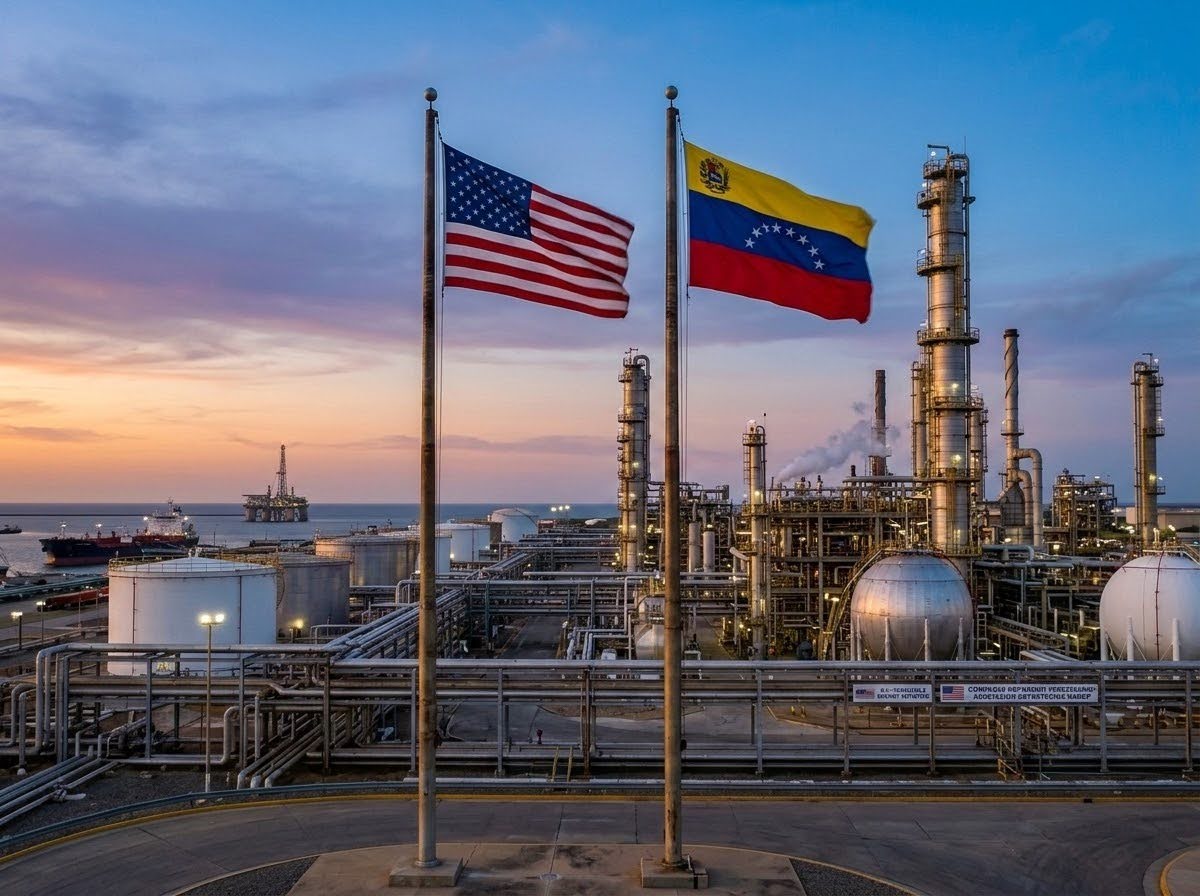
The United States has deepened ties with Venezuela over the last year, following the removal of President Nicolás Maduro from power in January 2026 through a unilateral U.S. intervention. The United States has also taken on a significant role in Venezuela’s oil industry, including overseeing revenues from oil exports and securing new interests in the country’s petroleum sector. These arrangements have substantially expanded energy ties between the two countries.
A Timeline of the Increasing U.S. Involvement in Venezuela’s Oil Business
U.S. involvement in Venezuela’s oil sector changed drastically following Maduro’s removal from power. The Trump administration shifted from imposing heavy sanctions on Venezuela’s energy sector to overseeing substantial oil revenues and securing financial and governance rights through agreements intended to expand U.S. access to Venezuelan crude.
Just two weeks after the January 3rd U.S. military intervention in Venezuela, the Trump administration announced that it had completed its first sale of Venezuelan oil, valued at $500 million, and said further sales were expected in the following weeks. By the end of January, the U.S. government had lifted some sanctions on Venezuelan energy to make it easier for the South American country to sell its crude.
In April, the White House announced that the U.S. would fully lift sanctions on Venezuelan oil, allowing Venezuela’s acting president, Delcy Rodríguez, to work more freely with U.S. companies and investors. The Trump administration has led a phased plan alongside Rodríguez to drive Venezuela’s recovery, including promoting Venezuelan oil to international investors.
Then, in August, the Trump administration announced that it had brokered a deal with Venezuela that secured the U.S. “majority control of more than 65 billion barrels of proven oil reserves in Venezuela.” This expanded its existing U.S. territorial proven reserves of roughly 46 billion barrels, the White House stated. The move was expected to give the U.S. government “powerful governance rights, economic ownership, and guaranteed low-cost off-take from a new private Venezuelan oil champion –North American Blue Energy Partners (NABEP) – which will be the second-largest private oil company by reserves in the world.”
According to the White House, Venezuela’s interim authorities granted NABEP 100-year concessions covering 17 oil fields with approximately 65 billion barrels of proven reserves. Under the agreement, NABEP would operate the fields, while the U.S. government would hold a 35% equity stake in its parent company and exercise significant governance rights.
Meanwhile, NABEP granted the U.S. Department of State the right to purchase, at production cost, a guaranteed 20% of the off-take from all current and future fields NABEP will operate – ensuring a stable supply of low-cost oil that can facilitate refilling the Strategic Petroleum Reserve.
U.S. Takes Control of Venezuelan Oil Revenue Management
A KPMG report prepared for the U.S. government revealed that the Trump administration managed more than $12 billion in revenue from Venezuela’s natural resource exports during the first nine months of 2026. The report, dated October 29 and subsequently released by the State Department, showed that nearly all the funds were returned to Venezuela, much of it through foreign currency transactions intended to support the country’s currency. However, it is not yet clear whether the money remained in Venezuela or who the final recipients were, according to a New York Times article.
Following news of the report and ahead of the November midterm elections, Democratic lawmakers pledged to establish greater transparency and accountability around Washington’s cooperation with Venezuela. The Democrats’ midterm victory is expected to increase pressure on the Trump administration to explain how it is overseeing Venezuelan oil revenues and what safeguards are in place to prevent corruption or misuse of the funds.
The KPMG report assesses activity in the “Venezuela Custody Account,” which the U.S. Treasury established to manage Venezuelan export revenues following Maduro’s removal from power. The account was originally set up in Qatar but was moved to Citibank in New York in late January.
Will U.S. Oil Majors Return to Venezuela?
As part of its aim to secure more Venezuelan oil reserves, President Trump has been encouraging U.S. oil majors to establish operations or return to the country.
In September, Chevron announced plans to expand its position in Venezuela after updating the terms of its joint ventures, thereby supporting future investment, project development, and production growth in the country. Chevron stated, “The enhancements underpin joint venture plans to invest over $7 billion over the next five years, more than doubling production to approximately 600,000 barrels a day compared to 2026.”
Meanwhile, Exxon Mobil, the largest U.S. oil company, announced in November that it had reached a preliminary agreement with Venezuela that could eventually support its return. The deal allows Exxon to take the time it needs to assess oil production opportunities and is not binding. However, it does highlight Exxon’s interest in developing operations in Venezuela, which was thought nearly impossible even a few months ago.
In January, ExxonMobil Chairman and CEO Darren Woods said that, “If we look at the legal and commercial constructs—frameworks—in place today in Venezuela, today it’s uninvestable.” Therefore, the recent agreement suggests that the business landscape in Venezuela has changed substantially in recent months. Nevertheless, Exxon said in a statement about the deal that “any future investment would require stable policies, clear regulations, strong investment protections and competitive returns.”
Venezuela’s oil recovery has become closely tied to U.S. financial and political involvement, creating new opportunities for U.S. energy companies. However, questions over revenue transparency, investment protections, and long-term stability could determine whether the country’s oil revival is sustainable.