Data centers are growing in size as technology companies develop major projects to meet rising computing demand from the artificial intelligence (AI) boom. Hyperscale facilities require vast amounts of electricity, prompting tech firms to invest in new energy projects and sign power purchase agreements with utilities.
This raises questions about whether smaller, modular facilities could provide sufficient computing power while placing less pressure on electricity grids.
Can Data Centers Adapt to Electricity Supply?
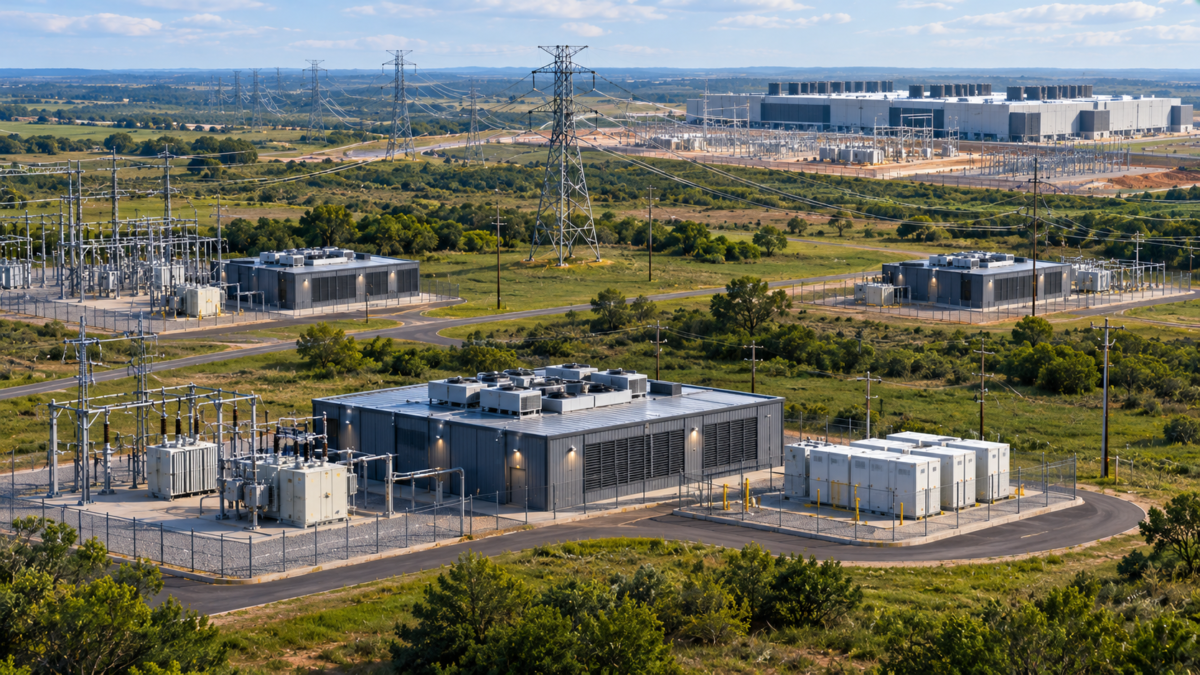
Many tech majors, such as Google, Microsoft, and Amazon, are developing hyperscale data centers that span hundreds of acres and connect to transmission lines and substations. To power these facilities, several companies have reached power purchase agreements with local utilities, with some even investing in new gas plants or renewable energy projects to provide more power.
The largest data center operators, or ‘hyperscalers,’ are expected to spend more than $700 billion in capital expenditures globally in 2026, according to the International Energy Agency. Policymakers worry that this development is straining local grids and stretching the supply chains for key electrical equipment, driving the need to develop new regulations.
Utilities are concerned that these types of data centers may have limited flexibility, placing sustained pressure on the grid. However, this concern could be addressed by creating more flexible mechanisms to reduce the burden on utilities.
Incorporating battery storage or shifting computing workloads, such as delaying AI training during periods of peak electricity demand or transferring some tasks to another facility with more available power, could help make facilities more flexible. However, this depends on the existence of sufficient computing capacity elsewhere.
Making data center development more grid-friendly will require greater flexibility and regulatory changes. One approach is non-firm grid connections, which allow facilities to access electricity subject to restrictions during periods of grid stress. The IEA estimates these arrangements could unlock 750-900 GW of grid capacity globally, helping accommodate future data center growth.
There are also other types of data centers to consider. While hyperscale appears to be the most popular in the recent wave of development, smaller, modular facilities have been around for years.
Jigar Shah, a partner at the consulting firm Multiplier, suggests that constructing smaller data centers where the grid already has unused capacity could reduce the need for new power infrastructure and lower costs for developers and utilities. These facilities can be developed in a modular design, using existing infrastructure for power across several locations.
Who Pays for Data Center Infrastructure?
A major concern surrounding hyperscale data centers is who pays for infrastructure if a project is canceled, scaled back, or becomes economically unviable. This supports the argument for developing smaller, modular data centers that can use existing grid capacity. This could reduce the risk of costly energy infrastructure becoming underused if anticipated AI demand fails to materialize.
However, smaller data centers may not always provide the same economies of scale as hyperscale facilities. Large campuses can share cooling, electrical, and backup infrastructure across extensive computing operations, potentially reducing costs per unit of computing capacity.
Hyperscale operators may have greater financial resources to fund new power generation and grid upgrades, thereby providing utilities with substantial new customers to support infrastructure investment. Long-term electricity agreements and commitments to fund new infrastructure could also help mitigate the risk of shifting development costs to consumers.
For example, Google has agreed to cover the costs of new electric service and grid infrastructure associated with its planned data center in Pine Island, Minnesota. The project also involves plans for additional wind, solar, and battery storage capacity.
The benefits of smaller, distributed data centers depend on local grid conditions, not simply facility size. Sites with spare generation, transmission, and distribution capacity may require fewer costly upgrades, while even smaller facilities can strain networks that lack sufficient capacity. Ultimately, location and electricity demand are just as important as scale.
Cooling, Water Consumption, and Environmental Impacts
Data center development also raises considerations beyond electricity use, including water consumption and broader environmental impacts. While smaller data centers could potentially reduce the environmental footprint of individual developments, the environmental burden of a large- or small-scale data center depends heavily on how sustainably it is developed.
For example, smaller facilities could offer more opportunities for location-specific cooling designs, but water and energy efficiency depend primarily on cooling technology and local environmental conditions rather than facility size alone.
Meanwhile, to make hyperscale facilities more sustainable, operators could consider closed-loop liquid cooling and waste-heat recovery. As data centers generate substantial heat, some facilities may be able to develop a district heating mechanism or use heat for nearby industrial applications.
Ultimately, smaller data centers could help ease pressure on electricity grids, particularly when built in locations with spare capacity. However, hyperscale facilities can also support new energy investment and benefit from economies of scale. Making data center development more grid-friendly will depend less on size than on location, efficiency, flexibility, and infrastructure costs.
Keep In Touch with Shale Magazine
As the new era of energy unfolds, you can bet we’ll be the boots on the ground to keep you informed. Subscribe to Shale Magazine for sharp insight into the arenas that matter most to your life. And don’t forget to listen to our riveting podcast, The Energy Mixx Radio Show, where our very own Kym Bolado interviews the most extraordinary thought leaders, business innovators, and industry experts of our time.