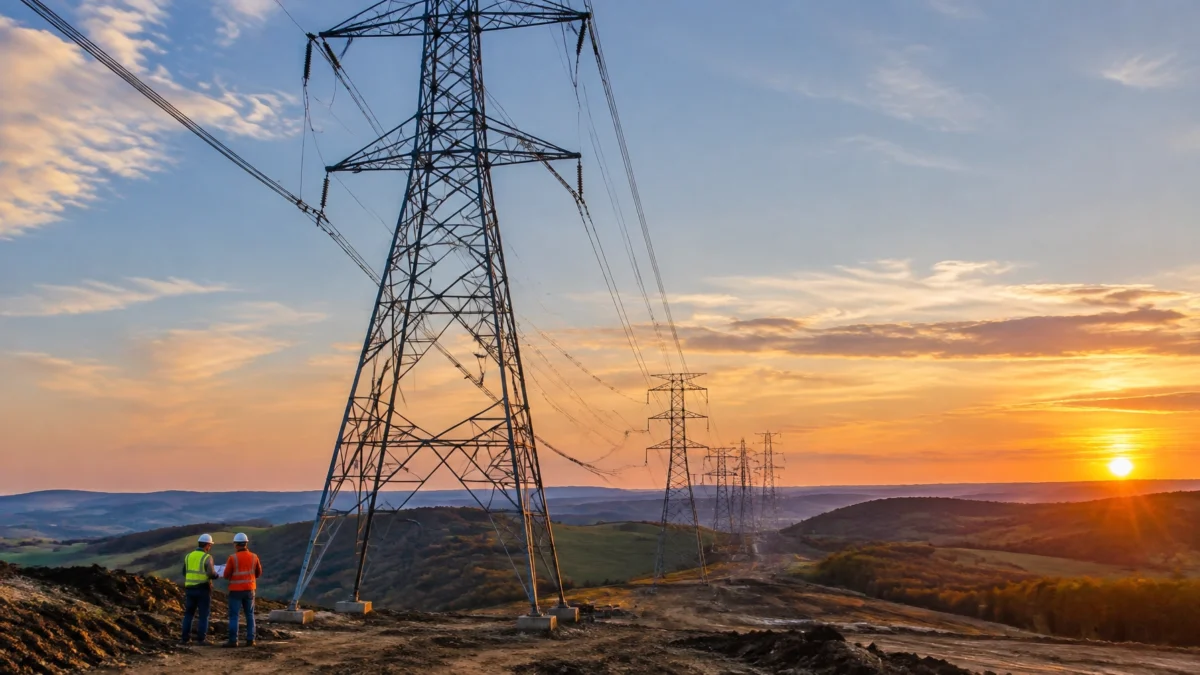
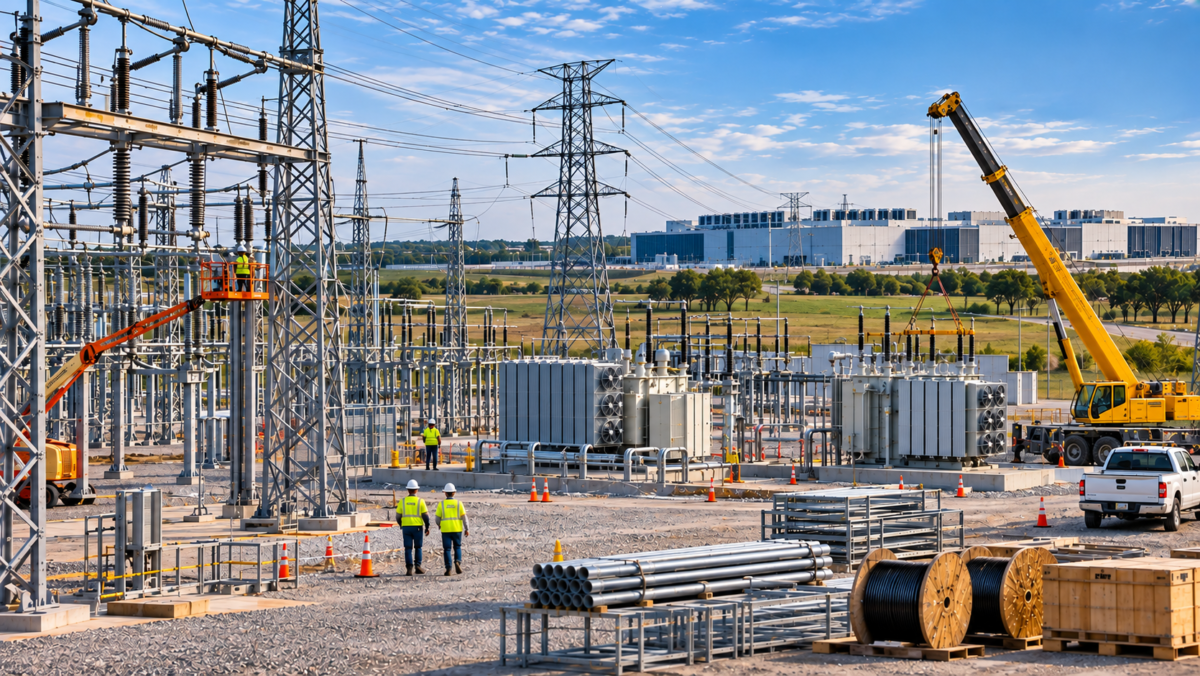
The United States government has long identified the need to modernize the country’s aging electricity grid. However, progress has been complicated by the fragmented regulatory and operational structure of the U.S. electricity system.
As more renewable energy projects have come online across the country, the need to upgrade and extend the system has become increasingly evident. In addition, AI expansion is accelerating data center development and increasing electricity demand, thereby encouraging investment in grid modernization.
Federal Investment in U.S. Grid
In October, the U.S. Department of Energy (DOE) announced approximately $967 million in additional funding through its Grid Resilience State and Tribal Formula Grant program. The funding will support state, territorial, and tribal projects aimed at strengthening electricity infrastructure, reducing the risk of power disruptions, and improving grid resilience.
The U.S. Secretary of Energy Chris Wright stated, “Lowering costs and unleashing prosperity are top priorities for President Trump… These commonsense investments provide resources directly to states, territories, and tribes to lower electricity costs and strengthen grid reliability for American businesses and families.”
The new funding announcement comes amid broader investment in grid modernization and upgrades. According to an analysis by the financial institution JPMorgan, the U.S. is expected to attract about $1 trillion in investment in grid upgrades over the coming decade, with 37% going to transmission and 63% to distribution.
AI Boom Drives Need for Grid Modernization
From 2026 to 2030, global power demand is expected to grow at a 3.6% compound annual growth rate, a pace 50% higher than the previous decade. Several factors are contributing to this increase in power demand, including decarbonization goals and the rollout of electric vehicles and heat pumps, according to JPMorgan.
In addition, according to the International Energy Agency, electricity consumption by data centers is expected to increase by approximately 465 terawatt-hours between 2025 and 2030, reaching around 950 terawatt-hours annually.
The accelerated deployment of data centers across the United States is driving the need for rapid grid modernization and expansion as massive new projects come online. The Zurich-based grid equipment manufacturer ABB reported a 40% increase in orders in the third quarter of 2026, compared with the same period last year, to a record $12 billion globally, citing U.S. data centers and utilities as drivers of growth.
ABB announced in October that orders from the United States had increased by 82% year-over-year. “Utilities continue to invest in refurbishment and build-out of the electrical grid to secure power availability and efficiency,” the company said in a press release.
Potential Obstacles to Grid Modernization
While the Trump administration has stated aims to strengthen, upgrade, and expand the U.S. grid, earlier this year, President Trump established new restrictions on certain foreign-produced bulk-power equipment, which could slow the pace of grid modernization. In August, Trump declared a National Emergency to Secure the United States’ Bulk Power System.
Trump explained, “The minimal restrictions on acquisition or operation in the United States of foreign-produced bulk-power system electric equipment augment the ability of some foreign entities to create and exploit vulnerabilities in such equipment; for instance, such equipment might have digital backdoors built into their systems that allow a foreign country to access that equipment remotely.”
Trump said that relying on foreign imports of power equipment also “creates a supply chain vulnerability that could eliminate the supply of these products in the United States.” For this reason, the order prohibits the ‘acquisition, importation, transfer, or installation of any foreign-produced bulk-power system electric equipment’ when the Secretary of Energy determines that the transaction presents an unacceptable national security or infrastructure risk.
Affected equipment could include grid-connected inverters, transformers, and battery energy storage systems (BESS) that interface with transmission lines rated at 69kV or higher.
The move has attracted criticism across the energy sector, with opponents voicing concerns about potential construction bottlenecks, higher consumer costs, and duplicative regulation. One of the main critiques is that no pre-defined criteria for how the DOE will manage pre-qualified vendor lists, licensing, or restriction rules during its 120-day implementation window have been provided.
Several critics and analysts have noted that around 80% of large power transformers are manufactured outside the United States, and that forcing a rapid transition away from established foreign suppliers could exacerbate existing infrastructure shortages. Wait times for large power transformers, for example, are already up to 210 weeks.
In addition, imposing rapid restrictions on the supply chains of inverters, switchgear, and battery management systems threatens to inflate capital costs for grid expansion driven by surging AI and data center demand, particularly as the U.S. faces manufacturing capacity constraints and skilled-labor shortages.
Energy sector stakeholders have also pointed out that the U.S. power grid already operates under stringent reliability and cybersecurity standards enforced by the North American Electric Reliability Corporation, and Trump’s executive order could duplicate existing regulatory requirements without immediately resolving physical manufacturing deficits.
While there is clear government support for the modernization and expansion of the U.S. grid, as demonstrated by the high levels of funding committed to power transmission and distribution projects, President Trump’s recent move to restrict certain imports of foreign power equipment could slow the pace of development.
Keep In Touch with Shale Magazine
As the new era of energy unfolds, you can bet we’ll be the boots on the ground to keep you informed. Subscribe to Shale Magazine for sharp insight into the arenas that matter most to your life. And don’t forget to listen to our riveting podcast, The Energy Mixx Radio Show, where our very own Kym Bolado interviews the most extraordinary thought leaders, business innovators, and industry experts of our time.