Tyler Refinery Expansion Tests Defense Production Act
ENMG Analysis
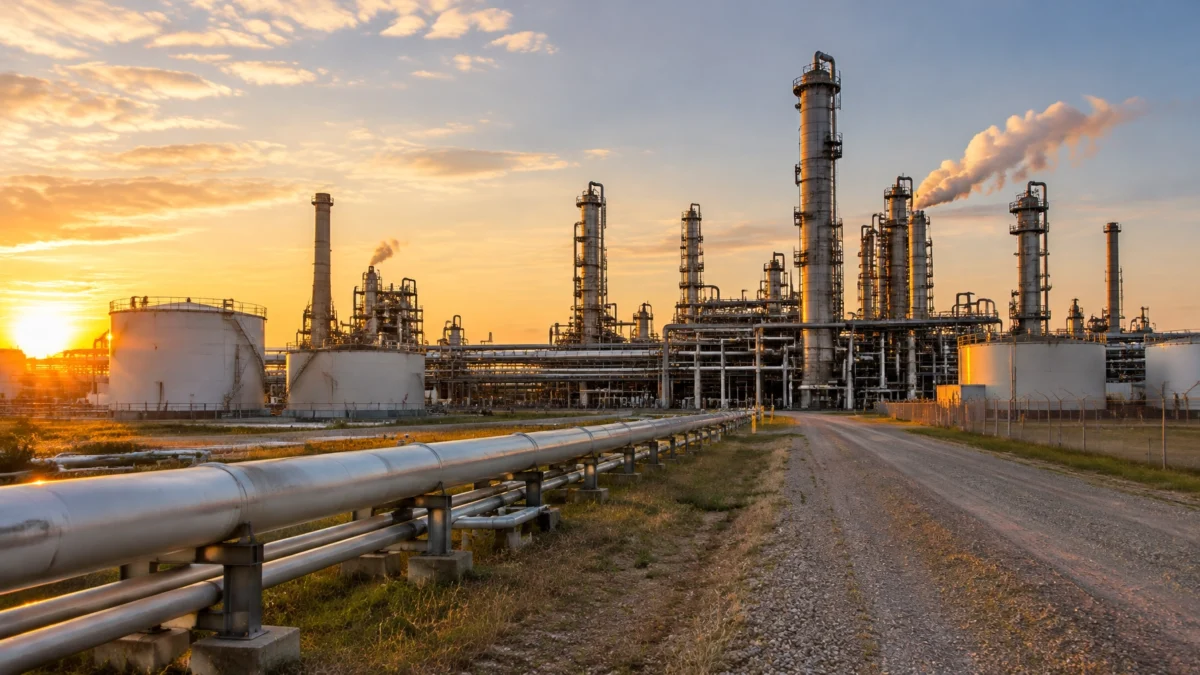
Vice President JD Vance announced on October 13 that the Trump administration plans to use the Defense Production Act to support an expansion of Delek US Holdings’ refinery in Tyler, Texas. The announcement puts a federal industrial-policy tool behind a stated goal of increasing domestic fuel production, but leaves the project’s scale, cost, mechanism and schedule undisclosed.
Speaking at a midterm campaign rally at Tyler Pounds Regional Airport, Vance said: “Today, I am pleased to announce that the Trump administration, working with the refinery at Delek, has used the Defense Production Act and we are gonna expand the refinery right here in Tyler, Texas.” The Tyler Morning Telegraph reported that Vance described an ambition to produce “millions of gallons of commercial-grade and military-spec fuel” in addition to existing output, while creating hundreds of jobs in Smith County.
Those are administration claims about the partnership’s intended benefits, not a published project specification. Neither Delek nor federal officials have publicly quantified the added capacity, disclosed a budget or laid out a timeline. Nor have they identified which DPA authority or financial arrangement will support the work. That missing information is central to understanding what the announcement means in practice.
What the DPA can, and cannot, tell us
The DPA gives the president tools to influence domestic industry in the interest of national defense. Its reach includes preparedness and response to emergencies, not only military procurement. In April, President Trump issued a determination under Section 303 that classified domestic petroleum production, refining and logistics capacity as essential to national defense. The memorandum directed the energy secretary to implement it with purchases, commitments and financial instruments as needed. The White House determination provides a policy and legal framework; it does not, by itself, show that funds have been committed to Delek or that a specific agreement is signed.
The DPA is not one single funding program. Under Title III, Section 303 can support industrial capacity through direct purchases, purchase commitments and other forms of financial support. Direct loans and loan guarantees are separate authorities under Sections 302 and 301, respectively, and are subject to additional requirements. Priority ratings, which can give certain orders precedence for materials and production, are a different DPA tool, principally associated with Title I. The Congressional Research Service’s overview of the act explains these distinctions.
The administration has not said whether Delek’s project will involve a purchase commitment, loan, capital investment, priority-rated equipment or another approach. It also has not detailed any federal fuel purchase contract. The Tyler announcement therefore signals intent to use federal authority, but does not establish the precise form or value of government support.

How Much Could the Tyler Refinery Expansion Add?
Reuters reported that the Tyler refinery processes about 74,000 barrels of crude oil per day. That figure describes the facility’s throughput capacity, not a guaranteed daily output of finished fuel. Actual operation varies with maintenance, utilization, the crude slate being processed and the mix of products made. Delek operates four inland refineries: in Tyler and Big Spring, Texas; El Dorado, Arkansas; and Krotz Springs, Louisiana, with combined nameplate crude throughput capacity of 302,000 barrels per day, according to the company’s own materials.
For national context, the Energy Information Administration recorded approximately 18.2 million barrels per calendar day of operable U.S. atmospheric crude-distillation capacity on January 1, 2026, down more than 250,000 barrels per day from the previous year. That measure is not a 2026 project tally, but it illustrates the scale difference: the existing Tyler refinery is a small portion of the national system, and the announced addition is not yet quantified. EIA has also described U.S. capacity as largely unchanged in recent years. A new greenfield refinery is a much larger undertaking than improvements at an existing site; the latter can potentially reuse infrastructure, though expansions still involve capital, permitting and execution risks. EIA’s current refinery-capacity report and its overview of U.S. refinery construction provide broader context.
More refining capacity can help ease a regional shortage of particular products, especially if the added units can produce the grades and volumes the market needs. But an expansion at one refinery cannot, by itself, determine what consumers pay nationally. Pump prices and other fuel costs reflect crude oil prices, refining margins, product inventories, transportation and storage constraints, seasonal demand, and market conditions. Vance presented lower travel and driving costs as a goal of the partnership; the size of any price effect cannot be assessed until the project’s added output and operating details are known.
Military-spec fuel requires more than an announcement
“Military-spec” generally refers to fuel that meets government procurement specifications for use by the armed forces, for example, certain jet fuel or diesel grades. Producing a compliant product is not the same as establishing a federal supply contract. The announcement did not identify which fuel specifications would be produced, the volume assigned to military use, quality-verification arrangements or whether the government would purchase the fuel.
If military procurement is part of the plan, those details will help explain how the project supports defense readiness and whether it creates a dependable supply channel beyond the refinery’s existing commercial markets. Without them, the national-security rationale is clear as an administration framing, but the operational connection remains to be spelled out.

Local jobs, public costs and the wider energy system
Delek and the Tyler region could benefit if the project proceeds: construction may create temporary work, while new operating roles could support longer-term employment. Vance promised “hundreds of good-paying new jobs,” but the company has not published a job count or hiring schedule. The company has also previously expressed support for federal policy toward small refineries. After the Environmental Protection Agency’s August 31 decisions on Small Refinery Exemption petitions for the 2025 compliance year, Delek CEO Avigal Soreq said the company remained committed to investing in its assets and energy infrastructure.
The costs and tradeoffs are also not yet measurable. If public financial support is used, taxpayers and policymakers will need to know its terms, risks and expected public benefit. Federal emergency intervention in energy markets has precedent, including DOE’s Section 202(c) emergency grid orders, which likewise paired urgent action with debate over how much federal intervention should shape market outcomes. Nearby residents and regulators will want details on construction, emissions and permitting. Applicable state and federal approvals, including air permits where required, remain part of the path from announcement to operating equipment.
The project also depends on more than refinery hardware. Added production would need crude supply, reliable utilities, pipelines or other transport, storage and access to product markets. If military fuels are included, procurement arrangements and logistics matter as much as the refinery’s ability to make them. In that sense, a refinery expansion sits within a wider system that links oil production, pipelines, terminals, fuel distributors and defense demand.
Texas Railroad Commissioner Wayne Christian praised the announcement, saying domestic energy security “depends on robust domestic oil production and refining.” That is a policy view; the practical contribution of the Tyler project will depend on its scale, timing and ability to supply products that are constrained or strategically valuable.
What to watch next
The October 13 event took place at a campaign rally ahead of the November 3 midterm election. That setting is relevant context for how the announcement was delivered, but it does not resolve the project’s commercial or regulatory details.
The next substantive milestones are likely to be disclosure of the project scope and added throughput, identification of the DPA mechanism, any published federal agreement or funding terms, and the permitting and construction path. Delek has not publicly quantified the expansion, and officials have not announced a budget or schedule. Until those facts emerge, the Tyler announcement is best understood as a federal commitment to pursue refinery expansion, not yet a measured increase in U.S. fuel capacity or evidence of a change in national fuel prices.
Keep In Touch with Shale Magazine
As the new era of energy unfolds, you can bet we’ll be the boots on the ground to keep you informed. Subscribe to Shale Magazine for sharp insight into the arenas that matter most to your life. And don’t forget to listen to our riveting podcast, The Energy Mixx Radio Show, where our very own Kym Bolado interviews the most extraordinary thought leaders, business innovators, and industry experts of our time.