ENMG Analysis
Federal oil and gas leasing is moving through different timelines. Onshore, the Bureau of Land Management is preparing a December 1, 2026, California lease sale offering 43 parcels in four counties after issuing the sale notice and opening a public protest period on October 1st. Offshore, BOEM’s December 10, 2025, Big Beautiful Gulf 1 sale remains relevant as the first Gulf sale required under the One Big Beautiful Bill Act. However, it was followed by Big Beautiful Gulf 2 in March 2026 and Big Beautiful Gulf 3 in August 2026.
The developments are linked by a broader policy direction toward regular federal leasing, but they are not equivalent events. The California sale remains subject to protests, final agency action and subsequent permitting. The Gulf sale generated bonus bid revenue and established potential development rights, but it did not produce oil or commit companies to drilling.
That distinction matters for energy companies, policymakers, investors and communities assessing what the federal leasing program can contribute to future U.S. supply.
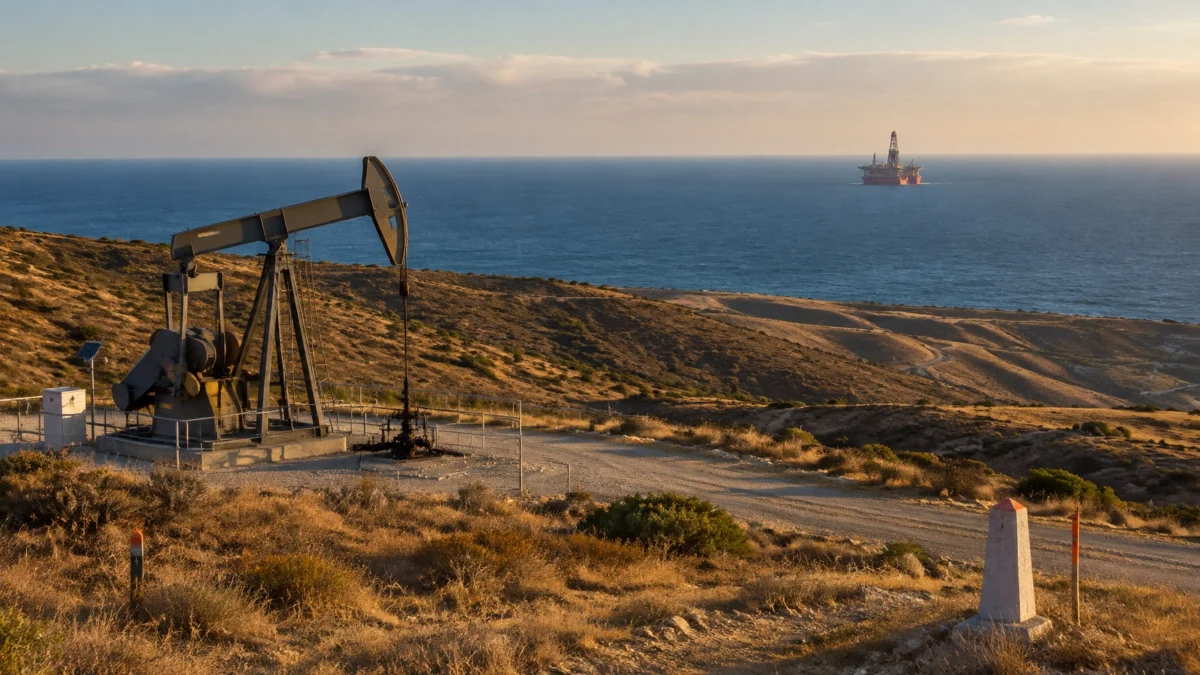
California Lease Sale Enters the Protest Period
BLM announced the California sale on October 1. The 43 parcels cover approximately 35,000 acres in Kern, Kings, San Luis Obispo and Fresno counties. The agency completed scoping in July and conducted a public comment period that closed in September.
A 30-day public protest period opened October 1 and is scheduled to close November 2. According to the National Fluid Lease Sale System, federal lease sales and their parcel listings are published through the agency’s online sale system.
The sale notice is an important checkpoint, not a guarantee that all 43 parcels will be leased or developed. Protests can lead the agency to modify, defer or withdraw parcels, while legal challenges may affect the timing or availability of leases after a sale.
BLM states that each parcel offered in a federal lease sale carries stipulations intended to protect important natural resources. Those requirements may address surface use, wildlife, cultural resources, water, air quality, reclamation or other site-specific concerns. The exact operational restrictions vary by parcel and by the environmental analysis supporting the offering.
California also presents a more complicated development environment than the acreage figure alone suggests. Federal leasing in the state has been contested, and development proposals can face substantial environmental review and legal risk. Even if leases are issued in December, there is no basis for assuming that the parcels will quickly become producing assets.

The December 2025 Gulf sale produced revenue, not production
The inaugural Gulf sale occurred on December 10, 2025, when BOEM held Big Beautiful Gulf 1, its first Gulf lease sale in two years. According to the Department of the Interior, 30 companies submitted 219 bids totaling approximately $371.9 million on 181 blocks. The winning high bids totaled $300,425,222. The sale remains relevant as the first benchmark under the new statutory schedule, although BOEM subsequently held two additional Gulf sales during 2026.
BOEM offered approximately 15,000 unleased blocks in the Western, Central and Eastern Gulf planning areas. The agency applied a 12.5% royalty rate to both shallow- and deepwater leases, describing it as the lowest deepwater rate since 2007. BOEM’s sale page records the high-bid total and subsequent bid-evaluation materials.
A high bid is not the same as completed investment in exploration or development. It is a payment offered for the right to obtain a lease if the bid is accepted after federal evaluation. The government also receives first-year rental payments and, if production eventually begins, royalties based on the value of production.
The 12.5% royalty rate illustrates the economic tradeoff embedded in lease design. A royalty is the government’s share of the value of oil and gas produced from a lease. A lower rate can improve project economics and increase bidding interest, particularly in technically demanding deepwater areas. At the same time, a lower rate reduces the government’s per-barrel share of production revenue if a project reaches commercial output. The policy question is therefore not simply whether a lower rate attracts bidders, but whether the resulting public return adequately reflects geological, financial and environmental risks.
Big Beautiful Gulf 1 was the first of 30 Gulf lease sales required through 2040 under the One Big Beautiful Bill Act. By October 2026, BOEM had conducted three of those sales: BBG1 in December 2025, BBG2 in March 2026 and BBG3 in August 2026. Laura Robbins, BOEM’s regional Gulf head, said predictable future sales can reduce pressure on companies to concentrate bidding in one event.
That planning benefit does not eliminate regulatory uncertainty. Each sale still requires agency preparation and environmental review, and individual leases remain subject to bid acceptance, lease terms, permitting requirements and potential litigation.
Deepwater attracted most of the value
The Gulf bidding pattern was concentrated in deeper water. Companies bid on 81 blocks in depths of 800 to 1,600 meters and 72 blocks deeper than 1,600 meters. By comparison, bidders targeted 12 blocks below 200 meters, one block from 200 to 400 meters and 15 blocks from 400 to 800 meters.
The distribution of high-bid value was even more pronounced. Blocks in the 800-to-1,600-meter range generated $126,524,342 in winning bids, while blocks deeper than 1,600 meters generated $155,494,697. The 0-to-200-meter category produced $2,776,823, the 200-to-400-meter category $3,219 and the 400-to-800-meter category $15,626,141.
BP Exploration & Production led by the number of high bids with 51, followed by Chevron U.S.A. with 24, Murphy Exploration & Production with 14, and Shell Offshore and Repsol OCS with 12 each. By total high-bid value, BP led with $61,881,157, followed by Chevron at $53,096,223, Woodside Energy (Deepwater) at $38,083,648, Murphy at $27,388,989 and Beacon Offshore Energy Exploration at $20,059,432.
Deepwater interest reflects the commercial structure of the Gulf resource base, but it should not be read as a simple preference for low-cost development. Deepwater projects generally require subsea wells, remotely operated equipment, floating production systems, specialized vessels and extensive infrastructure. They involve high capital expenditure, complex logistics and long lead times. In favorable geological settings, however, a deepwater block may offer access to larger reservoirs or development concepts capable of supporting those costs.

Leasing is only the first step
The onshore and offshore systems differ, but both follow a long progression from acreage access to production.
For the California parcels, a lease sale is followed by bid evaluation, lease issuance and the payment of the required bonus and first-year rental. An operator seeking to drill must then submit an application for permit to drill, or APD, describing the proposed well, facilities, access routes and environmental safeguards. BLM reviews the application, provides opportunities for public input, conducts environmental analysis and coordinates with state agencies and other stakeholders.
Offshore, a successful bidder must first receive the lease and obtain approval for the activities it proposes to conduct. Exploration plans, permits and environmental reviews generally precede exploratory drilling. If a commercial discovery is made, the operator may then undertake appraisal work and submit additional development and production plans. Offshore projects also require extensive geophysical, engineering, safety and infrastructure reviews because operations may occur far from shore and existing production systems.
Although the onshore and offshore approval processes are not identical, a generalized path from leasing to production may include:
- Lease sale and submission of a high bid
- Federal evaluation and acceptance or rejection of the bid
- Lease issuance and required bonus and rental payments
- Geological, geophysical and engineering evaluation
- Approval of drilling permits or offshore exploration plans
- Exploratory drilling and resource appraisal
- Development planning and additional environmental review
- Construction and infrastructure installation
- First production
Years can separate a lease sale from first oil, and many leases never reach production because exploration results, commodity prices, financing, permitting, litigation or project costs do not support development.

What the developments mean for the energy system
The immediate financial effect of a completed lease sale is the collection of bonus bids and rental payments, with revenues distributed according to applicable federal law. Companies receiving leases gain access to evaluate potential acreage. Offshore service companies, engineering firms, ports, field contractors and surrounding communities could benefit later if the leases generate exploration, construction or production activity. Any future production could also contribute to domestic crude oil and natural gas supply.
The limitations are equally important. The California sale does not guarantee production, and the December 2025 Gulf sale did not provide an immediate response to oil or gas market conditions when it occurred. Offshore developments may take years to reach first production. California acreage may face additional legal and environmental constraints. Companies also bear the risk that geological results or future prices do not justify development.
The broader energy impact depends on what happens after leasing. Domestic oil production supports transportation fuels, refining and petrochemical manufacturing. Associated natural gas can affect regional supply, LNG availability and power generation. At the same time, new production must compete for capital with shale drilling, offshore projects, pipelines, storage, renewables, nuclear generation, transmission and other infrastructure needed as electricity demand grows.
The next milestones are therefore more informative than the sale notice and the earlier Gulf benchmark itself. Readers should watch the outcome of the California protest period, the parcels ultimately offered and leased, bid acceptance and any litigation. In the Gulf, because the sale was completed in December 2025, the key indicators are accepted leases, exploration plans, seismic activity, appraisal results, final investment decisions and the timing of future mandated sales in the years ahead.
Federal leasing may be rebuilding procedural momentum, but the commercial test remains further downstream. Acreage must become a viable project, and a viable project must become permitted production before it changes the balance of the U.S. energy system.
Keep In Touch with Shale Magazine
As the new era of energy unfolds, you can bet we’ll be the boots on the ground to keep you informed. Subscribe to Shale Magazine for sharp insight into the arenas that matter most to your life. And don’t forget to listen to our riveting podcast, The Energy Mixx Radio Show, where our very own Kym Bolado interviews the most extraordinary thought leaders, business innovators, and industry experts of our time.