West Virginia Nuclear Campus Bid Ends Over Spent Fuel
ENMG Analysis
The West Virginia nuclear campus bid ended September 30 when the state withdrew from the U.S. Department of Energy’s Nuclear Lifecycle Innovation Campus program following public and political controversy over spent fuel and radioactive-waste requirements.
The state submitted a one-page, one-paragraph letter signed by state energy office chief Nick Preservati. The letter said West Virginia was “unable to execute the Hosting Agreement and commit fully to its requirements,” while affirming support for President Donald Trump and Energy Secretary Chris Wright’s vision for a national nuclear renaissance. It also said the state remained willing to support DOE, the NLIC initiative and future campus recipients.
The decision followed several days of contention over the waste-management responsibilities included in the proposed campus model. As MetroNews reported, West Virginia had been one of six states under consideration. Utah, Tennessee, Oklahoma, Louisiana and Idaho remain in the competition, and DOE has not selected a host.

Why the West Virginia nuclear campus bid ended
Governor Patrick Morrisey announced on September 8 that West Virginia had made the first cut after pressing DOE to include the state in the finalist group.
“Well, West Virginia wasn’t originally part of that group, but we wanted to be, so we started working the phones,” Morrisey said at the time. “We started engaging more and more. We knew that nuclear was an important part of the strategy, and we went to work.”
He described the selection as a significant step toward attracting nuclear development, manufacturing and private investment to the state. DOE estimated that a campus could attract up to $50 billion in capital investment and generate as much as $10 billion in state and local tax revenue. The department’s July announcement cited nearly 25,000 potential jobs, while September congressional testimony cited nearly 22,000 jobs at full scale.
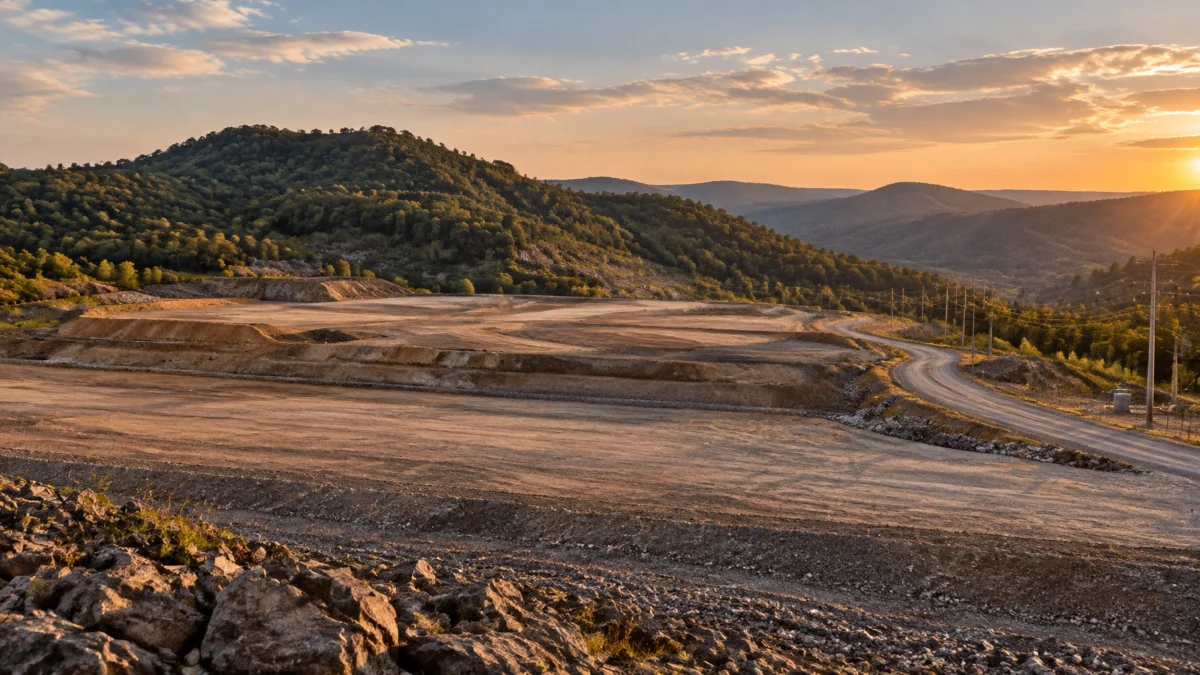
The opportunity changed as the public discussion turned to waste. The Charleston Gazette-Mail reported on potential sites, including the former Hobet mine site in Boone County and areas of Jackson and Jefferson counties. State officials cautioned that those locations had not been fully vetted or geologically qualified. The newspaper’s print headline characterized the bid as an offer to store nuclear waste.
Morrisey responded that “West Virginia will not be a dumping ground for nuclear waste. Period.” He said he had directed the state Office of Energy to ensure that sites identified in the final application would be considered only for nuclear generation or manufacturing, not as a dump.
A Morrisey administration spokesman, Lars Dalseide, said the governor’s directive “trumps bureaucrat letter” and that the state would not accept nuclear waste. That position conflicted with the broader requirements of the proposed Host Agreement, which was due to be executed by September 30.
The memorandum of understanding signed earlier in September stated that the Host Agreement would address “the acceptance and management of out-of-state used nuclear fuel, spent nuclear fuel, high-level radioactive waste, and greater than class C radioactive waste.” If the agreement was not signed by the deadline, either party had the right to terminate the partnership.
The conflict was therefore not simply about whether West Virginia supported nuclear power. It was about whether the state would accept the full range of fuel-cycle and waste-management obligations attached to the NLIC concept.
What a nuclear lifecycle campus would contain
DOE describes the program as an effort to modernize the nation’s full nuclear fuel cycle by co-locating activities such as fuel fabrication, uranium enrichment, reprocessing of used nuclear fuel and waste disposition.
That is a broader concept than a conventional power plant. A campus could include several distinct industrial and research functions:
- Enrichment, which increases the concentration of uranium-235 in uranium feed material.
- Fuel fabrication, which converts enriched uranium into fuel assemblies or other forms suitable for reactor designs.
- Advanced reactor deployment, including manufacturing, testing and potentially commercial power generation.
- Reprocessing or recycling, which separates potentially reusable uranium and plutonium from irradiated fuel.
- Interim storage, which holds used fuel or radioactive materials until a later management or disposal decision.
- Waste treatment and disposition, covering materials that cannot be recycled and require long-term isolation or another approved pathway.
West Virginia’s 48-page presentation to DOE in April 2026 addressed the fuel-cycle issue directly. The state proposed a phased approach beginning with spent-fuel recycling and interim storage, followed by advanced reactor deployment and manufacturing.
The state told federal officials that it had identified “partially spent and spent nuclear fuel streams management as a near-term actionable strategic opportunity.” It also proposed anchoring the campus around “advanced fuel recycling, materials recovery and responsible long-term nuclear materials stewardship.”
Those statements demonstrate why the later political disagreement was difficult to resolve. Waste management was not an incidental possibility added by outside observers. It was included in DOE’s call for proposals and in West Virginia’s own initial concept.

The waste categories are not interchangeable
The phrase “nuclear waste” is often used as a catchall, but the materials listed in the Host Agreement have different technical characteristics, regulatory histories and potential disposal pathways.
Spent nuclear fuel is irradiated fuel removed from a reactor after use. It remains highly radioactive and generates heat, but it also contains uranium and plutonium that can potentially be recovered through reprocessing. Commercial spent-fuel reprocessing is not currently practiced in the United States.
High-level radioactive waste and spent nuclear fuel are separately defined under the Nuclear Waste Policy Act. High-level waste generally includes highly radioactive liquid or solid material produced through spent-fuel reprocessing, along with other highly radioactive material that the Nuclear Regulatory Commission determines requires permanent isolation. Although the terms are legally distinct, they are frequently addressed together because both require secure storage, transportation controls and a long-term disposal pathway.
Greater-than-Class-C radioactive waste is a category of low-level radioactive waste defined by radionuclide concentration. It can include certain highly radioactive sealed sources, activated components and other materials that exceed the Class C limits established for commercial low-level waste. It is not synonymous with spent fuel or high-level waste.
The distinctions matter because recycling, storage and disposal involve different activities. Reprocessing seeks to recover usable materials from spent fuel and creates additional radioactive waste streams. Interim storage holds material pending later action. Permanent disposal is intended to isolate waste for the long term, generally through a licensed repository or another legally authorized pathway.
The regulatory responsibilities also differ. The Nuclear Regulatory Commission licenses and oversees commercial nuclear facilities and many radioactive-material activities, while DOE manages federal nuclear programs and is responsible for major portions of national spent-fuel and defense-waste policy. A campus combining these functions would face multiple layers of federal, state and local review rather than one single approval.
The economic opportunity and the political tradeoff
For West Virginia, an NLIC campus could have connected the state’s industrial workforce and former coal sites to nuclear manufacturing, fuel-cycle services and electricity production. It might also have supported new demand from manufacturing facilities, data centers and other large industrial customers.
A domestic fuel-cycle hub could contribute to the broader nuclear expansion effort by strengthening enrichment, fabrication and advanced-reactor supply chains. The United States is also working to expand the domestic HALEU supply chain, which advanced reactors may require. Those investments, however, do not eliminate the need to determine how used fuel and radioactive byproducts will be stored, processed or disposed of.
The tradeoff is that the same integrated approach that creates industrial efficiencies also concentrates public responsibility. A state that seeks reactor construction and manufacturing but excludes all used-fuel management may be asking DOE and private developers to separate functions that the NLIC program was designed to connect.
That does not mean every campus would perform every activity at the same scale, or that participation would automatically mean permanent disposal. It does mean that host states must define which materials they will accept, for how long, under whose authority and with what financial, environmental and emergency-planning safeguards.
What happens next
West Virginia’s withdrawal removes one candidate but does not resolve the underlying national waste-management problem. Utah, Tennessee, Oklahoma, Louisiana and Idaho remain in contention, and each state will have to address the same core questions if its proposal includes fuel recycling, interim storage, reprocessing or waste disposition.
DOE’s program could also evolve as the remaining states negotiate their Host Agreements. Industry observers should watch for clarification of the following issues:
- Whether any finalist will accept out-of-state spent fuel or other radioactive materials.
- How DOE distinguishes interim storage from permanent disposal in the final agreements.
- Which activities would be licensed by the NRC and which would fall under DOE authority.
- Whether proposed sites have suitable geology, transportation access, water resources and grid connections.
- How states would finance long-term monitoring, security and eventual closure.
- Whether advanced-reactor manufacturing and fuel-cycle work can proceed without waste-hosting commitments.
- How public consultation and local consent will be handled before a host is selected.
West Virginia’s decision is ultimately a state-level political choice involving technically distinct nuclear materials. Its significance extends beyond one withdrawn application because it shows how quickly support for nuclear generation can diverge from support for the fuel-cycle obligations that make nuclear development possible.
No NLIC host has been selected. The remaining finalists now face the central question that West Virginia could not reconcile: whether the economic benefits of an integrated nuclear campus justify accepting a clearly defined, legally enforceable role in managing the materials produced across the nuclear lifecycle.
Keep In Touch with Shale Magazine
As the new era of energy unfolds, you can bet we’ll be the boots on the ground to keep you informed. Subscribe to Shale Magazine for sharp insight into the arenas that matter most to your life. And don’t forget to listen to our riveting podcast, The Energy Mixx Radio Show, where our very own Kym Bolado interviews the most extraordinary thought leaders, business innovators, and industry experts of our time.