U.S. Venezuela Oil Deal Takes Shape as Chevron Expands
Just months after President Trump pledged to tap Venezuela’s crude reserves, the world’s largest, after the United States captured the country’s then-President Nicolás Maduro in January, energy development plans are starting to take shape.
In August, President Trump announced a “historic deal” which would see the United States playing a major role in Venezuela’s oil industry. Then, in September, the U.S. oil giant Chevron confirmed that it plans to expand operations in Venezuela. The U.S. is now mapping out plans for new oil production operations in Venezuela that could provide additional crude supplies in exchange for economic investment.
How the U.S. Venezuela Oil Deal Works
On August 31st, President Trump announced that he had secured “U.S. majority control of more than 65 billion barrels of proven oil reserves in Venezuela – vastly expanding our current U.S. territorial proven reserves of roughly 46 billion barrels.” Trump added, “This deal secures our energy dominance for the next century—all at zero cost to the United States.”
As part of the agreement, the Venezuelan interim authorities granted North American Blue Energy Partners (NABEP), a privately held oil company that is the second-largest private Venezuelan oil producer and a proven operator, 100-year concessions for 17 oil fields with proven reserves of approximately 65 billion barrels.
NABEP granted the U.S. Department of War’s Office of Strategic Capital a 35% equity stake in its corporate parent. It also granted the U.S. Department of State the right to purchase, at production cost, a guaranteed 20% of the off-take from all current and future fields NABEP will operate, and the right of first refusal to purchase the remaining 80% of its production.
Venezuela’s Response to the Oil Deal
Venezuela’s interim President Delcy Rodríguez said she expected the deal, which will remain in force for 25 years, to support the economic revival of the oil-rich South American country. Rodríguez said the deal targets a 1.5 million barrels per day (bpd) increase in crude output. The interim President had previously stated that the agreement outlines “an investment of more than $100 billion and more than $209 billion in taxes” for Venezuela.
“These investments will contribute not only to the recovery and modernization of our industry, but also to our country’s economic growth, the energy security of our hemisphere and greater balance in international markets,” said Rodríguez.
U.S. Venezuela Oil Deal Draws Criticism
Although Trump and Rodríguez are optimistic about the deal, some energy analysts are more critical, questioning whether the move will address long-standing obstacles that have deterred investment in Venezuela’s oil industry.
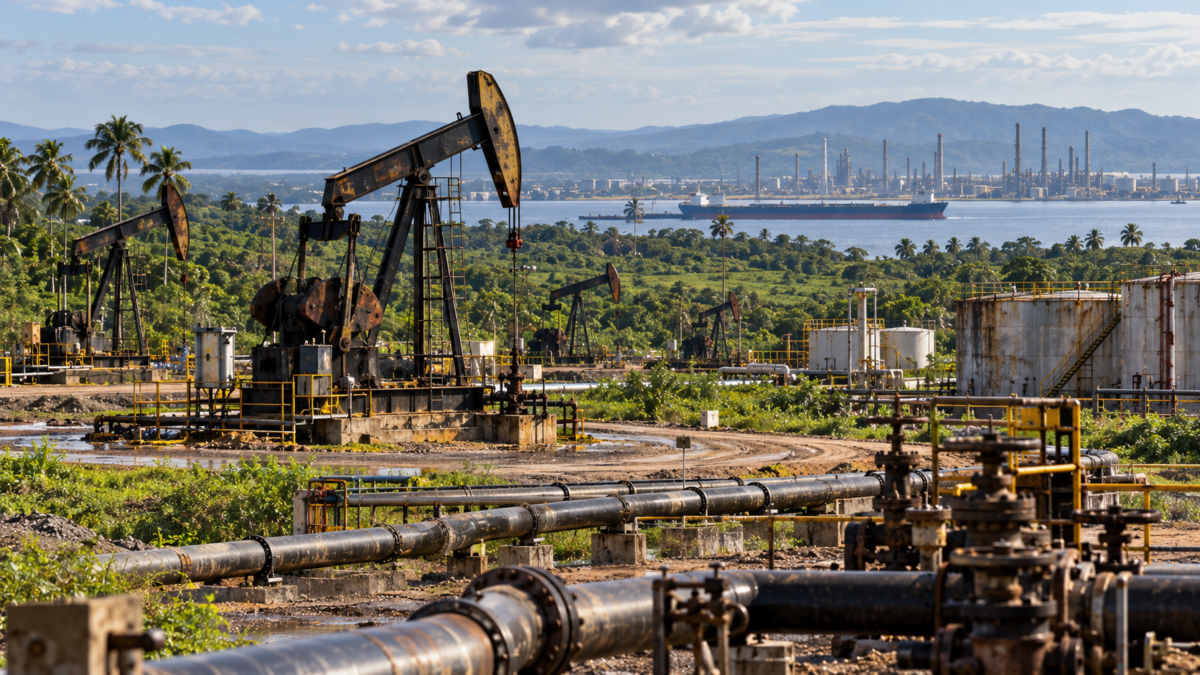
It is expected to be extremely expensive and time-consuming to significantly increase Venezuelan oil production. Around half of the 17 production areas outlined in the deal are reported to be in Lake Maracaibo. Oil production facilities in the region have faced years of underinvestment, leading many to fall into disrepair.
The remaining areas are spread across the oil-rich Orinoco Belt in central and northeastern Venezuela. The oil reserves in this region are extremely heavy, making them difficult and expensive to extract and transport. Several of these areas are undeveloped, meaning NABEP will need to invest in new drilling operations and in the development of pipelines and processing facilities.
Bob Fryklund, a vice president at the research firm S&P Global Energy, explained, “This is a huge amount of money that’s needed, and then you need the people, too — it’s not just the steel and the pipe and the engineering.”
Meanwhile, David Goldwyn, the president of energy consultancy Goldwyn Global Strategies, questioned the validity of the overall U.S.-Venezuela oil agreement. Goldwyn told Reuters there was “no precedent” for the U.S. government entering into a lease to operate Venezuelan oil fields, and said it was unclear whether such a move would violate the country’s constitution or hydrocarbons law.
“It is hard to see how this kind of arrangement would accelerate investment at any material scale,” given Venezuela’s political uncertainty, weak transmission infrastructure, and limited export capacity, stressed Goldwyn.
Chevron’s Venezuela Expansion Plans
Despite skepticism voiced by some about the agreement, clear progress has been seen in recent months, with the U.S. oil major Chevron announcing plans to expand operations in Venezuela in September. Chevron plans to more than double the number of oil rigs it operates in Venezuela as part of its five-year plan to increase oil output, according to the company’s Chief Financial Officer, Eimear Bonner.
Chevron has continued operations in Venezuela throughout years of political instability and declining national oil output. In early September, Chevron confirmed that its joint venture partnerships in Venezuela planned to invest over $7 billion to more than double its oil production, to 600,000 bpd by 2031.
The U.S.-Venezuela oil deal and Chevron’s recent expansion announcement could mark a turning point for Venezuela’s long-suffering oil industry. However, significantly increasing the country’s oil output will require substantial investment and several years of development, making it unlikely to contribute meaningfully to global energy supplies in the short- to mid-term.
Keep In Touch with Shale Magazine
As the new era of energy unfolds, you can bet we’ll be the boots on the ground to keep you informed. Subscribe to Shale Magazine for sharp insight into the arenas that matter most to your life. And don’t forget to listen to our riveting podcast, The Energy Mixx Radio Show, where our very own Kym Bolado interviews the most extraordinary thought leaders, business innovators, and industry experts of our time.