
ENMG Analysis
The U.S. Department of Energy has opened a funding opportunity of up to $237 million aimed at easing supply constraints for transformers and other critical grid equipment. The Grid Supply Chain Alternatives to Lead Energy Dominance program, or Grid SCALED, will support projects to refurbish and reuse existing equipment or integrate domestically sourced alternative materials and components into manufacturing.
The opportunity is intended to address a practical constraint on grid investment: new transmission and distribution projects, replacement of aging equipment and rising electricity demand all depend on components that can take time to procure. The department announced the funding on October 30. The funding opportunity, listed as DE-FOA-0003641, sets out two topic areas, application requirements and deadlines.
The $237 million is the maximum funding available under the opportunity, not money already awarded. DOE will review applications before making selections, and the stated amounts for each topic area are ceilings rather than guaranteed spending.
Two Routes to Relieving Equipment Constraints
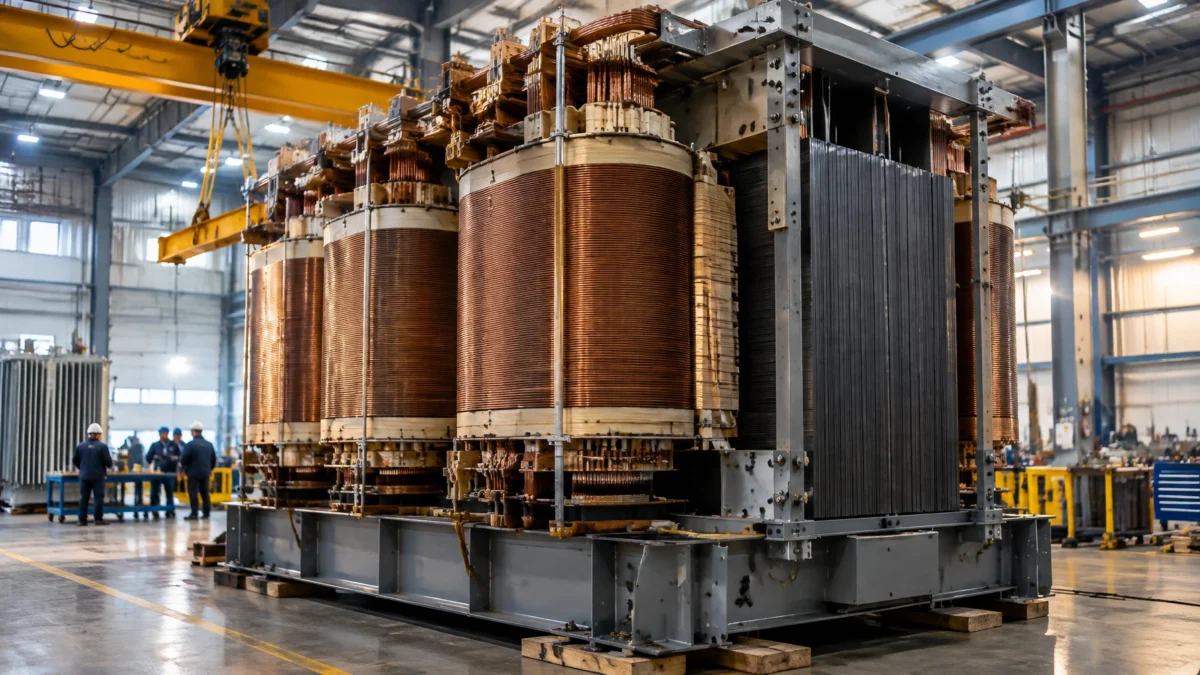
Topic Area 1 offers up to $50 million for refurbishment and reuse of critical grid equipment. The notice identifies distribution and power transformers among the equipment of concern, along with components such as circuit breakers and switchgear. DOE expects projects to establish workable processes for recovering equipment or materials, testing them and returning suitable items to the grid supply chain.
Topic Area 2 offers up to $187 million to support the integration of domestically sourced alternative materials and subcomponents into U.S. grid-equipment manufacturing. The notice identifies materials and components including electrical steel, copper windings, insulation and bushings. Applicants must show how proposed alternatives can be sourced, qualified and incorporated into production.

DOE’s notice describes the opportunity as a nonresearch demonstration program. For Topic Area 1, it calls for projects at Technology Readiness Level 8 or higher; for Topic Area 2, it calls for existing alternatives at Level 6 or higher. In both cases, the aim is practical supply-chain improvement, not early-stage laboratory research.
That distinction matters. A refurbished transformer is not automatically ready for reuse simply because it can be repaired. Its condition, intended application and performance must be assessed, and equipment returning to service must meet relevant technical and utility requirements. Refurbishment could return some assets to inventory sooner than waiting for new equipment, but not every retired or damaged unit is suitable for that route. The application notice asks projects to describe testing, validation and how recovered equipment will be handled before reentering inventory.

Alternative materials also require more than a change in purchasing. Transformers and other grid equipment are engineered systems; manufacturers need to verify that a substitute material or component can meet design, performance and reliability requirements. The DOE notice emphasizes qualification, domestic sourcing and integration into production. Those steps may take time, and a new source of one input will not necessarily resolve constraints elsewhere in the supply chain.
Why the Supply Chain Is in Focus
Transformers convert electricity between voltage levels and are used throughout transmission and distribution networks. Utilities need them for new connections, network upgrades and replacement of equipment that has reached the end of its service life. Delays in obtaining them can affect project schedules, even when financing, permits and other equipment are in place.
DOE’s funding notice describes rising demand for grid equipment as a combination of grid modernization, new electricity loads and manufacturing growth. It cites data center development, electrification and additions to energy generation among the factors contributing to demand. The notice also says utilities have faced transformer lead times of up to two years, while domestic manufacturing capacity remains limited relative to demand. These are DOE’s stated estimates in the program documents; actual lead times and equipment availability can vary by product specifications, manufacturer and order conditions.

For grid planners, the supply-chain issue is distinct from the question of how much electricity the grid can carry. Grid SCALED targets the availability and sourcing of equipment. Transmission and distribution projects address infrastructure buildout itself. Both affect how quickly the electricity system can accommodate new generation and growing loads, but funding equipment supply does not, by itself, build new transmission lines or increase grid capacity.
The initiative also connects the electric grid to a wider industrial base. Transformer production relies on specialized materials, components, manufacturing processes and skilled workers. A domestic alternative could diversify sources, but its impact depends on whether it can be produced consistently at scale and accepted by equipment makers and utility customers.
Costs, Applicants, and Tradeoffs
DOE estimates the initiative could yield $125 million in annual utility savings and retain $50 million per year in the U.S. economy that otherwise would go to foreign suppliers. Those figures are projections from the department, not guaranteed savings or outcomes. Actual results would depend on which projects are selected, how much capacity they add or recover, and whether utilities and manufacturers adopt the resulting equipment and materials.
The program requires at least a 50% cost share for every project. In practical terms, applicants must provide at least half of total allowable project costs from nonfederal sources. That requirement can bring private capital and industry participation into projects, but it also puts a financing burden on applicants. It may be easier for larger manufacturers, utilities or well-capitalized partnerships to assemble the required share than for smaller firms, even when smaller suppliers have relevant technologies or capabilities.
The opportunity is open to eligible U.S. entities, including for-profit and nonprofit organizations, institutions of higher education, state and local governments and federally recognized Indian Tribes. DOE encourages partnerships (for example, between utilities, refurbishment facilities, suppliers and manufacturers) whose members can demonstrate how a proposed project will work across the supply chain.
The National Electrical Manufacturers Association welcomed the funding announcement. NEMA said the initiative supports domestic supply chains and manufacturing capacity. As an industry association representing electrical equipment manufacturers, NEMA’s response reflects a stakeholder perspective; whether the program produces lower costs or shorter procurement times will depend on project outcomes.
What Applicants and Grid Buyers Should Watch
Concept papers are due November 20, 2026, at 5 p.m. Eastern time. Submitting one is mandatory for applicants seeking to submit a full application. Full applications are due February 8, 2027, at 5 p.m. Eastern time. DOE anticipates notifying applicants of selections on June 25, 2027, according to the notice.
The next test will be whether projects can move beyond proposals to measurable improvements: equipment returned to service, qualified domestic suppliers, greater production capacity or shorter procurement times. For refurbishment projects, relevant measures include the share of recovered equipment that can be recertified and put back into service. For alternative-material projects, the practical indicators include successful qualification, reliable production and adoption by manufacturers and customers.
The funding opportunity creates an avenue for addressing one part of the grid-buildout challenge, but it is not a quick fix. Refurbishment has limits, material substitutions require validation, and a 50% cost share may narrow the pool of applicants able to participate. The value of the program will ultimately depend on whether selected projects deliver usable equipment and dependable supply-chain alternatives at a scale that matters to utilities.
Keep In Touch with Shale Magazine
As the new era of energy unfolds, you can bet we’ll be the boots on the ground to keep you informed. Subscribe to Shale Magazine for sharp insight into the arenas that matter most to your life. And don’t forget to listen to our riveting podcast, The Energy Mixx Radio Show, where our very own Kym Bolado interviews the most extraordinary thought leaders, business innovators, and industry experts of our time.