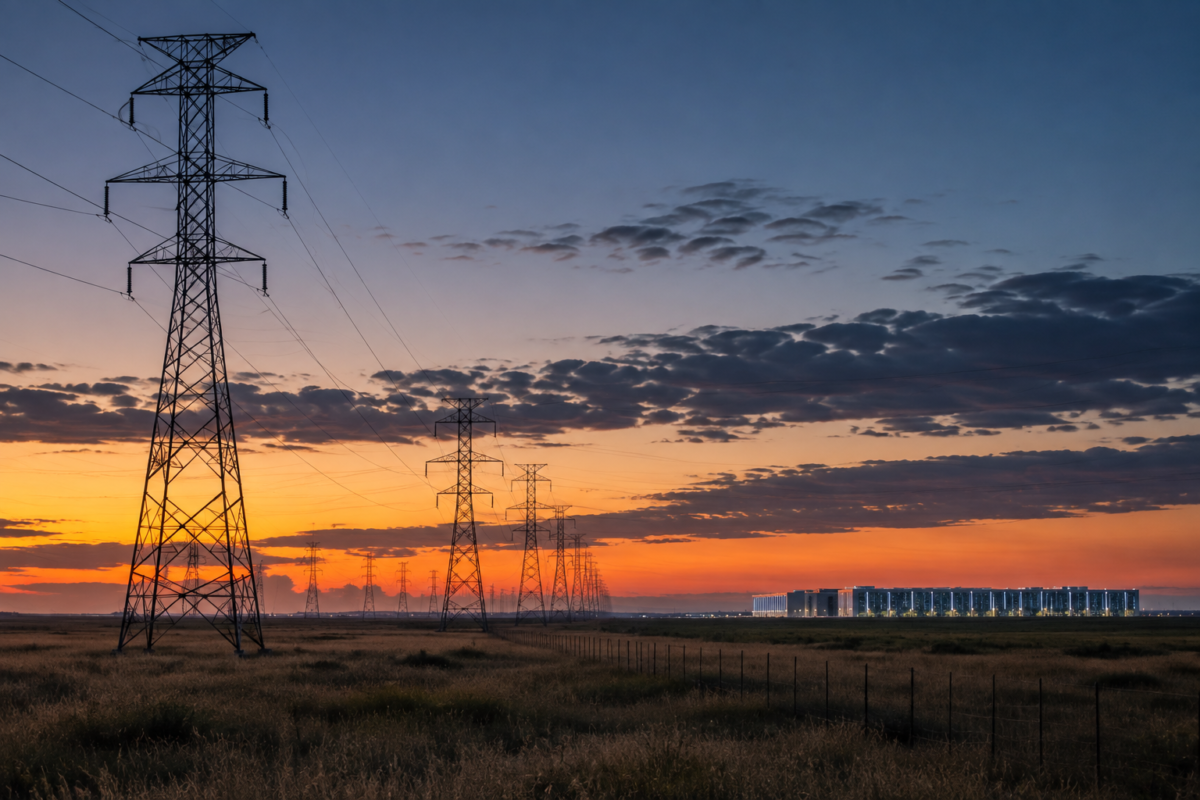
Texas Governor Greg Abbott has paused the approval of new data centers over concerns that the rising electricity demand could threaten reliability. Texas is expected to become a major data center hub in the United States, making it vital that construction is thoughtfully considered in terms of power demand.
Texas State Pauses Data Center Development
Forecasts suggest that Texas has the potential to overtake Virginia – the leading data-center hub – by 2030 thanks to its abundant land, diverse energy supplies, and its business-friendly environment. This could help Texas further develop its reputation as a rising U.S. tech hub, provide a wide array of economic benefits, and support job creation in the state.
Governor Abbott wrote a letter to the Public Utility Commission of Texas and grid operator ERCOT in late July, asking the agencies to audit all planned data centers seeking grid connections before any other data centers are approved.
ERCOT is currently considering approximately over 474 gigawatts (GW) of requests to connect to the Texas grid, with around 90% of this demand coming from data centers, according to Abbott.
“Any data center project that fails to comply with the verification and audit process to protect the reliability and resilience of the Texas electric grid must be denied,” wrote Abbott. “Simply put, Texans must come first.”
As part of the audit, data center developers will be required to share information on power demand, water use, tax incentives, ownership structures, and efforts to mitigate local impacts.
ERCOT said in a statement that it is “reviewing Governor Abbott’s letter concerning data centers and will work with the Public Utility Commission of Texas to implement the Governor’s directive, including postponement of the Batch Zero transmission planning study.”
Broader Public Concerns About Data Centers
While Governor Abbott cited concerns about future energy supply and demand for the pause on development, the public has broader concerns about data center development, according to recent U.S. reports and surveys. Opposition to data centers has arisen due to their heavy use of energy and water, as well as concerns about pollution created by the fossil fuels used to run these facilities.
In a Reuters/Ipsos poll from June, just one-third of those surveyed approved of the pace of data-center construction. Meanwhile, a 2025 HostingAdvice survey showed that while 93% of Americans support AI data center development, only 24% of women and 46% of men surveyed would say “yes” to having an AI data center built in their area.
A Data Center Watch report showed that by the end of 2025, a combined $64 billion in data center projects had been blocked or delayed due to opposition. The organization estimated that over two years, $18 billion worth of data center projects were blocked and $46 billion of projects were delayed due to opposition from residents and activist groups.
The Environmental Impact of Data Centers
In the United States, the power demand of data centers was expected to rise by 22% between the end of 2024 and the end of 2025, a figure that is forecast to increase threefold by 2030.
Data centers can also place heavy demands on the environment. A mid-sized data center consumes around as much water as a small town, while larger facilities require up to 5 million gallons of water a day, equivalent to the water demand of around 50,000 people.
A Houston Advanced Research Center study suggested that data centers in Texas were expected to use 49 billion gallons of water in 2025. A figure that could rise as high as 399 billion gallons in 2030. The study also showed that using natural gas to power Texas data centers would require 50 times more water than using solar power, demonstrating the importance of regulating sectoral power use.
Restrictions on Data Center Development
Texas is not the only state to limit data center development, and it will probably not be the last. In July, New York became the first U.S. state to pause the construction of large new data centers.
Governor Kathy Hochul imposed a one-year moratorium on construction, citing concerns over potential rising power costs and heavy water use associated with data center deployment.
Hochul said, “As data center development threatens to hike up utility bills, deplete our natural resources, and create uncertainty for New Yorkers, it’s my responsibility to take action and lead.” The governor said she also intends to pursue legislation to repeal sales tax exemptions for large data centers.
Meanwhile, the director of the environmental nonprofit New York State’s Food & Water Watch, Laura Shindell, stressed, “This one-year moratorium is a huge step forward for New York communities fighting against an onslaught of massive data center proposals.” Shindell added, “It comes as the direct result of immense public pressure from people across the state demanding their elected leaders protect them from Big Tech’s assault, which threatens the state’s clean air and water and New Yorkers’ financial security.”
The power demand and environmental concerns raised by a range of actors suggest that greater federal and state regulation is required for sustainable data center development. Several states have placed restrictions on data center development over the last year, with several more expected to do the same as deployment accelerates.
Keep In Touch with Shale Magazine
As the new era of energy unfolds, you can bet we’ll be the boots on the ground to keep you informed. Subscribe to Shale Magazine for sharp insight into the arenas that matter most to your life. And don’t forget to listen to our riveting podcast, The Energy Mixx Radio Show, where our very own Kym Bolado interviews the most extraordinary thought leaders, business innovators, and industry experts of our time.
Subscribe to get more posts from Felicity Bradstock