The United States has accelerated the deployment of utility-scale solar power in recent years, becoming a world leader. Now, consumers across the U.S. are looking to develop their own solar capabilities by installing residential solar systems.
The legalization of plug-in solar power has enabled people across the country to install solar panels to produce clean energy locally and cut their energy bills amid rising inflation and high oil and gas prices.
Rooftop Solar Power – Expansion and Limitations
Residential solar power has become increasingly popular in recent years, encouraged by a greater awareness of and access to small-scale solar systems. Residential solar installations have grown from 5 million in 2024 to over 6 million in 2026 and are expected to reach over 8 million by 2030. Roughly 97% of solar installations in the United States are on residential rooftops, and roughly 9% of U.S. homes now have solar panels.
At the federal level, there are concerns that the momentum in solar system adoption will slow due to the Trump administration’s decision to cut funding for the sector, which has restricted federal solar tax credits and limited eligibility. However, several states are still supporting solar deployment through grants, rebates, and streamlined permitting processes.
Rooftop solar panels and installation have a median cost of around $30,000, before government incentives. This limits the uptake of rooftop solar systems to mid- to high-income households.
A 2025 Cornell University study shows that rooftop solar installations are concentrated in certain regions of the United States, such as California. The study also found that lower-income neighborhoods have 14.7% higher carbon offset potential but 47% fewer installations.
Meanwhile, low-income households spend an average of 8.6% of their income on energy. In comparison, non-low-income households spend roughly 3% of their income on energy, according to data from the U.S. Department of Energy.
The Rise of Plug-In Solar Systems
As rooftop solar systems are prohibitively expensive for some households, the legalization of plug-in solar systems in certain states could present a huge opportunity for consumers seeking to reduce their energy bills.
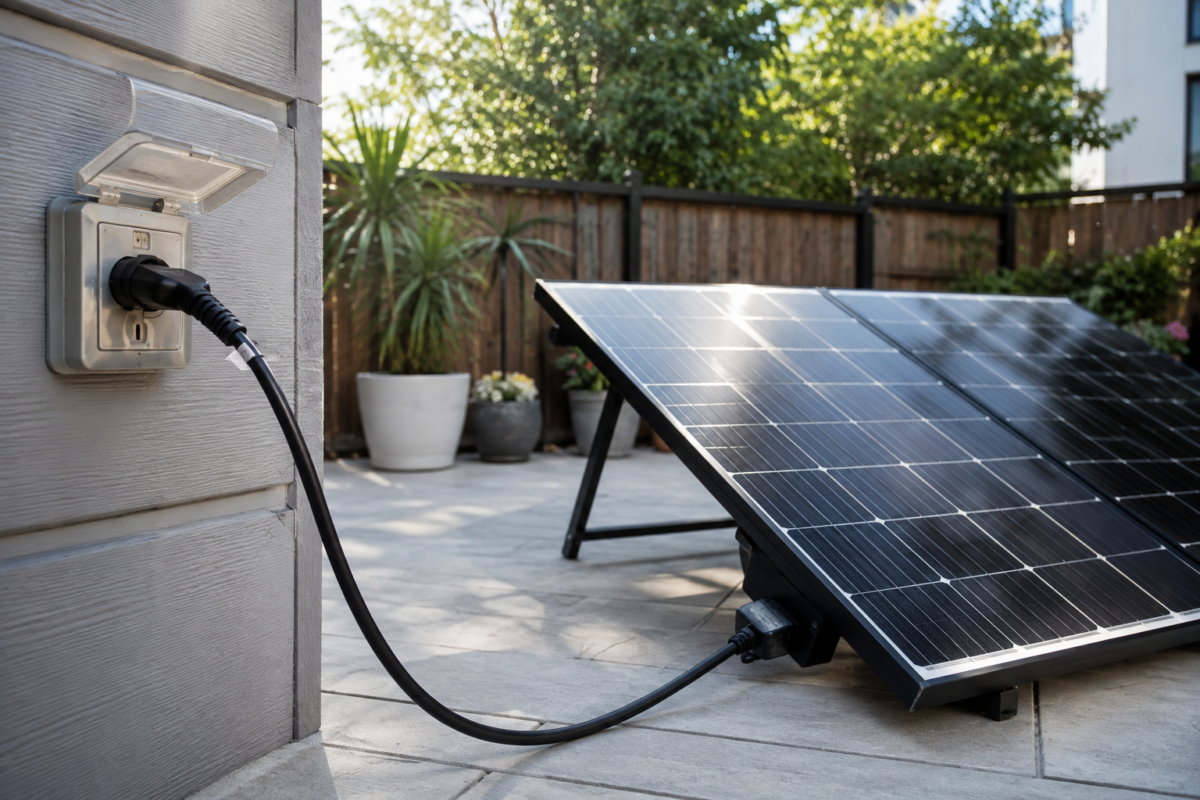
Plug-in solar panels are smaller and cheaper than rooftop solar systems, with some costing just a few hundred dollars per panel. A plug-in solar installation requires three components: a solar panel, a microinverter, and a standard wall outlet.
In addition, in states that allow solar plug-ins, no permit is required for their use, and people can often install them themselves. They can be installed on flat surfaces, such as balconies, in backyards, or basically anywhere with access to sunlight and an electrical outlet.
The plug-in system backfeeds through a regular outlet, generating electricity that can be consumed immediately by whatever is running in your home.
The Legalization of Plug-In Solar Power
In 2025, Utah became the first state to legalize plug-in solar systems, with nine other states, including New Jersey and Virginia, quickly following suit. This year, Colorado passed one of the broadest U.S. plug-in solar laws to date. Several other states are expected to legalize plug-in solar soon, including California, Massachusetts, New York, and Pennsylvania.
While there is significant enthusiasm around the potential rollout of plug-in solar panels, no solar system has yet been certified as safe to use in the United States. However, the legalization of the technology in several states is expected to encourage more companies to pursue approval from regulatory organizations. Plug-in solar systems can be certified by organizations such as UL Solutions, which tests, validates, and sets standards for various products.
UL Solutions has reported that it expects to certify at least one plug-in solar system for domestic use, but warned consumers to avoid using uncertified products, which could cause electric shock, damage electrical equipment, or start fires. This addresses the widespread availability of uncertified plug-in options across various websites.
Unlicensed Plug-in Solar Systems
However, many consumers have begun installing uncertified plug-in solar systems to cut their energy bills, even in states where the technology has not yet been legalized. For many, in the face of rising consumer energy bills, the potential to cut costs using cheap solar installations is too attractive to pass up.
The average U.S. residential electricity rate in April was 7% higher than in April 2025, according to the Energy Information Administration. The National Energy Assistance Directors Association reported in June that U.S. electricity bills could rise by 10.5% this summer compared to last, while one in six U.S. households has fallen behind on its utility bill payments.
In response to rising consumer costs, the California-based nonprofit Bright Saver began selling DIY plug-in solar kits, priced at $300, with no profit from the sales. It is offering pre-orders of the kits across 47 states.
Bright Saver’s co-founder, Cora Stryker, stated, “Only a nonprofit like ours will ever give up our margins completely to pass along to consumers the savings from clean energy.” Stryker explained that the systems they are selling are too small to pose any safety risks but could help consumers save on their electricity bills.
There is significant potential for plug-in solar systems in the U.S. market, particularly given the rising cost of utility bills. The deployment of the technology could provide low-income households with access to technology that could cut their electricity bills, rather than restricting solar installations to mid- and high-income households. However, the rollout must go hand in hand with greater regulatory and certification efforts by state and federal governments to ensure that plug-in systems comply with safety standards.