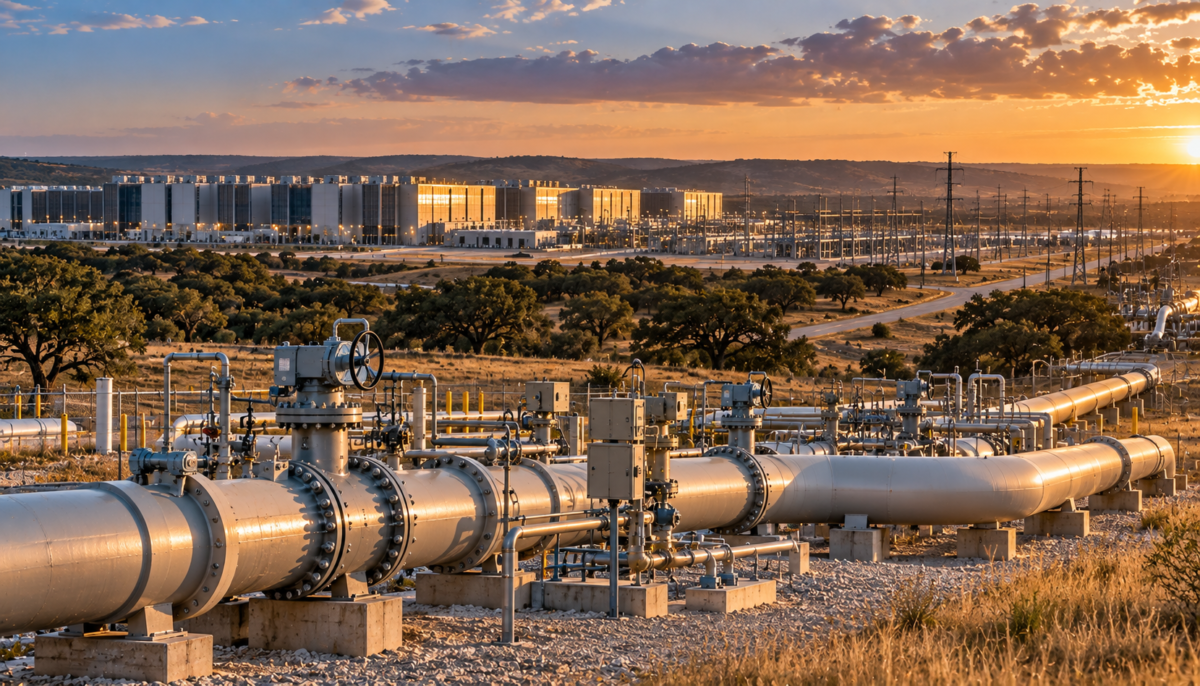
The rapid expansion of technology companies—including the buildout of AI data centers and increasingly ambitious space operations—is driving up U.S. energy demand. One company in particular, SpaceX, is expected to significantly increase its power demand in the coming years, which could drive new energy infrastructure challenges.
Elon Musk Projects Massive SpaceX Power Demand
SpaceX CEO Elon Musk said in August that the company had spent $15.8 billion on AI computing infrastructure during the second quarter while voicing concerns about the company’s growing energy demand.
During SpaceX’s first earnings call on August 11th, Musk emphasized the need to scale up the company’s energy infrastructure. Musk stated, “Our tentative target is to actually have 20 gigawatts (GW) at the power and cooling level online by the end of next year… Now I don’t think we’re going to achieve 20 GW, but we want to have a series of projects that cumulatively come to 20 GW by the end of next year. Some of them won’t pan out exactly on time, but I would expect that we still probably have at the power plant level something close to 15 GW.”
Musk’s 20 GW target refers to the planned power and cooling capacity of SpaceX’s expanding computing infrastructure, rather than the company’s total energy demand across all its operations. The power demand of tech companies is expanding at an unprecedented pace, with energy requirements now exceeding those of entire cities. For example, 20 GW is typically enough to supply power to between 15 million and 20 million households.
SpaceX Expanding into Natural Gas Development
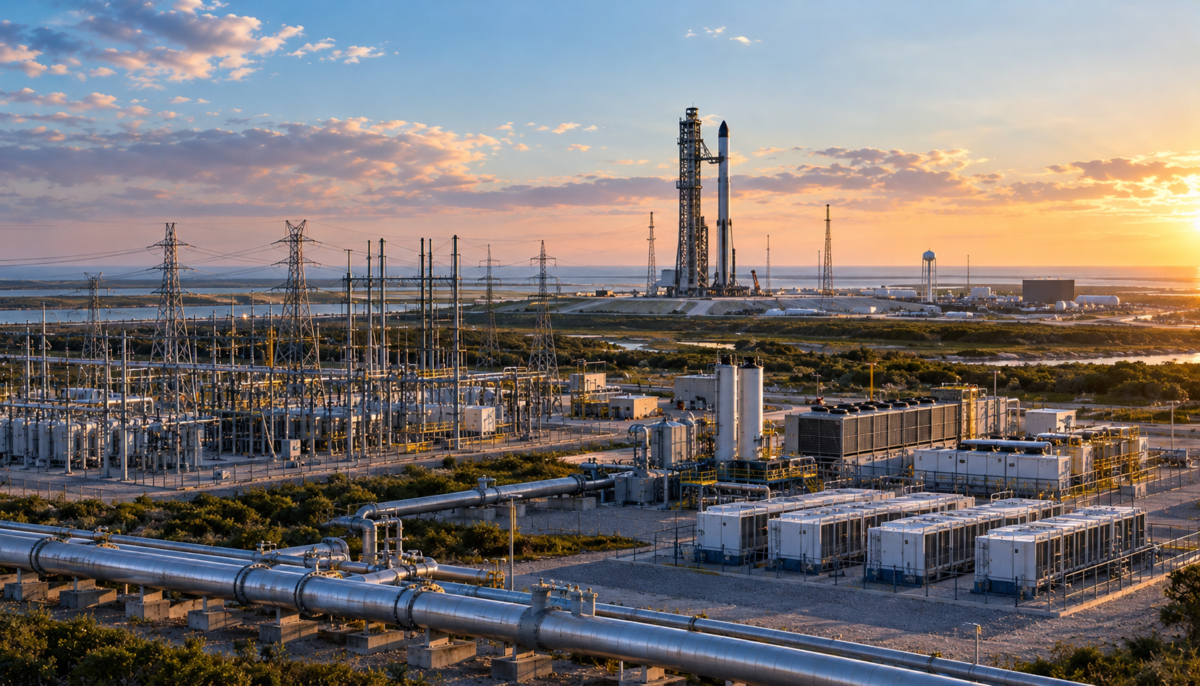
SpaceX relies on a variety of energy sources to power its operations, including renewable energy and natural gas. The firm is now seeking approval to develop a natural gas pipeline in Florida to supply fuel for its rocket, which will launch from Cape Canaveral, according to a September state regulatory filing.
A SpaceX subsidiary, Coastal Connect Services (CCS), has requested approval from the Florida Public Service Commission for a 32.4-mile, 16-inch natural gas transmission pipeline in Brevard County, where Cape Canaveral is located. CCS is expected to oversee the building and operation of pipeline facilities if approved. The firm said the pipeline is necessary for safe, timely, and efficient natural gas delivery.
SpaceX plans to use its 40-story rocket to expand its Starlink broadband network, deploy orbital AI data-center satellites, and eventually transport astronauts to the Moon and Mars. The Starship rocket has been designed to be fully reusable. It requires around 630,000 gallons (2.4 million liters) of liquid methane per launch, which is currently delivered to the site by tanker trucks. As Musk aims to eventually increase the number of rocket launches to dozens, hundreds, and eventually thousands per year, the development of a gas pipeline supports his long-term expansion aims for SpaceX.
SpaceX also plans to construct an eight‑mile natural gas pipeline known as “Starpipe” at its Texas launch facilities, which it hopes to bring online by January 2027. The firm has also spent several years exploring the development of its own drilling operations near Starbase and throughout Texas and has signed more than 100 fully paid oil and gas leases with Texas property owners since 2023, according to land records.
Its new gas ventures suggest that SpaceX could expand deeper into the energy industry in the coming years. Greater control over natural gas supply could reduce SpaceX’s reliance on third-party fuel logistics and give the company more control over costs and launch scheduling. Developing its own energy projects could also help reduce SpaceX’s reliance on existing utility power, as tech companies continue to drive up power demand, leaving both utilities and consumers concerned about future demand and rising energy bills.
SpaceX Power Demand Not Limited to Rocket Launches
Space exploration is not the only driver of SpaceX’s power demand; data centers also contribute significantly to its growing energy use. SpaceX reportedly purchased $295 million worth of Tesla Megapacks, or battery energy storage systems, to help power its Colossus data centers in the Greater Memphis area in the second quarter of the year.
Megapacks are used to provide power to businesses and utility-scale projects. Tesla’s Megablocks combine four Megapacks around one transformer to provide even greater power. They can be used to provide data centers with more flexibility when using intermittent sources like solar and wind, as well as to prevent blackouts.
Energy Innovations of the Future
In the long term, SpaceX aims to advance its orbital infrastructure through its Starmind concept, including the development of orbital data centers and the achievement of “energy beaming”. SpaceX has reportedly already filed a request with the U.S. Federal Communications Commission to develop an orbital data center, powered by solar energy and connected via laser links. The company’s idea is to place computing hardware in orbit and run it on solar power, which is much more abundant in space.
Although orbital data centers could reduce reliance on terrestrial power grids by harnessing solar energy, their commercial viability remains uncertain. Significant engineering, launch, maintenance, thermal-management, and cost challenges must be overcome, and SpaceX’s FCC application does not guarantee regulatory approval or successful implementation.
SpaceX’s ambitions highlight the growing relationship between technological innovation and energy infrastructure. As the company expands its rocket launches and AI computing operations, securing reliable power supplies will become increasingly important. While natural gas pipelines and battery storage could support near-term growth, longer-term concepts such as orbital solar-powered data centers remain uncertain, highlighting how future growth in AI and space infrastructure could reshape both electricity demand and fuel infrastructure.
Keep In Touch with Shale Magazine
As the new era of energy unfolds, you can bet we’ll be the boots on the ground to keep you informed. Subscribe to Shale Magazine for sharp insight into the arenas that matter most to your life. And don’t forget to listen to our riveting podcast, The Energy Mixx Radio Show, where our very own Kym Bolado interviews the most extraordinary thought leaders, business innovators, and industry experts of our time.