Quantum Genesis initiative timeline. The announcement coming from the Department of Energy today marks a definitive shift in the global race for computational supremacy. On June 23, 2026, Energy Secretary Chris Wright formally unveiled the Quantum Genesis initiative, a comprehensive program designed to deliver the world’s first scientifically relevant, fault-tolerant quantum computer by 2028. This move follows a series of executive orders aimed at securing American leadership in emerging technologies, positioning quantum computing as the third pillar of national infrastructure alongside artificial intelligence and high-performance semiconductors.
The Quantum Genesis initiative timeline is not merely a theoretical exercise but a funded, multi-agency roadmap that builds upon a decade of research at National Laboratories and partner universities. According to Secretary Wright, the goal is to transition from the era of Noisy Intermediate-Scale Quantum (NISQ) devices to machines capable of performing error-corrected calculations that can solve real-world problems in chemistry, materials science, and nuclear physics. This effort is centralized under the Quantum Computer for Application Development and Discovery Science (QC-ADDS) framework, which serves as the blueprint for the hardware and software specifications required for a utility-scale machine.
Unveiling the Quantum Genesis initiative timeline

The primary objective of this new Department of Energy (DOE) strategy is to bridge the gap between experimental quantum physics and industrial application. For years, the energy sector has looked toward quantum computing to revolutionize battery chemistry and grid optimization. However, the lack of fault tolerance: the ability of a computer to continue operating despite the presence of errors: has remained the greatest barrier. Under the Quantum Genesis initiative timeline, the DOE aims to demonstrate fault-tolerant systems with logical qubits numbering in the low hundreds by the end of 2028.
This timeline is structured around several key milestones:
- Phase One (2026): Identification of technical specifications through the QC-ADDS effort and a national Request for Information (RFI) to private sector partners.
- Phase Two (2027): The launch of the DOE Q Competition, a high-stakes challenge for private firms and research institutions to demonstrate stable, error-corrected quantum operations.
- Phase Three (2028): The deployment of a functional, fault-tolerant system at a newly established National Quantum Supercomputing User Facility.
The significance of this transition cannot be overstated. Current quantum systems are highly susceptible to environmental noise, leading to high error rates that prevent the execution of long, complex algorithms. By achieving fault tolerance, the DOE expects to unlock the ability to simulate molecular interactions with a level of precision that classical supercomputers, even those utilized for US semiconductor manufacturing, cannot match.
Building the 2028 fault-tolerant machine

Central to the Quantum Genesis initiative timeline is the integration of quantum systems with existing classical high-performance computing (HPC) infrastructure. The DOE does not view quantum computers as standalone units but as accelerators that will work in tandem with the world’s fastest supercomputers. Secretary Wright emphasized that the 2028 machine will be the cornerstone of an integrated AI-HPC-quantum platform, designed to process massive datasets for the Genesis Mission.
One of the most critical applications for this technology is in the realm of energy production and climate modeling. A fault-tolerant quantum computer could potentially discover new catalysts for carbon capture or simulate the behavior of plasma in fusion reactors, accelerating the path to commercializing fusion energy. This aligns with the mission of Energy Network Media Group to provide expert analysis on energy production across sectors like nuclear, biofuels, and geothermal.
The DOE is also exploring private-sector partnership models to understand the cost and scope of delivering these systems. By collaborating with industry leaders, the government aims to de-risk the development of quantum hardware while ensuring that the resulting technology remains a national asset. The Quantum Genesis initiative timeline ensures that the transition from lab to utility is managed with rigorous performance targets and clear accountability.
Quantum Genesis initiative timeline and national security

Beyond scientific discovery, the drive toward 2028 is heavily influenced by geopolitical considerations. Quantum computing has profound implications for cryptography and cybersecurity. A fault-tolerant machine of sufficient scale could theoretically decrypt current encryption standards, making the development of quantum-resistant algorithms a parallel priority for the federal government. The Quantum Genesis initiative timeline is therefore as much about national defense as it is about economic growth.
The DOE plans to provide U.S. scientists and engineers with broad access to these advanced systems through the National Quantum Supercomputing User Facility. This facility will serve as a hub for innovation, allowing researchers to test new algorithms and develop software that can harness the power of hundreds of logical qubits. By democratizing access to this technology, the DOE hopes to spark a wave of innovation across the domestic economy, from finance to pharmaceuticals.
Recent reports from the EIA and other federal agencies suggest that the integration of quantum computing into the energy grid could also enhance reliability. By modeling complex grid dynamics in real-time, operators could better manage the variability of renewable energy sources and prevent large-scale outages. This is a recurring theme in SHALE Magazine, where the focus remains on grid stability and the integration of emerging technologies.
The role of National Labs in the 2028 vision

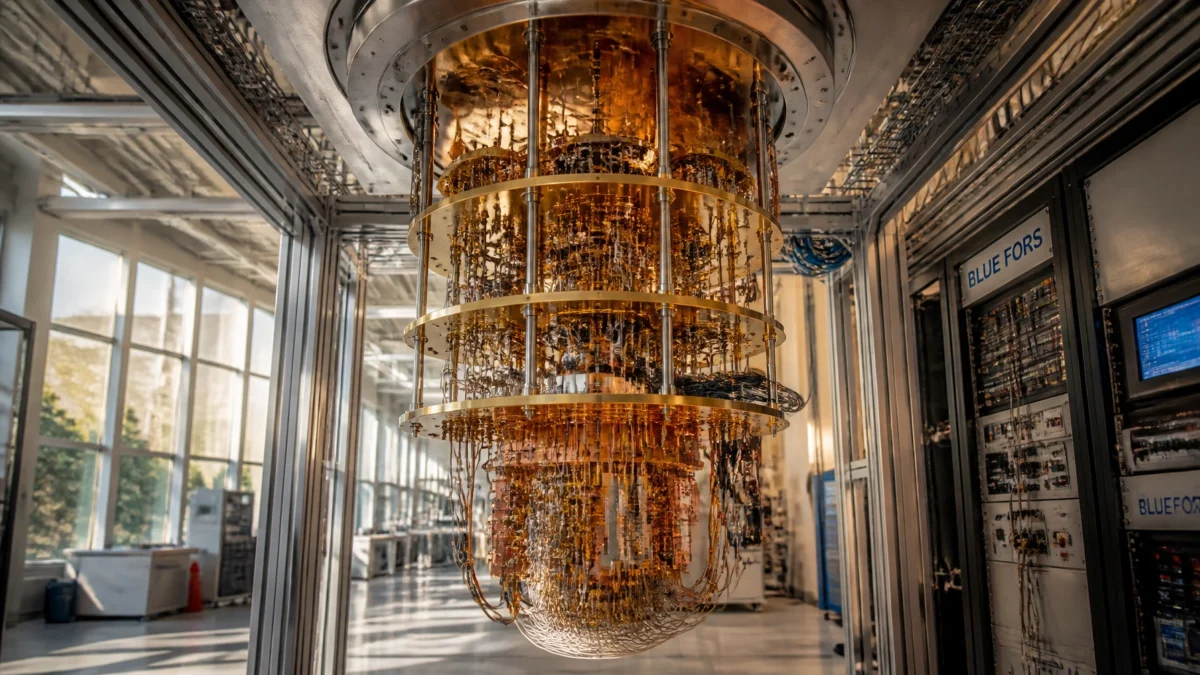
The successful execution of the Quantum Genesis initiative timeline relies heavily on the expertise housed within the DOE’s network of seventeen National Laboratories. These institutions have spent decades refining the materials and engineering techniques required to stabilize qubits at near-absolute zero temperatures. The new initiative consolidates these efforts, providing a unified direction and increased funding to accelerate the path to a 2028 delivery.
Secretary Wright’s vision for the DOE involves a shift toward mission-driven research that produces tangible results for the American taxpayer. By setting a hard deadline of 2028, the department is forcing a convergence of theory and engineering. The focus is no longer just on how many physical qubits a machine has, but on how many logical, error-corrected qubits it can maintain during a calculation. This distinction is what separates the Quantum Genesis initiative from previous federal quantum programs.
As we look toward the end of the decade, the energy landscape is poised for a transformation driven by data and computational power. The Quantum Genesis initiative timeline provides the framework for this transformation, ensuring that the United States remains at the forefront of the quantum revolution. For the decision-makers and industry professionals who follow Energy Network Media Group, the arrival of fault-tolerant quantum computing will signal the start of a new era in industrial efficiency and scientific breakthrough.
Keep In Touch with Shale Magazine
As the new era of energy unfolds, you can bet we’ll be the boots on the ground to keep you informed. Subscribe to Shale Magazine for sharp insight into the arenas that matter most to your life. And don’t forget to listen to our riveting podcast, The Energy Mixx Radio Show, where our very own Kym Bolado interviews the most extraordinary thought leaders, business innovators, and industry experts of our time.
Subscribe to get more posts from Amanda Jenkins