QatarEnergy announced in October that it had struck a deal with U.S. exporter Cheniere Energy to purchase 4 million metric tons of liquefied natural gas (LNG) annually through 2054. The agreement highlights how the war in Iran is reshaping LNG trading strategies, as QatarEnergy seeks to diversify its portfolio amid disruptions to its domestic exports.
Qatar’s LNG Dominance and Export Disruptions
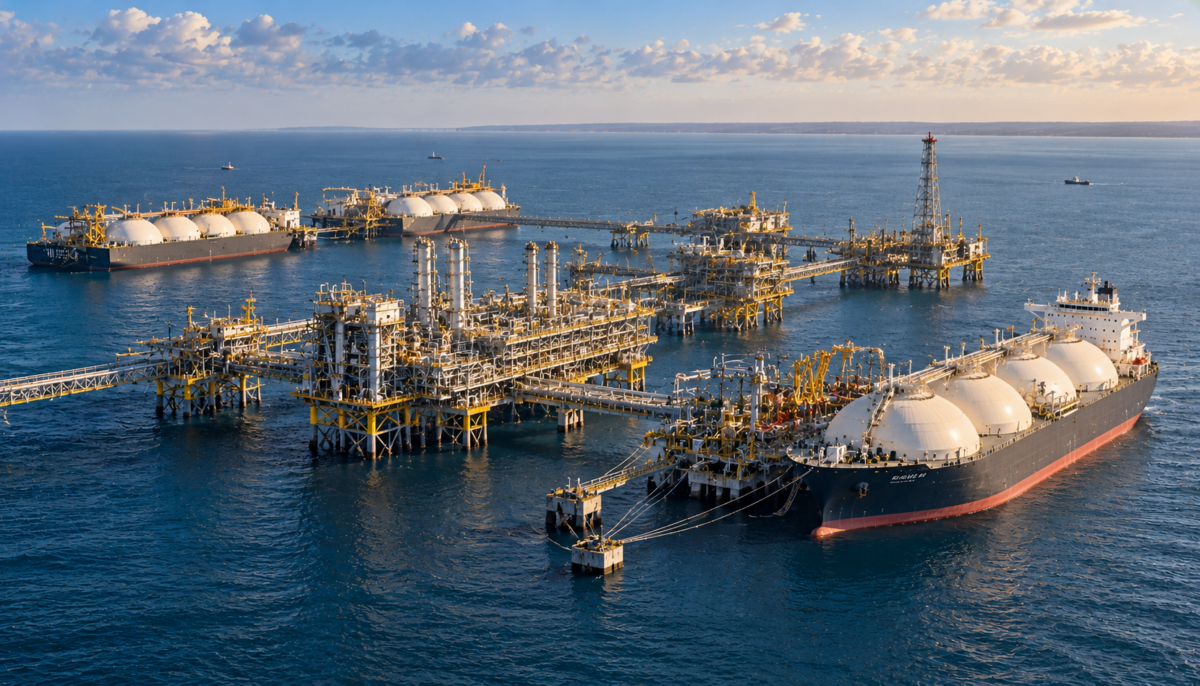
State-owned QatarEnergy is the second-largest LNG exporter globally after the United States, normally accounting for around one-fifth of global LNG exports. The firm plans to expand production from 77 million tons per annum (mtpa) at present to 142 mtpa by 2030, which would give it about a quarter of the global market. Most of Qatar’s LNG facilities and export infrastructure are located in Ras Laffan, around 80 km northeast of the capital, Doha.
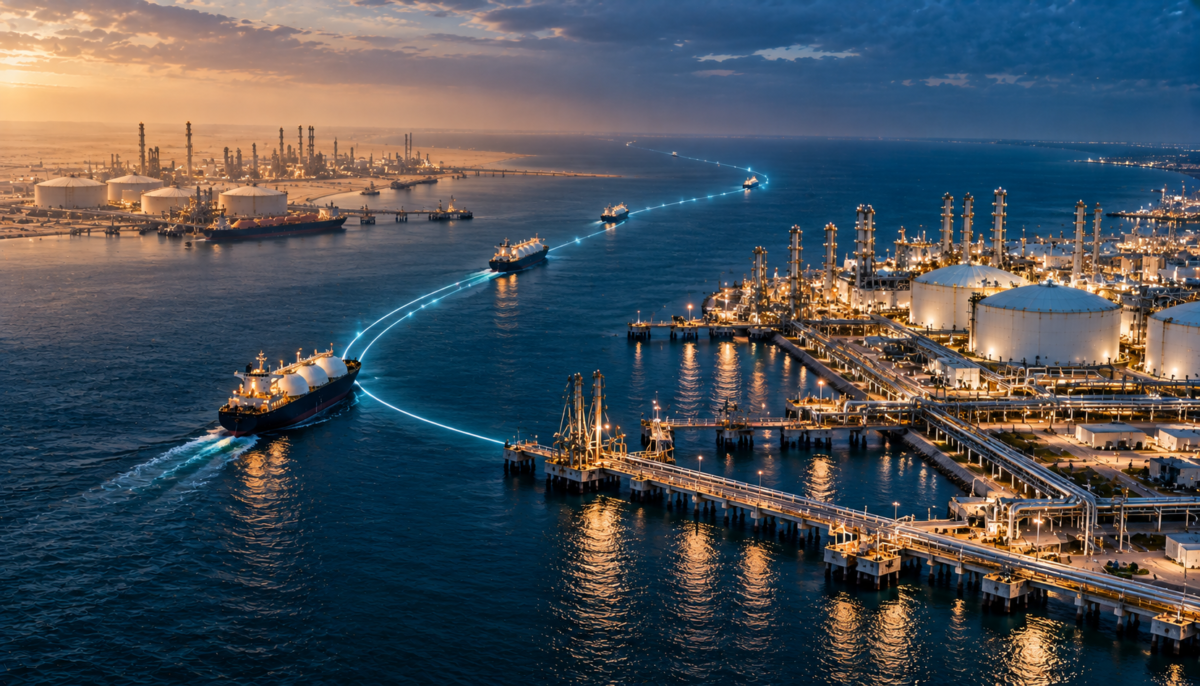
Qatar has been hit hard by the war in Iran, as it relies on the Strait of Hormuz to transport virtually all of its LNG cargoes, leading to a significant fall in exports since the war began in February. QatarEnergy exports LNG to markets across both Europe and Asia, with more than 80% of its customers in China, Japan, India, South Korea, Pakistan and other countries in Asia.
The ongoing conflict in the Middle East has led to shutdowns at the Ras Laffan LNG complex, while Iranian missile attacks have damaged infrastructure responsible for around 17% of the country’s export capacity. This is expected to lead to tens of billions of dollars in annual revenue losses while Qatar repairs the damage, which could take up to three years according to Qatar’s energy minister Saad Sherida Al-Kaabi.
By August, visible Qatar-linked LNG exports had fallen by an estimated 96%, although some cargoes may have transited with tracking systems disabled. This was a far steeper decline than those seen in neighboring Saudi Arabia, the United Arab Emirates, Iraq, and Kuwait. As Qatar continues to rely heavily on its energy sector for revenue, the country’s economy is expected to feel the impact so long as disruptions continue. The International Monetary Fund estimated in October that Qatar’s GDP could shrink by up to 15.6% this year.
The Qatar-U.S. LNG Deal
On October 22, QatarEnergy entered a deal with U.S. exporter Cheniere Energy to purchase 4 million metric tons of LNG per year through 2054 at a price indexed to the U.S. Henry Hub price plus a fixed fee, with deliveries expected to commence in the 2030s. This means that the agreement will support Qatar’s long-term diversification efforts rather than resolve its immediate supply losses.
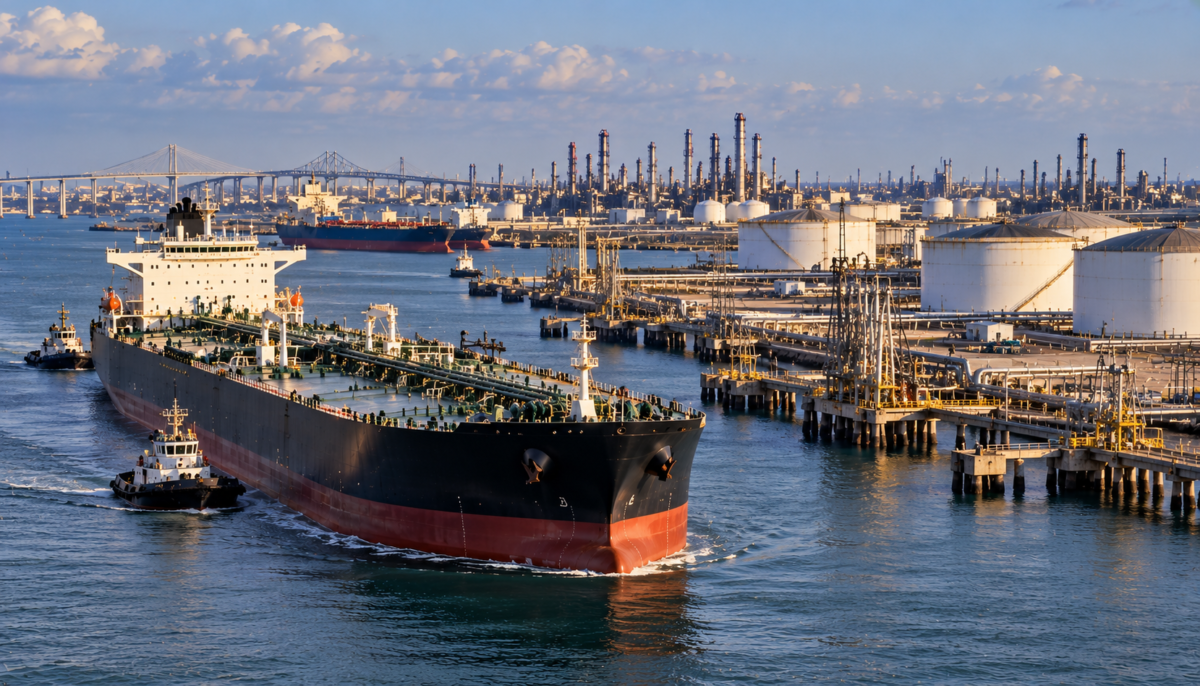
Under the agreement, QatarEnergy will buy 2 million metric tons (mmt) of LNG per year from Cheniere’s Sabine Pass facility in Louisiana and another 2 mmt from Corpus Christi in Texas. It is important to note that 1 mmt per year from Sabine Pass remains conditional on a positive final investment decision for the first phase of the facility’s expansion.
Cheniere CEO Jack Fusco said in a statement, “We look forward to reliably supplying QatarEnergy from both Sabine Pass and Corpus Christi into the second half of this century.”
The gas QatarEnergy is purchasing represents less than 1% of the global LNG trade, but it marks a significant shift in the global energy structure, given that Qatar has long been one of the world’s largest LNG exporters. U.S. LNG exporters have benefited as buyers seek replacement cargoes and greater geographic diversification.
Reshaping the Global Energy Structure
Energy analysts have repeatedly discussed whether global energy trade will return to “normal” once the conflict ends. However, International Energy Agency Executive Director Fatih Birol announced in late October that he does not expect energy markets to return to their pre-Iran war levels in 2027.
Other energy analysts expect global energy trade to change in the long term following the exposure of vulnerabilities in the current system and an overreliance on the Strait of Hormuz. Alex Munton, the director of global gas and LNG at Rapidan Energy, said that QatarEnergy’s decision to purchase U.S. LNG for several decades suggests Qatar sees a risk that freedom of navigation in the Strait of Hormuz may not return in the near future, as Iran continues to attack tankers.
Munton stressed that it is complicated to find alternative routes for transporting LNG, as it is a waterborne product. “It’s liquefied so it can be put on a ship and that requires access to seaborne routes… They’ve got to access the Strait of Hormuz. There’s no other way of getting LNG to market. They’re just stuck,” said Munton. The analyst emphasized that QatarEnergy is expanding its LNG trading business through the Cheniere deal.
The agreement highlights how geopolitical disruptions can reshape energy trade even when countries retain their ambitions as major producers. By securing U.S. LNG, QatarEnergy can diversify its supply portfolio and potentially maintain deliveries to customers while its domestic export capacity recovers. However, the deal is not an immediate substitute for Qatar’s lost exports, with deliveries expected to begin in 2031.
Its long-term significance will depend on Qatar’s infrastructure recovery, maritime route security, and future LNG demand. The agreement also reinforces the United States’ position as a major supplier, although its impact on global prices and competition remains uncertain.
Keep In Touch with Shale Magazine
As the new era of energy unfolds, you can bet we’ll be the boots on the ground to keep you informed. Subscribe to Shale Magazine for sharp insight into the arenas that matter most to your life. And don’t forget to listen to our riveting podcast, The Energy Mixx Radio Show, where our very own Kym Bolado interviews the most extraordinary thought leaders, business innovators, and industry experts of our time.