



The landscape of global energy security has undergone a seismic shift over the last five years, moving from a period of relative stability to one defined by rapid infrastructure deployment and geopolitical necessity. At the center of this transformation is Louisiana. During a high-level session at CERAWeek by S&P Global, Louisiana Governor Jeff Landry and Mike Sabel, CEO, Executive Co-Chair, and Founder of Venture Global LNG, detailed how the state has evolved into a critical supplier for the global economy.
The discussion highlighted a fundamental change in how state governments and energy producers interact. For Louisiana, the objective is no longer just to regulate, but to facilitate energy production at what Governor Landry calls the speed of life. This philosophy aims to reconcile the slow-moving nature of government bureaucracy with the fast-paced requirements of global energy markets.
Permitting at the Speed of Life
The primary bottleneck for American energy infrastructure has long been the permitting process. For massive projects like liquefied natural gas (LNG) export terminals, the time between a final investment decision and the first cargo offtake can span a decade, much of which is consumed by regulatory review and litigation. Governor Landry’s administration has signaled a departure from this traditional timeline by reorganizing state agencies to act as a one-stop shop for developers.
According to the Governor, the Department of Economic Development has been positioned as the tip of the spear. By requiring different agencies to coordinate and communicate under a unified mandate, the state seeks to eliminate the silos that often stall permit applications. The rationale is purely economic: the longer a permit takes to issue, the more it costs the developer, which ultimately risks capital flight to more efficient jurisdictions.
Treating corporations as customers rather than adversaries is a hallmark of this new approach. By maximizing the efficiency of the bureaucracy, Louisiana aims to maximize the investment margins for companies like Venture Global, ensuring they continue to choose the Gulf Coast for their multi-billion dollar expansions. This internal reform is designed to match the pace of private industry, where delays equate to lost market opportunities and increased project costs.
Venture Global’s High-Stakes Growth Strategy
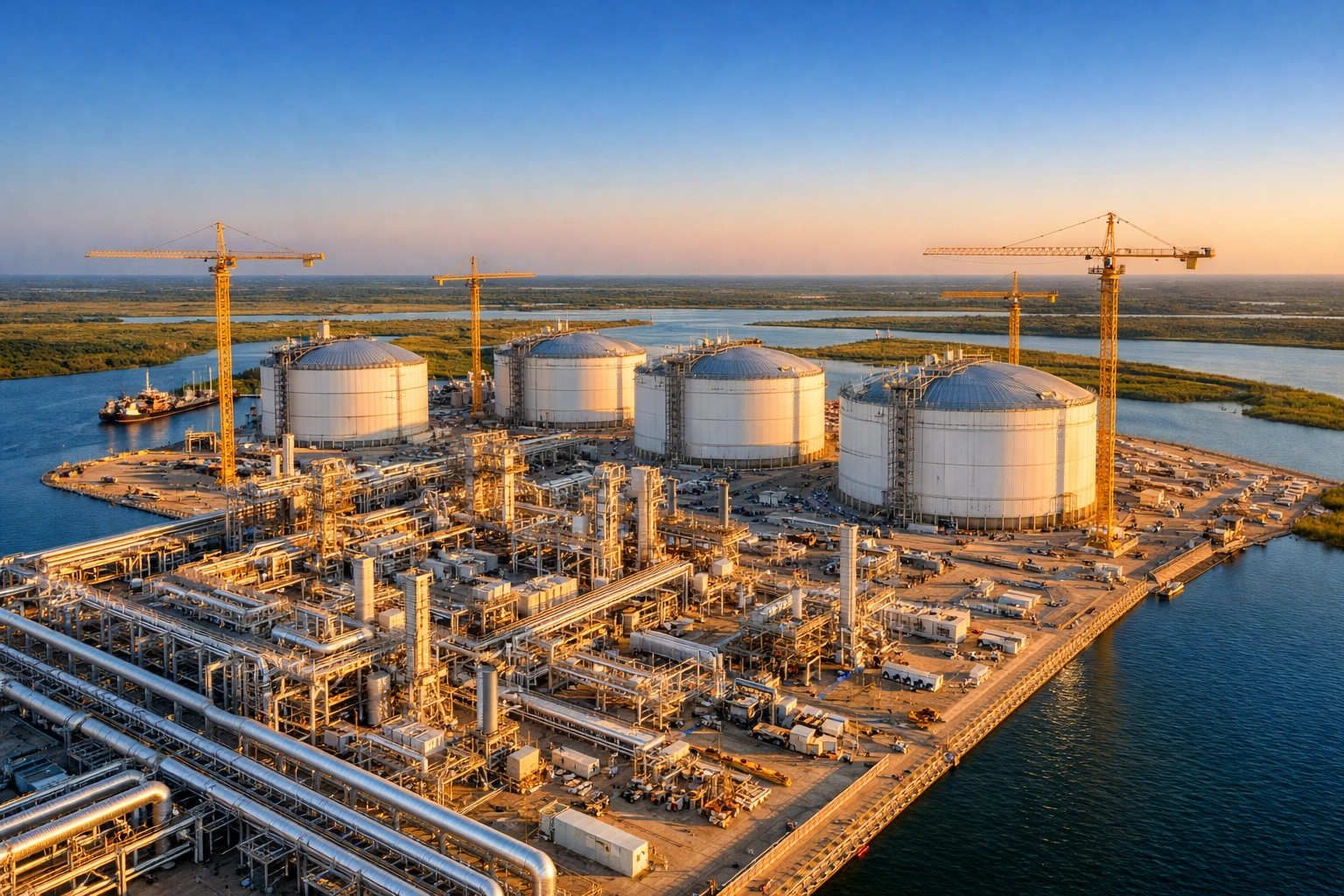
Venture Global LNG has emerged as perhaps the fastest-growing LNG supplier in the world. Their presence in Louisiana is substantial, with projects like Calcasieu Pass, Plaquemines LNG, and the proposed CP2 and CP3 facilities representing a combined investment that scales toward $100 billion. Mike Sabel noted during the CERAWeek session that the company is currently on track to reach approximately 70 million tons of production capacity in the near future.
A unique aspect of Venture Global’s strategy is their willingness to make massive financial commitments ahead of receiving final permits. Sabel revealed that the company had invested nearly $6 billion into the CP2 project before formal permits were secured. This level of risk-taking is predicated on a high degree of trust in both state and federal regulatory processes. For Venture Global, the goal is to get supply into a hungry global market as quickly as possible, often placing orders for long-lead equipment like turbines and cold boxes years in advance.
The scale of these projects is difficult to overstate. Plaquemines LNG, following its recent brownfield expansion announcement, is poised to become the largest LNG export facility in North America. By adding 24 trains and an additional $18 billion in investment, the facility’s capacity could exceed 45 million tonnes per annum. This aggressive growth is a response to long-term demand signals from global partners, including 20-year offtake agreements with major entities like ExxonMobil and various European and Asian utilities.
Bridging the Federal and State Regulatory Gap
While Louisiana has streamlined its internal processes, the success of these projects often hinges on federal synergy. The interaction between state-level efficiency and federal-level oversight is a recurring theme for energy executives. During the discussion, both Landry and Sabel pointed to the importance of leadership at the federal level in maintaining the momentum of the American energy sector.
The Governor emphasized that the current administration’s focus on streamlining has put pressure on the state to move even faster. When federal cabinet secretaries prioritize business-oriented efficiency, it creates a top-down mandate that prevents projects from getting clogged in the federal bureaucracy. This alignment is critical because even the most efficient state-level permitting scheme can be negated if a project is stalled by federal agencies or the Federal Energy Regulatory Commission (FERC).
However, challenges remain. Sabel pointed to an ecosystem of NGOs and third-party litigation that frequently uses the court system to frustrate the permitting process. Even after thousands of pages of environmental and safety studies are completed, projects often face years of legal challenges. Governor Landry’s legislative agenda in Louisiana aims to simplify these hurdles, ensuring that while the public’s right to notice and comment is protected, the legal system is not used as a tool for indefinite obstruction.

Building the Essential Economy Workforce
Infrastructure of this magnitude requires more than just capital and permits; it requires a specialized workforce. Governor Landry and Mike Sabel both identified labor as one of the most significant challenges facing the industry today. The shift toward what some call the essential economy requires a re-evaluation of how the American workforce is educated and trained.
In Louisiana, approximately 70% of new job opportunities do not require a four-year college degree. These roles, which include specialized welding, electrical work, and pipe fitting, often pay significantly better than many entry-level positions available to college graduates. The state is currently working to reallocate educational resources to drive young people toward these skill sets, moving away from the traditional push for universal university attendance.
Venture Global has taken a proactive role in this space by launching its own training programs, such as Venture Skills. These programs provide specialized instruction to ensure that the workforce can handle the immense complexity of LNG liquefaction facilities. The ability to assemble thousands of specialized components safely and with craftsmanship is the backbone of the industry. This focus on vocational training is essential for sustaining Louisiana’s competitive advantage.
Louisiana as a Global Energy Hub
The transformation of Louisiana into a global LNG powerhouse is a case study in large-scale infrastructure support. By treating energy producers as partners and focusing on the speed of execution, the state has positioned itself as the primary gateway for American natural gas to reach the world. The facilities being built today are not just local economic engines; they are pillars of global energy security.
As Venture Global continues to discover new ways to improve production capacity through data analysis and technical upgrades, the ripple effects will be felt across the global market. The collaboration between state leadership and private enterprise in Louisiana demonstrates that when the regulatory environment matches the pace of the industry, the results are transformative. The future of the LNG race will be decided by those who can move at the speed of life. Louisiana has made its choice, and the global energy market is already responding.