
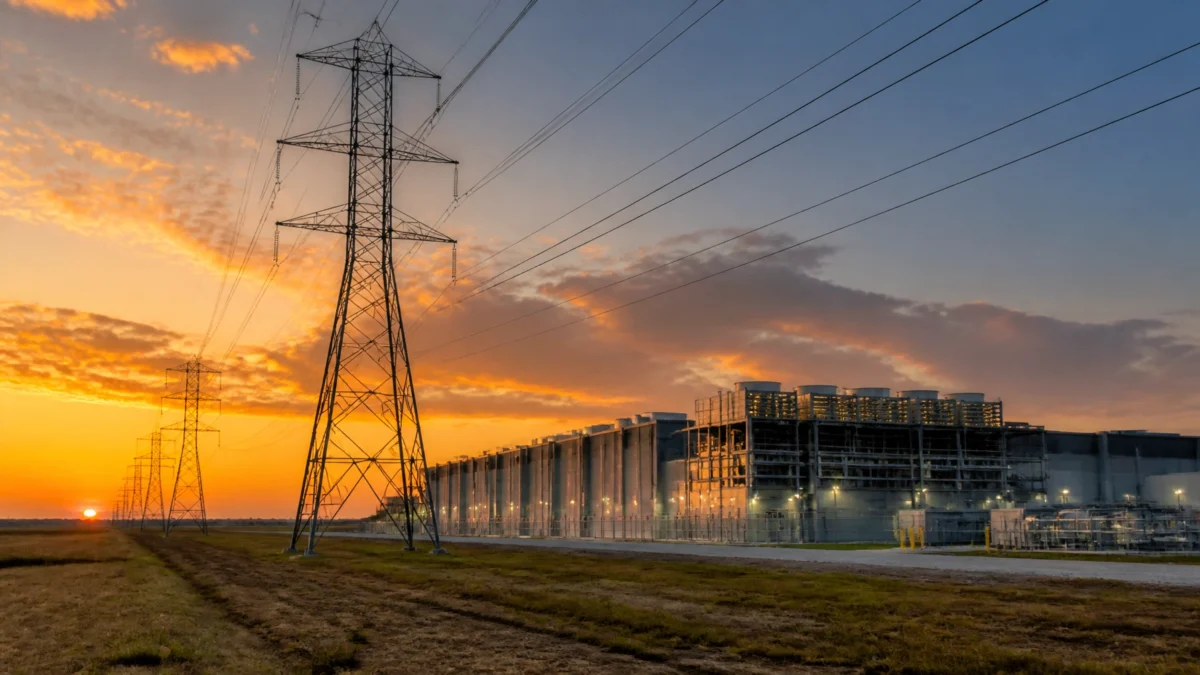
The landscape of the Texas energy market is undergoing a significant transformation as state leadership moves to reconcile industrial growth with consumer protection. Governor Greg Abbott issued a formal directive on June 10, 2026, aimed at the Public Utility Commission of Texas (PUC) and the Electric Reliability Council of Texas (ERCOT). This directive addresses the rapid Texas data center expansion that has placed unprecedented pressure on the state’s electrical grid and water resources. The core of the Governor’s message is clear: the financial burden of the infrastructure required to support massive digital facilities must fall on the operators themselves, not on the residential families or small businesses of the Lone Star State.
Texas has long been a hub for technological innovation and industrial development, but the sheer scale of the current demand from data centers has forced a reevaluation of existing regulatory frameworks. As these facilities multiply across the state, their consumption of electricity and water has raised concerns regarding long-term grid stability and the potential for rising utility bills for the average Texan. By demanding that the PUC and ERCOT take immediate action, the Governor is signaling a shift toward a more self-sustaining model for high-demand industrial sectors.
Shifting infrastructure costs to commercial operators
For years, the expansion of industrial facilities often relied on shared infrastructure costs that were distributed across a broad base of ratepayers. However, the unique demands of the Texas data center expansion require a more surgical approach to cost allocation. Under the new directive, the PUC is tasked with requiring data centers to fully fund the costs of the electric infrastructure specifically needed to serve their operations. This includes the high-voltage lines, transformers, and interconnection equipment that allow these facilities to draw massive amounts of power from the ERCOT grid.
The goal of this policy shift is to ensure that the rapid growth of the tech sector does not result in a hidden tax on Texas residents. When a new data center enters a local market, the upgrades to the regional grid can run into the hundreds of millions of dollars. By mandating that these companies cover their own capital expenditures for power access, the state is decoupling corporate expansion from residential rate hikes. This move aligns with a broader national trend where energy-intensive industries are being asked to take more responsibility for their environmental and infrastructural footprints.
This directive also addresses the issue of “capacity versus demand.” In many cases, data centers have been criticized for merely increasing the total load on the grid without contributing to the overall generation capacity. Governor Abbott’s directive seeks to flip this dynamic by encouraging, and eventually requiring, these facilities to add power generation or storage capabilities that benefit the entire system.

Timely mandates for regulatory transparency and action
The Governor has established a strict timeline for regulatory bodies to respond to these challenges. The PUC and ERCOT are required to submit a joint memorandum by July 17, 2026, outlining the specific actions they will take under their current authority to safeguard ratepayers. This document is expected to serve as a roadmap for the near-term management of the Texas data center expansion, identifying where existing rules can be tightened and where new legislative intervention may be necessary.
Following the submission of this memorandum, the PUC must initiate formal action by July 31, 2026, to reduce the transmission costs currently borne by residential customers. This is a critical component of the directive, as transmission and distribution charges often make up a significant portion of a monthly electric bill. By shifting a larger share of these costs to the industrial users who necessitate the upgrades, the state aims to provide tangible financial relief to Texas households.
The urgency of these deadlines reflects the pace at which the energy landscape is changing. With the rise of artificial intelligence and high-performance computing, the energy needs of data centers are projected to grow exponentially over the next decade. According to analysis from SHALE Magazine, the intersection of AI and energy infrastructure is one of the most critical challenges facing policymakers today. The July 2026 deadlines ensure that Texas is not reacting to a crisis but rather proactively shaping the future of its energy economy.
Sustainable standards for the Texas data center expansion
Beyond the immediate financial implications for the grid, the Governor’s directive looks ahead to the next legislative session to establish long-term standards for data center operations. One of the most pressing issues is water consumption. Traditional data centers use millions of gallons of water for evaporative cooling systems, which can strain local municipal supplies, especially in the more arid regions of Texas. The proposed legislation would require data centers to adopt water-efficient cooling technologies, such as closed-loop systems or liquid-to-chip cooling, which drastically reduce the environmental impact.
In addition to water conservation, the Governor is calling for a phase-out of outdated tax incentives that were originally designed to attract data centers to the state when the industry was in its infancy. With Texas now a dominant player in the global data market, these subsidies are seen as no longer necessary and, in some cases, counterproductive to the goal of fiscal responsibility. Future laws will likely require more accurate and frequent reporting of both electricity and water usage, providing the state with the data needed for more precise long-term energy planning.
Community protections are also a major pillar of the upcoming legislative agenda. Residents in areas adjacent to large-scale data centers have frequently voiced concerns about noise pollution from massive cooling fans and the aesthetic impact of industrial “megastructures” in suburban or rural settings. The Governor’s plan includes the implementation of setbacks and noise-reduction requirements to ensure that industrial growth does not come at the expense of the quality of life for neighboring Texas communities.

Balancing industrial growth with residential stability
The broader strategy behind these directives is to maintain the competitive advantage of the Texas energy market while protecting the individuals who power the state’s economy. The Texas data center expansion is a testament to the state’s business-friendly environment and its robust energy production, but the Governor’s actions suggest that “business-friendly” cannot mean “resident-agnostic.” By forcing a higher degree of accountability on the tech sector, Texas is attempting to create a more balanced ecosystem where innovation and affordability can coexist.
The role of ERCOT in this transition cannot be overstated. As the primary manager of the state’s isolated grid, ERCOT must balance the competing needs of diverse industrial players while ensuring that the lights stay on for millions of homes. The upcoming July 17 memorandum will likely provide deep insights into how ERCOT plans to integrate these massive loads without compromising reliability. This involves not only managing demand but also facilitating the integration of new, cleaner forms of energy that data centers may eventually bring online themselves.
As we look toward the future, the success of these measures will depend on the collaboration between the PUC, ERCOT, and the private sector. Companies looking to capitalize on the Texas data center expansion will need to factor in these new costs and regulatory requirements as part of their long-term capital planning. While this may increase the initial cost of entry for some operators, it provides a much-needed layer of stability and predictability for the state as a whole.

At Energy Network Media Group, we continue to monitor these policy shifts and their impact on the global energy market. The decisions made in Austin over the next few months will set a precedent for how other states and nations manage the insatiable energy appetite of the digital age. By prioritizing the ratepayer and the reliability of the grid, Texas is once again positioning itself as a leader in energy policy and industrial oversight.
Keep In Touch with Shale Magazine
As the new era of energy unfolds, you can bet we’ll be the boots on the ground to keep you informed. Subscribe to Shale Magazine for sharp insight into the arenas that matter most to your life. And don’t forget to listen to our riveting podcast, The Energy Mixx Radio Show, where our very own Kym Bolado interviews the most extraordinary thought leaders, business innovators, and industry experts of our time.