



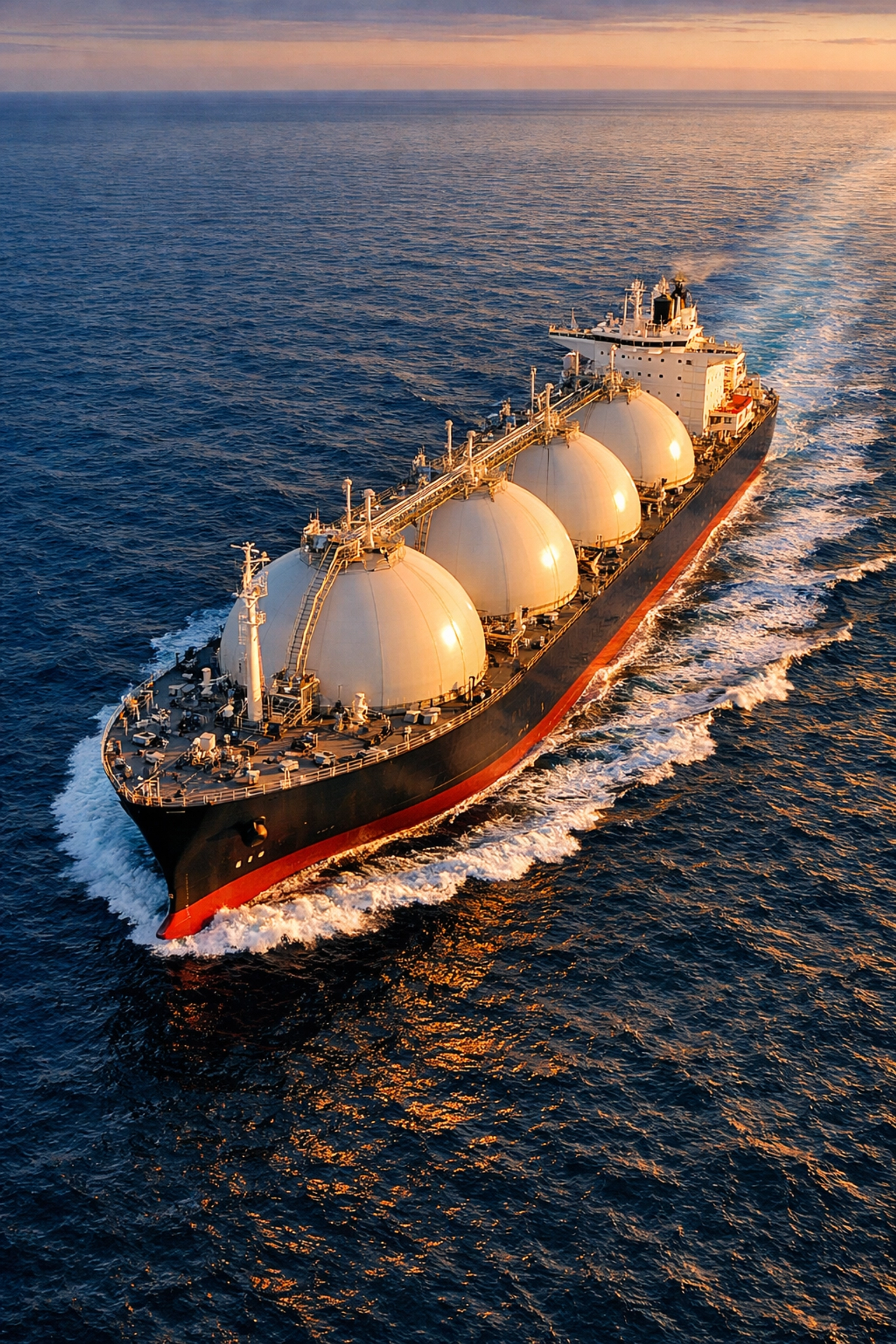
Ten years and one month ago, the energy world watched as the first modern shipment of liquefied natural gas departed from the United States, marking a paradigm shift in how the world consumes American resources. That milestone, originating from Cheniere Energy’s Sabine Pass terminal in February 2016, effectively ended the era of American energy scarcity and launched a decade of unprecedented growth. At the 2026 CERAWeek conference in Houston, Cheniere CEO Jack Fusco reflected on a decade defined by rapid scaling, geopolitical volatility, and the fundamental transformation of his company from a niche player into a global infrastructure giant.
The numbers associated with this decade are staggering. Since that first cargo, Cheniere has seen a tenfold increase in its production capacity and a corresponding tenfold increase in its stock price. As the company approaches its 5,000th cargo, the narrative has shifted from whether the U.S. could export gas to how much of the global demand it can realistically meet. Fusco noted that the journey has been as humbling as it has been profitable, driven by a shale energy revolution that provided the necessary feedstock to power entire nations.
The Ten Year Milestone of Global LNG Market Expansion
The success of the American LNG sector was never a foregone conclusion. When the first shipments began, natural gas prices were volatile and the infrastructure required to super-cool gas for transoceanic travel was incredibly capital-intensive. Today, Cheniere stands as a primary pillar of the global energy market, responsible for over 50 percent of all U.S. LNG production by actual tanker volume. This scale has allowed the company to weather a half-decade of maximum capacity operations, particularly following the onset of the Russia-Ukraine conflict, which saw American gas redirected to stabilize European grids.
According to Fusco, the impact of these exports extends far beyond simple power generation. Early in his tenure, during a diplomatic mission to China, he realized that the demand for natural gas was not just about displacing coal in massive utility plants, but about replacing solid fuels like wood and coal in residential kitchens. This micro-level displacement has massive implications for global air quality and health, reinforcing the role of natural gas as a critical tool for human development in emerging markets.
Defining the Infrastructure Company in the Global Energy Market
One of the most significant shifts in Cheniere’s corporate identity under Fusco’s leadership has been the transition to being viewed as an infrastructure company rather than a commodity speculator. With over $50 billion invested in American soil, Cheniere has focused on the reliability and execution of long-term projects. This distinction is vital for investors and regulators alike, as it underscores a commitment to domestic economic growth and physical asset management over short-term price hedging.
The company’s footprint is expanding. Currently, Cheniere has permits pending to add another 40 million tons of capacity on top of the 60 million tons already in operation or under construction. This growth is anchored in a business model that prioritizes foundation customers: those who sign the 20-year contracts necessary to bankroll multi-billion-dollar liquefaction trains. By positioning itself as an infrastructure provider, Cheniere offers a stable price signal to a world that has grown wary of the volatility seen in oil and gas news headlines over the last few years.
Reliability has become the company’s primary currency. Fusco emphasized that Cheniere has never missed a foundation customer cargo, a record of operational excellence that is rare in a sector prone to technical delays and supply chain disruptions. This focus on execution is what allowed the company to grow from 300 employees in 2016 to the multi-thousand-person powerhouse it is today, maintaining a steady course even as competitors faced significant headwinds. More information on the financial underpinnings of this growth can be found at Finance Today.
Securing Reliability Through Global LNG Market Expansion Strategies
The global energy landscape in 2026 is dominated by a renewed focus on energy security. The lessons learned from Europe’s previous over-reliance on Russian pipeline gas have permeated the Asian markets, where diversity of supply is now seen as the ultimate safeguard. Fusco pointed out that while the U.S. is a critical supplier, customers are increasingly looking for a balanced portfolio that includes multiple geographic origins to avoid single-point-of-failure risks.
This need for security has fueled a renaissance in long-term contracting. After a period where some market analysts suggested that the industry would move toward a purely spot-market-based model, the 20-year contract has returned to favor. Customers in India, Pakistan, Bangladesh, and Vietnam are seeking the stability of $6 to $7 per MMBtu gas to protect their developing economies from the price spikes that characterize the spot market during times of geopolitical tension.
Geopolitical risks remain a constant concern for the industry. Tensions in the Middle East and threats to maritime routes, such as the Strait of Hormuz, continue to impact market sentiment. Fusco noted that while Cheniere tracks its fleet of approximately 40 tankers with advanced GPS and continuous emission monitoring systems, the broader market remains sensitive to any disruption in the flow of energy. For emerging nations, these price fluctuations are not merely economic inconveniences; they often dictate whether a country must return to burning dirty, high-sulfur coal to keep its lights on.
Future Growth and the Speed of Life Expansion
Looking ahead to 2040, the demand for natural gas is projected to reach nearly 800 million tons annually, leaving a significant supply gap of approximately 150 million tons. Cheniere is racing to fill this void through its Corpus Christi expansion. The company’s Train 5 project is moving at what industry insiders call the speed of life, with operational status expected imminently. Working closely with engineering partners like Bechtel, Cheniere has managed to pull expansion timelines forward, a necessity in a market where every molecule of gas is in high demand.
The expansion at Corpus Christi represents the next chapter in the company’s evolution. By integrating advanced technologies and maintaining a rigorous focus on emissions tracking, Cheniere is attempting to set the standard for what low-carbon LNG looks like. Every cargo now comes with an emission tag, providing transparency to customers who are under increasing pressure to meet ESG targets without sacrificing energy reliability.

The shale energy revolution remains the bedrock of this entire operation. Without the prolific production from basins like the Permian and the Haynesville, the U.S. would not have the low-cost feedstock required to compete on the global stage. As Fusco enters what he describes as the final chapter of a 40-year career, his focus remains on the operational health of the plants. He remains a regular presence at the sites, an engineer by trade who believes that the true value of the company is found in the pipes, turbines, and people on the ground rather than just the balance sheets in the boardroom.
Analyzing the Long-Term Outlook for Energy Market Trends
As the 10th anniversary celebrations conclude, the industry must reckon with the fact that the next decade will likely be more complex than the last. Energy market trends indicate a world that is simultaneously hungry for more power to fuel AI and data centers, while also demanding a reduction in the carbon intensity of that power. Natural gas, with its ability to provide flexible, dispatchable baseload energy, is uniquely positioned to bridge this gap.
The return of repeat customers for the latest 13 million tons of contracted capacity suggests that the Cheniere model is working. By providing a stable, reliable service, the company has built a level of trust that is difficult to replicate. This trust is essential as the world transitions into a more fragmented geopolitical environment where energy is frequently used as a lever of statecraft.
In the broader context of business and energy, Cheniere’s success serves as a blueprint for how American industrial policy and private sector innovation can align to create global influence. The transition from a net importer to the world’s leading exporter of LNG in just a decade is one of the most significant economic achievements in modern history. As long as the U.S. maintains its lead in shale production and continues to streamline the permitting process for infrastructure, the next ten years could see American LNG play an even more dominant role in securing global prosperity.
Through a combination of engineering prowess, strategic long-term thinking, and a deep understanding of global energy market trends, Cheniere has navigated a decade of change to emerge as a global leader. The goal for the next decade remains clear: maintain the reliability that foundation customers expect while expanding the infrastructure necessary to power a developing world. In the words of Jack Fusco, the focus must remain on the molecules, the machines, and the mission of delivering American energy to every corner of the globe.
Keep In Touch with Shale Magazine
As the new era of energy unfolds, you can bet we’ll be the boots on the ground to keep you informed. Subscribe to Shale Magazine for sharp insight into the arenas that matter most to your life. And don’t forget to listen to our riveting podcast, The Energy Mixx Radio Show, where our very own Kym Bolado interviews the most extraordinary thought leaders, business innovators, and industry experts of our time.
Subscribe to get more posts from Amanda Jenkins