The United States energy landscape just cleared a massive technical hurdle right before the holiday weekend. In a series of rapid-fire announcements from the Department of Energy and private innovators, four advanced microreactors reached initial criticality by the early morning hours of July 4, 2026, successfully surpassing a high-stakes Independence Day deadline. This achievement serves as a tangible signal of nuclear energy renaissance progress across the domestic power sector. By hitting and then exceeding this goal, the Department of Energy has effectively proven that the long-promised era of modular, rapidly deployable nuclear power is no longer a collection of white papers and CAD renderings but a physical reality.
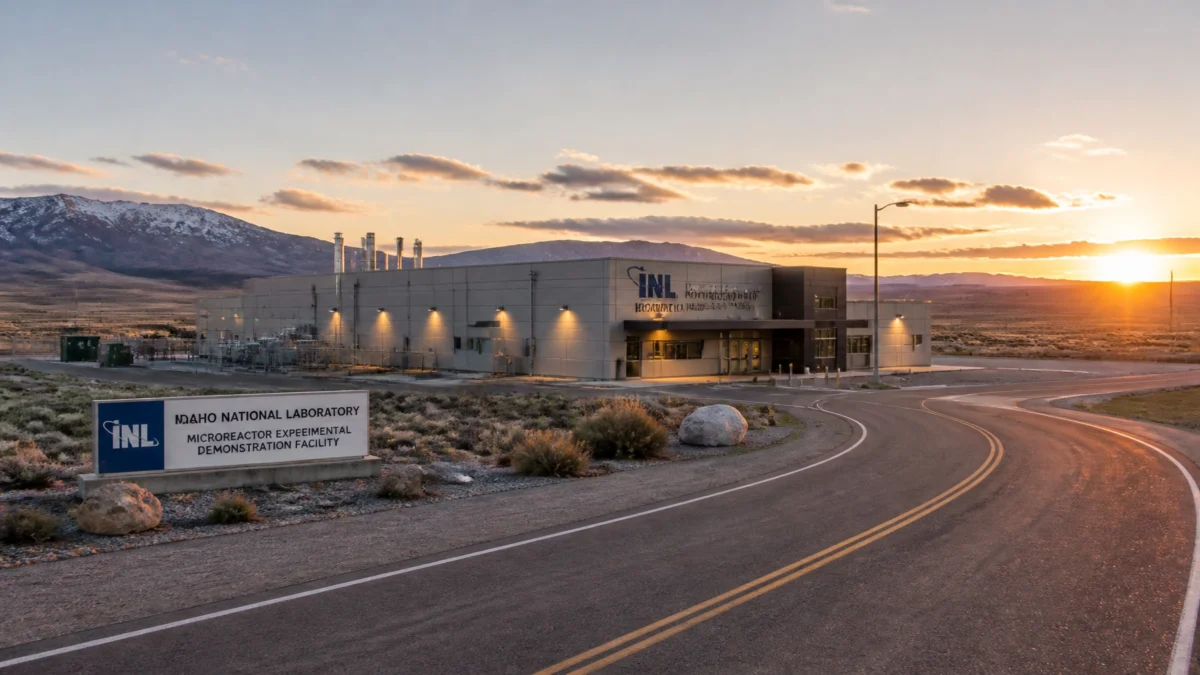
The deadline was not an arbitrary date selected by bureaucrats. It was the centerpiece of Executive Order 14301, signed in May 2025, which aimed to reform how the United States tests and authorizes new nuclear designs. The order challenged the industry and the DOE to bring at least three advanced test reactors to criticality by Independence Day 2026. With Deployable Energy, Antares Nuclear, and Valar Atomics all crossing the finish line in the final days of June, and Aalo Atomics achieving criticality with its Aalo-X Critical Test Reactor at Idaho National Laboratory in the early morning hours of July 4, the industry did more than deliver on the mandate. It surpassed it, a point Energy Secretary Chris Wright formally highlighted in announcing that the United States had beaten the Executive Order target.
Critical Milestones for Nuclear Energy Renaissance Progress
Achieving criticality is the foundational moment for any nuclear reactor. It is the point where a nuclear chain reaction becomes self-sustaining, essentially waking the machine up. While the recent tests at the Idaho National Laboratory were zero-power or cold criticality demonstrations: meaning they are not yet churning out electricity for the grid: they confirm the fundamental physics of these new designs. They prove that the fuel is correctly configured, the control systems are functional, and the safety parameters are behaving exactly as predicted by digital twins.
Secretary of Energy Chris Wright has been a vocal proponent of this aggressive timeline. In a recent statement, Wright framed the success as the beginning of a genuine nuclear renaissance, emphasizing that the speed of these developments is what will eventually drive down costs and improve grid reliability. Unlike the massive, gigawatt-scale light water reactors of the past, these microreactors are designed to be built in factories, transported by truck or rail, and deployed in weeks rather than decades.
According to data from the Nuclear Energy Institute, the success of these four units represents the most significant concentration of new reactor start-ups in more than forty years. This momentum is critical as the industry looks toward a future where small modular reactors and microreactors provide carbon-free baseload power for data centers, military installations, and remote industrial sites.

The New Guard of Microreactor Technology
Four distinct companies led the charge to meet and exceed the July 4 mandate, each bringing a unique technological approach to the table. The diversity of these designs is a key feature of the DOE Reactor Pilot Program, which sought to avoid betting on a single technology pathway.
- Antares Nuclear: The Mark-0 reactor from Antares was the first to hit the goal. It utilizes a sodium heat-pipe design paired with TRISO fuel. This combination is particularly attractive because heat pipes eliminate the need for complex pumps and high-pressure coolant loops, significantly reducing the number of moving parts that could fail. The Mark-0 is a demonstration unit intended to pave the way for a 2027 electricity-producing model.
- Valar Atomics: Moving with characteristic speed, Valar Atomics achieved criticality with its advanced microreactor shortly after Antares. While Valar has kept many of its specific design specs closer to the chest, the unit is part of a broader strategy to provide high-heat output for industrial processes and hydrogen production, beyond just simple electricity generation.
- Deployable Energy: The Unity reactor was the third to cross the finish line. Unity is a 1 MW nuclear battery designed for maximum portability. It is the flagship project of the Nuclear Energy Launch Pad initiative, which focuses on reactors that can be deployed in rugged environments with minimal site preparation.
- Aalo Atomics: Aalo completed the final surprise of the weekend when its Aalo-X Critical Test Reactor at Idaho National Laboratory achieved criticality in the early morning hours of July 4, 2026. That milestone turned a three-reactor mandate into a four-reactor outcome. Secretary of Energy Chris Wright formally announced that the United States had surpassed the Executive Order requirement, giving the DOE a stronger-than-expected victory heading into the holiday.
The fact that multiple companies are now racing toward these milestones shows that the competitive spirit of the private sector is finally being successfully integrated into the nuclear regulatory framework.
Policy Drivers and the Nuclear Energy Launch Pad
The speed at which these reactors reached criticality can be traced directly back to the policy shifts within the Department of Energy and the White House. Executive Order 14301 did more than just set a deadline; it created a fast-track authorization pathway that bypasses some of the traditional hurdles of the Nuclear Regulatory Commission for reactors located on DOE sites like the Idaho National Laboratory. This doesn’t mean safety was sacrificed; rather, it means the administrative review was conducted in parallel with hardware development.
The Nuclear Energy Launch Pad initiative has been a vital part of this ecosystem. By providing a centralized testing ground where private companies can utilize DOE fuel, security, and expertise, the government has lowered the barrier to entry for nuclear startups. This public-private partnership model mirrors the successes seen in the commercial space industry over the last decade.
Industry analysts at Rystad Energy have noted that the success of this pilot program likely means we will see an expansion of the Launch Pad concept to other sites. As the US looks to secure its energy future, the ability to rapidly iterate on nuclear designs is a major strategic advantage. You can read more about how similar technological integrations are affecting the grid in our analysis of AI and midstream reliability at https://shalemag.com/ai-driven-midstream-reliability-gas-compression.

Path to Commercialization and Grid Integration
The big question now is what happens after the fireworks fade and the July 4 deadline is met. Criticality is a major victory, but it is not the same as commercialization. The next eighteen to twenty-four months will be focused on transition. These test reactors will provide the data necessary for the companies to submit their final design certifications to the NRC for commercial deployment.
The roadmap for most of these firms looks something like this:
- 2026-2027: Extended testing and data collection at the Idaho National Laboratory.
- 2027-2028: Construction of first-of-a-kind commercial units and integration of power conversion systems.
- 2028-2029: First commercial deployments to early adopters, likely including the Department of Defense and high-demand data center operators.
The demand for this technology is already skyrocketing. As we have discussed in our coverage of power demand at https://shalemag.com/why-ai-data-center-power-demand-is-reshaping-the-global-energy-grid, the rise of artificial intelligence and large-scale computing is putting a strain on the existing grid that traditional renewables alone cannot meet. Microreactors offer a localized, reliable solution that can sit right next to a data center, providing 24/7 power without the need for massive new transmission lines.
A Turning Point for American Energy
The achievement of these four microreactors is more than just a win for the specific companies involved. It is a win for the entire energy sector. It demonstrates that the United States is capable of moving fast on complex infrastructure projects when policy, funding, and engineering are aligned. Secretary Wright and the Department of Energy have essentially provided a blueprint for how to modernize the American nuclear industry.
While there are still hurdles to clear, particularly regarding the supply of high-assay low-enriched uranium fuel and the final NRC licensing of commercial designs, the momentum is undeniable. The Fourth of July 2026 will likely be remembered not just for the holiday, but as the moment the American nuclear renaissance moved from a hopeful concept into a functional, critical reality.

Keep In Touch with Shale Magazine
As the new era of energy unfolds, you can bet we’ll be the boots on the ground to keep you informed. Subscribe to Shale Magazine for sharp insight into the arenas that matter most to your life. And don’t forget to listen to our riveting podcast, The Energy Mixx Radio Show, where our very own Kym Bolado interviews the most extraordinary thought leaders, business innovators, and industry experts of our time.
Subscribe to get more posts from Amanda Jenkins