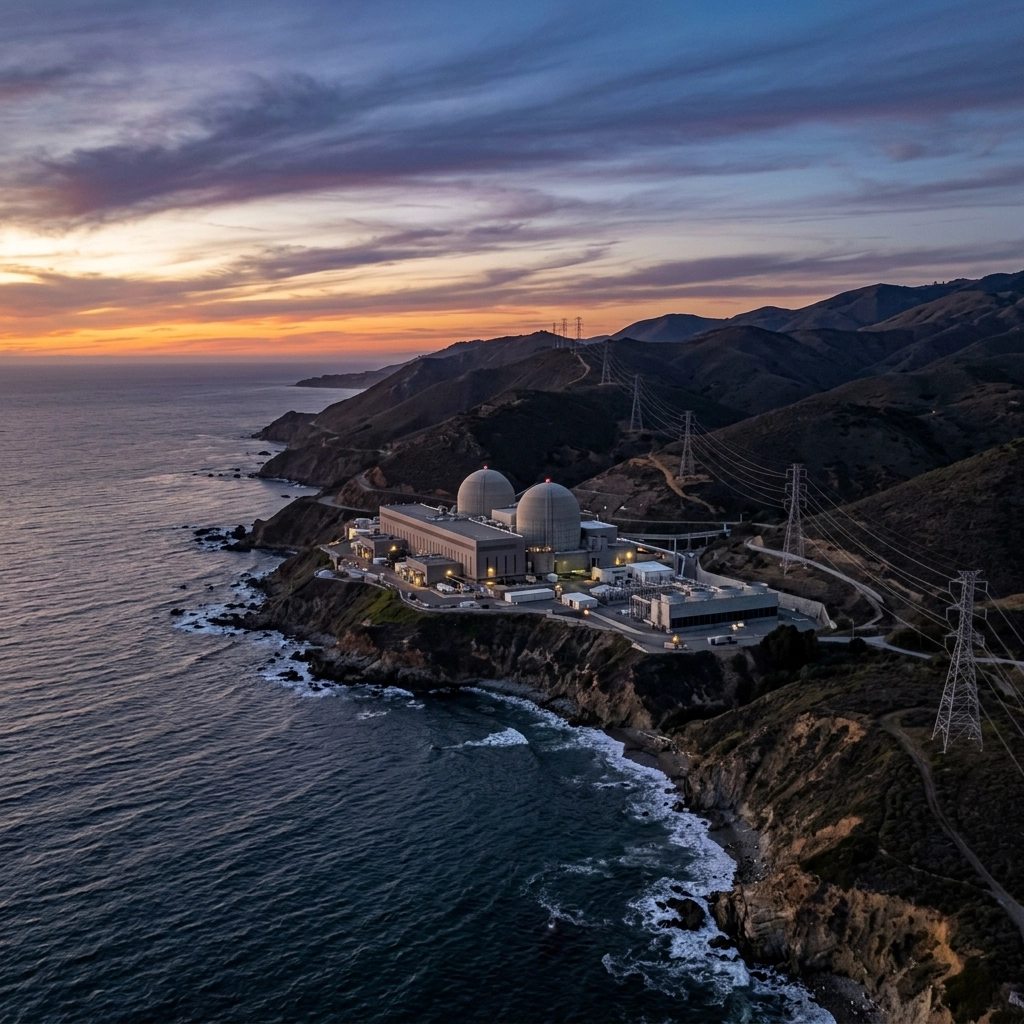
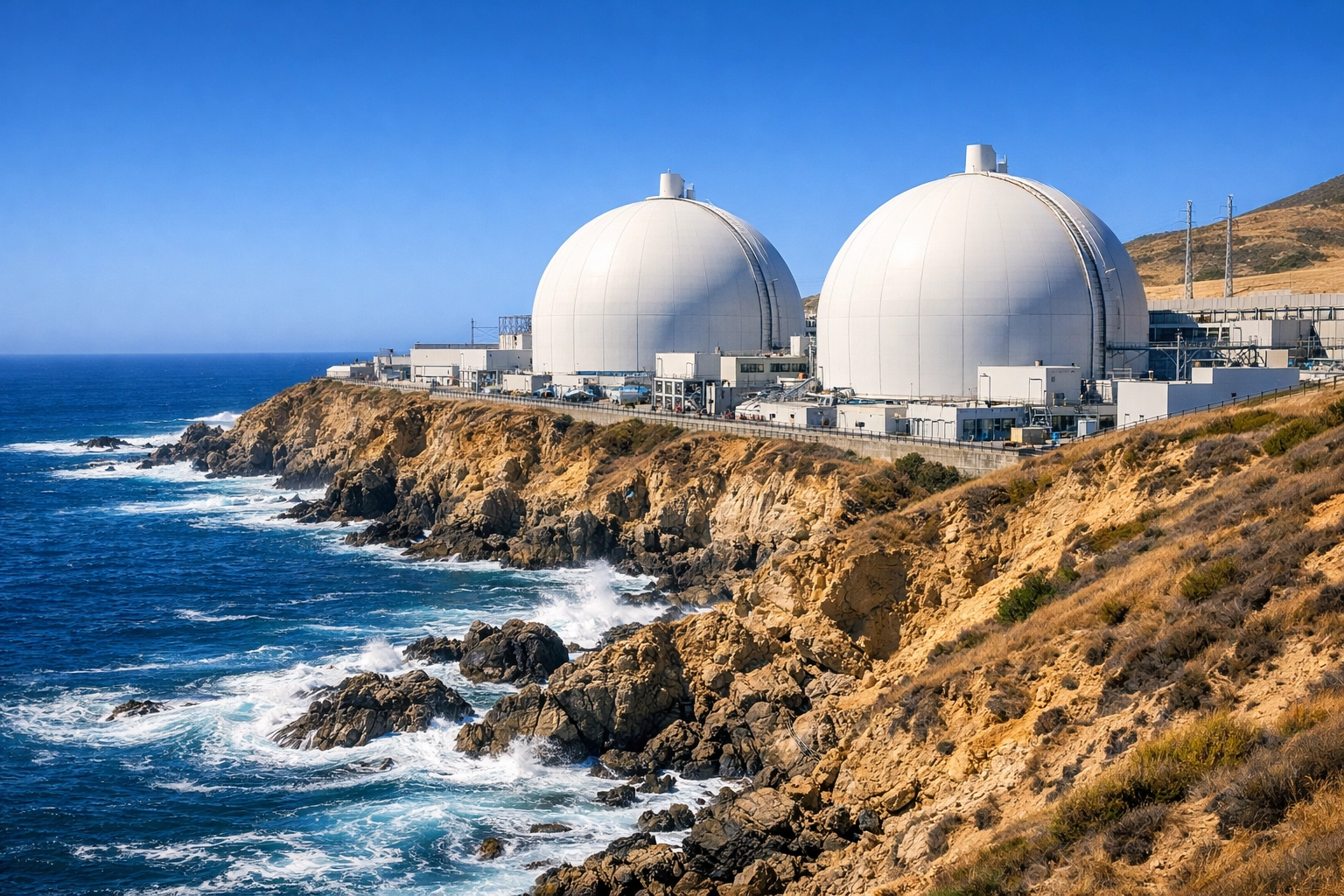
The regulatory landscape for nuclear energy in the United States often feels like a high-stakes game of tug-of-war between federal oversight and state-level policy. On April 3, 2026, the Nuclear Regulatory Commission (NRC) added a significant weight to the federal side of that rope by officially approving a 20-year license renewal for the Diablo Canyon Power Plant. This decision theoretically allows the twin reactors, located on the coast of California in San Luis Obispo County, to continue generating power until 2044 and 2045.
However, in the world of energy infrastructure, federal permission does not always equate to operational reality. While the NRC has signaled that the plant is technically and environmentally sound to operate for two more decades, the California State Legislature remains the ultimate gatekeeper. Under current state law, specifically Senate Bill 846, the facility is only authorized to run through 2030. This creates a fascinating, albeit precarious, regulatory gap that highlights the growing tension between national energy security and state-led climate mandates.
The Federal Verdict on Diablo Canyon License Extension
The NRC approval was not a sudden pivot but the culmination of a rigorous three-year review process. Federal regulators conducted exhaustive environmental impact assessments and safety inspections to determine if the aging facility could withstand the rigors of another twenty years of service. Their conclusion was clear: Diablo Canyon remains a safe and vital asset for the western power grid.
The significance of this federal green light cannot be overstated. From a federal perspective, maintaining baseload power sources like nuclear is essential for national grid stability, especially as the country transitions toward intermittent renewable sources like wind and solar. The Department of Energy has increasingly viewed nuclear preservation as a non-partisan priority for domestic energy independence.
Despite this, the NRC’s authority ends where the state’s jurisdictional control over land use and utility regulation begins. California originally planned to decommission the plant by 2025, a decision famously reversed in 2022 when Governor Gavin Newsom and state lawmakers realized that the state’s grid was not yet prepared to handle the loss of its largest single power source. The current extension to 2030 was intended as a bridge, but the NRC’s new 20-year window suggests that the federal government sees a much longer bridge as necessary.
Grid Reliability and the Zero-Carbon Struggle
To understand why the Diablo Canyon License Extension is such a polarizing issue, one must look at the hard data regarding California’s energy consumption. In 2024, Diablo Canyon provided roughly 10 percent of the state’s total electricity. More importantly, it accounted for 16 percent of California’s zero-carbon electricity production.
As the state pushes toward its aggressive goal of 100 percent clean energy by 2045, the math of removing a 2,200-megawatt baseload facility becomes increasingly difficult. Solar and wind have made massive strides, but they still struggle with the duck curve: the phenomenon where solar production drops off just as evening demand peaks. Without the steady, 24/7 output of Diablo Canyon, the state would likely have to rely more heavily on natural gas peaker plants, which would directly contradict its carbon reduction targets.
The reliability factor is particularly pressing given the extreme weather events that have plagued the West Coast in recent years. Heatwaves often push the grid to its breaking point, and during these times, every megawatt counts.
Key statistics regarding Diablo Canyon’s impact include:
- Total capacity: 2,200 megawatts.
- Percentage of California’s zero-carbon power: 16%.
- Federal funding currently allocated: $741.4 million.
- Projected operational lifespan under NRC license: Until 2045.
The Financial Tug of War and Ratepayer Concerns
While the technical safety of the plant is no longer in question at the federal level, the financial cost of keeping it open is under intense scrutiny. A report released on April 7, 2026, has stirred the pot by suggesting a significant discrepancy in funding needs. Pacific Gas & Electric (PG&E), the utility that operates the plant, originally sought a $1.4 billion state loan to facilitate the extension.
However, the U.S. Department of Energy (DOE) recently determined that the facility only requires approximately $741.4 million through 2030. This leaves a gap of over $658 million. Critics and consumer advocacy groups are asking why state taxpayers and utility ratepayers are being asked to bridge such a massive financial chasm if federal analysts believe the plant can be maintained for less.
The concern here is that the cost of the Diablo Canyon License Extension could eventually show up on monthly utility bills in a state that already faces some of the highest electricity rates in the country. This financial debate mirrors broader trends in the energy sector where aging infrastructure requires massive capital injections to remain viable.
Legislative Roadblocks and the Path to 2030
The ball is now firmly in the court of the California Legislature. While the NRC has extended the invitation for Diablo Canyon to stay at the party until 2045, the state’s current law says the music stops in 2030.
Legislators are facing a complex choice. They can maintain the status quo and hope that by 2030, offshore wind, geothermal energy, and massive battery storage projects will be sufficient to replace the lost 2.2 gigawatts. Or, they can move to align state law with the NRC’s new license, ensuring that the state keeps its largest carbon-free asset for the foreseeable future.
This decision-making process is further complicated by local environmental concerns and the long-term management of spent nuclear fuel. While the federal government maintains that the facility is environmentally sound, local activist groups continue to raise questions about seismic safety and the impact of the plant’s cooling water system on marine life.
Strategic Implications for the Energy Spectrum
The situation at Diablo Canyon is a microcosm of the global energy transition. It represents the collision of old-school baseload power and new-school climate aspirations. As we see in other sectors, such as the push for domestic mineral production or the expansion of liquified natural gas (LNG) infrastructure, the path to a clean energy future is rarely a straight line.
If California chooses to ignore the NRC’s 20-year extension and stick to the 2030 shutdown, it will serve as a massive test case for whether a modern economy can function on intermittent renewables alone. Conversely, if the state embraces the extension, it could signal a broader shift in the American West toward accepting nuclear energy as a permanent fixture in the green energy portfolio.
Ultimately, the Diablo Canyon License Extension is about more than just one power plant in California. It is a debate about the definition of grid reliability and the price a society is willing to pay for zero-carbon stability. As the 2030 deadline approaches, the data suggests that the conversation is far from over. The state legislature may hold the final say, but the reality of the grid may eventually force their hand.