The landscape of international energy trade is undergoing a significant transformation as Global LNG market dynamics recalibrate in response to shifting demand centers. For much of the past two years, the United States served as the primary energy guarantor for a European continent reeling from the loss of Russian pipeline gas. However, recent data indicates a pivot is underway. As Asian spot prices remain competitive and emerging markets like Egypt aggressively enter the fray, American liquefied natural gas (LNG) is increasingly finding its way to Eastern ports, marking a departure from the Euro-centric flow that defined the post-2022 era.
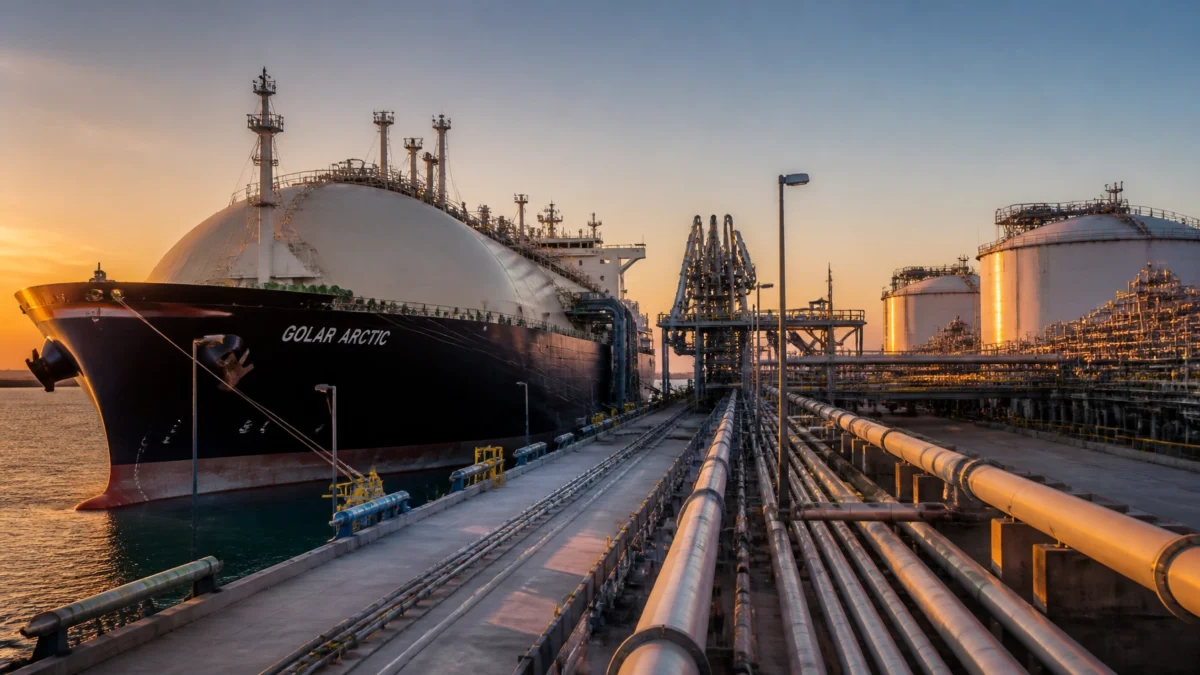
According to recent Reuters analysis and LSEG ship-tracking data, June 2026 marked a pivotal moment in this transition. For the first time in nearly 24 months, less than half of all U.S. LNG exports were destined for European terminals. The share of cargoes heading to Europe dropped to approximately 42%, a sharp decline from the 60% to 70% levels seen during the peak of the European energy crisis. This redirection of molecules is not merely a statistical anomaly but a reflection of the evolving price sensitivity and seasonal demand patterns that currently dominate the global energy economy.
Analyzing Global LNG market dynamics in 2026
The shift in cargo destinations is largely driven by a combination of high storage levels in the European Union and intensifying heatwaves across the Asia-Pacific region. While Europe entered the summer of 2026 with gas storage facilities near seasonal highs, Asian utilities have been forced to compete more aggressively for spot cargoes to meet cooling demands. This competition has narrowed the price spread that previously favored the Dutch Title Transfer Facility (TTF) over the Japan Korea Marker (JKM).
In July 2026, U.S. LNG output reached 9.1 million metric tons, according to LSEG data. While this figure represents the third-highest monthly output on record for the United States, it fell short of the absolute record of 11.7 million metric tons established in March 2026. Despite the high production levels, the destination mix tells the real story of the market. Asia has emerged as a primary magnet for these cargoes, with record volumes expected to arrive in regional hubs throughout the remainder of the summer.
Beyond the traditional Asian powerhouses of China, Japan, and South Korea, new players are disrupting traditional trade routes. Egypt, traditionally a gas exporter, has emerged as a significant buyer on the global stage. In June alone, Egyptian imports accounted for roughly 10% of total U.S. exports, as the nation grappled with domestic production declines and extreme summer temperatures. This influx of demand from the Middle East and North Africa (MENA) region adds another layer of complexity to the global supply chain, further tightening the availability of cargoes for European buyers.

The Rising Price Spread and Global LNG market dynamics
The decision of where to send a cargo is fundamentally an economic one, dictated by the netback price: the final profit after accounting for liquefaction, shipping, and regasification costs. Industry analysts at S&P Global Platts have been monitoring the tightening spreads between the major global benchmarks. As of mid-July 2026, the price environment remains volatile but lucrative for Gulf Coast producers.
| Benchmark | Price (USD/MMBtu) |
|---|---|
| Henry Hub (US) | $2.89 |
| JKM (Asia) | $16.81 |
| TTF (Europe) | $17.80 |
While the TTF nominal price currently sits slightly above the JKM, the “Asia premium” often manifests in the willingness of buyers to secure long-term reliability through higher-cost spot purchases when regional supplies are constrained. Furthermore, for cargoes originating from the U.S. Gulf Coast, the economics of shipping to Asia via the Panama Canal or around the Cape of Good Hope are increasingly factored into the arbitrage opportunities.
The relatively low price of Henry Hub gas, holding steady at $2.89 per MMBtu, ensures that U.S. export terminals remain highly profitable. The wide margin between domestic feedstock prices and international selling prices continues to incentivize maximum utilization of existing liquefaction capacity. This price disparity is a core driver of why LNG is the safe bet for powering off-grid industry and utility-scale generation abroad.
Regional Infrastructure and Global LNG market dynamics
To sustain these record-breaking export levels, the U.S. energy sector is rapidly expanding its physical footprint. The commissioning of new capacity is essential for the U.S. to maintain its status as the world’s leading LNG exporter. Key projects such as Venture Global’s Plaquemines LNG facility and the Golden Pass LNG terminal (a joint venture between ExxonMobil and QatarEnergy) are critical components of the 2026 energy policy landscape.
The Plaquemines facility, located south of New Orleans, has begun contributing to the export totals, providing much-needed flexibility as older terminals undergo routine maintenance. Meanwhile, Golden Pass is expected to significantly ramp up the total export ceiling once fully operational. These facilities are designed with modern modular liquefaction technology, allowing for more efficient processing and lower operational emissions, aligning with current Department of Energy (DOE) and Environmental Protection Agency (EPA) standards.
The integration of these new terminals into the global grid is supported by a robust network of upstream production from the Permian and Appalachian basins. As domestic production remains resilient, the bottleneck for U.S. influence in global markets remains the pace of midstream and export infrastructure development. The current shift toward Asia suggests that American producers are successfully diversifying their customer base, reducing the risk of over-reliance on any single regional market.

Strategic Implications for Global Energy Security
The redirection of U.S. LNG toward Asia and North Africa has broader geopolitical implications. For Europe, the decrease in U.S. imports may signal a need to reconsider long-term contracting strategies. Many European buyers have historically been hesitant to sign the 20-year contracts preferred by U.S. developers, opting instead for the flexibility of the spot market. In contrast, Asian buyers have shown a greater appetite for long-term supply security, which may give them a competitive edge in securing U.S. volumes during periods of global supply tightness.
Furthermore, the emergence of Egypt as a major importer highlights the fragility of regional energy balances. As the Eastern Mediterranean sees shifts in its own production profiles, the U.S. LNG fleet serves as a vital “swing supply” that can be rerouted to wherever the need: and the price: is highest. This flexibility is a hallmark of the modern energy era, where molecules are no longer tied to fixed pipelines but move according to real-time market signals.
As we look toward the final quarters of 2026, the industry will be watching the Federal Energy Regulatory Commission (FERC) and the Department of Energy for updates on pending export authorizations. While the current administration has faced pressure to balance domestic prices with international trade goals, the data suggests that the U.S. export machine is operating at a level that supports both domestic stability and global market liquidity.
The pivot to Asia is not a temporary detour but a maturation of the U.S. LNG industry. By serving as a reliable supplier to both the Atlantic and Pacific basins, the United States is cementing its role as the central pillar of the global gas trade. As long as the price signals from the JKM and TTF remain robust, the Gulf Coast will continue to be the world’s most watched energy hub.
Keep In Touch with Shale Magazine
As the new era of energy unfolds, you can bet we’ll be the boots on the ground to keep you informed. Subscribe to Shale Magazine for sharp insight into the arenas that matter most to your life. And don’t forget to listen to our riveting podcast, The Energy Mixx Radio Show, where our very own Kym Bolado interviews the most extraordinary thought leaders, business innovators, and industry experts of our time.
Subscribe to get more posts from Amanda Jenkins