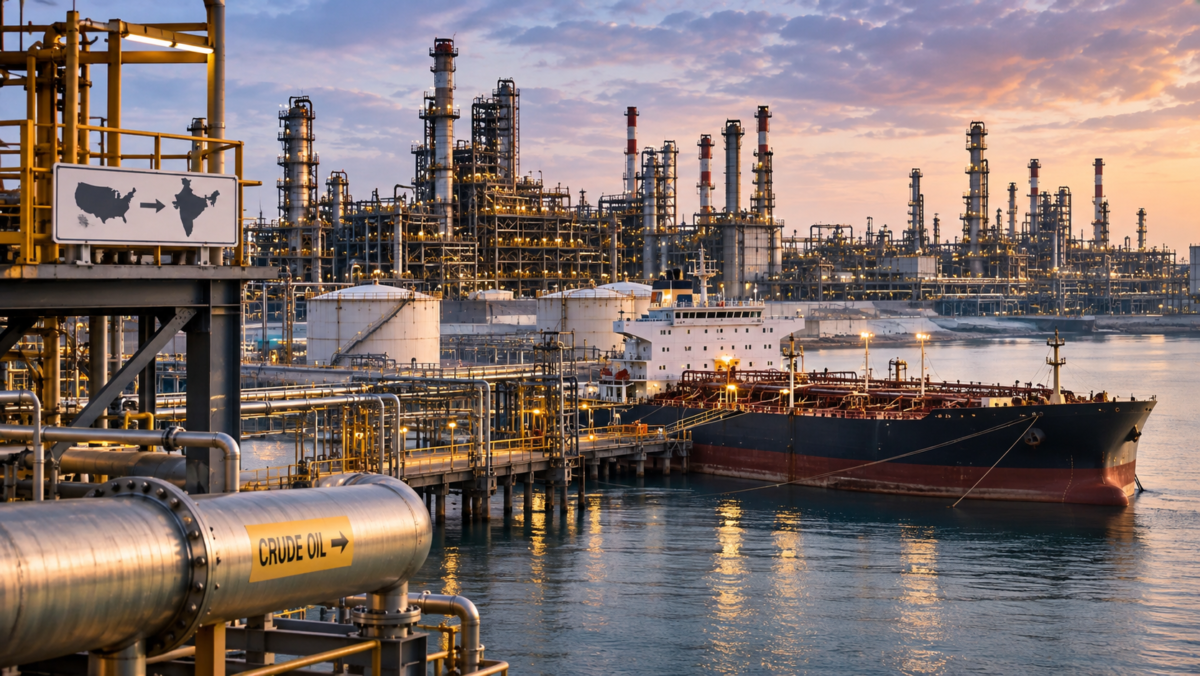
In October, U.S. Secretary of State Marco Rubio visited Reliance Industries’ Jamnagar refinery in Gujarat, India, the world’s largest single-site refinery, to discuss the potential for closer cooperation between the United States and India in refining. Rubio said during an interview that the U.S. is looking to ‘work together more closely’ with Reliance to refine energy supplies from the ‘Western Hemisphere.
Expanding ties with India, which Rubio has previously referred to as a ‘refining superpower’, could allow the U.S. to play a larger role in strengthening global fuel supplies, while supporting U.S. strategic interests. India is the world’s fourth-largest crude refiner, with an installed capacity of roughly 5.6 million barrels per day. Meanwhile, the refining industry in the U.S. faces a range of structural challenges.
The move comes amid pressure on global oil and refined-product markets, with structural tightness and price volatility driven by geopolitical disruptions, infrastructure damage, and uneven recovery timelines, largely owing to the ongoing conflict in the Middle East that began after the war in Iran in February.
United States Working Closely with India’s Reliance Industries
Rubio’s visit to Jamnagar came ahead of the midterm elections at a time when U.S. diesel prices were soaring, putting increasing pressure on consumers.
India currently depends heavily on imported crude oil but is a net exporter of refined petroleum products. The Jamnagar refinery has a crude processing capacity of 1.4 million barrels per day, equivalent to around 1.5% of global refining capacity. This makes India, and Reliance in particular, an important part of global fuel supply.
United States crude shipments to India averaged approximately 128,000 bpd between January and October 2026, down 43% from the same period in 2025, indicating there is considerable room to expand trade.
Meanwhile, Reliance has become the largest buyer of Venezuelan crude outside the U.S. in recent months, as Jamnagar can process heavy, sulfur-rich crude, including Venezuelan grades. Rubio said that the U.S. could help India diversify its supply chain, particularly as U.S. oil companies plan to expand operations in Venezuela.
Rubio told reporters that Venezuela “can certainly provide relief” in the short term and may help ease supply pressures amid tensions in the Middle East. In addition, encouraging India to import more Venezuelan oil could help support its goal of decreasing its purchases of Russian crude. It could also support progress toward a broader trade deal with energy cooperation as a key component.
Michael Kugelman, a senior fellow at the Atlantic Council, stated, “I don’t think anyone really expected a trade deal to be announced at this point, but this trip seems to have helped get the relationship back on track” after the Trump administration introduced additional 25% tariffs on Indian goods over its Russian oil purchases in August.
Investing in U.S. Refining
In March, President Trump announced that the United States will construct its first new oil refinery in half a century in Brownsville, Texas, supported by investment from Reliance, although no official figure has yet been released. At the time, Trump wrote on the platform Truth Social: “THIS IS A HISTORIC $300 BILLION DOLLAR DEAL — THE BIGGEST IN U.S. HISTORY.”
The America First Refining facility is designed to process around 168,000 bpd of light, sweet U.S. shale oil, rather than the heavy, sour crude that many older Gulf Coast refineries process, if developed. Operations could commence as early as 2029, according to reported plans.
Reliance reportedly signed a binding 20-year offtake term sheet with America First to purchase refined products from the facility. This could help reduce India’s trade surplus with the U.S., which has been a point of criticism for President Trump.
The development of the plant could help strengthen the U.S. domestic refining industry while also creating a long-term commercial relationship between American crude producers and one of the world’s largest refining companies. It could also create another source of demand for U.S. crude, supporting production and exports.
The U.S. Refining Capacity Problem
The United States is the world’s largest oil producer, but its refining system still faces structural constraints. The country’s refining capacity has been constrained by plant closures, limited investment in new facilities, and the high cost of constructing refineries.
Meanwhile, many Gulf Coast refineries are optimized to process heavier, sour crude grades, which do not match the lighter, sweeter crude most U.S. companies produce. This means that high levels of domestic crude production do not automatically translate into sufficient domestic production of every refined petroleum product.
Conversely, India has a strong track record in refining operations, and Reliance operates highly sophisticated facilities capable of processing a broad range of crude grades. However, it continues to refine more oil than it produces, making it a net importer of crude and a major exporter of diesel, gasoline, and other refined products.
Deepening energy ties between the United States and India could open new crude export opportunities for the U.S. and strengthen its role in global refined-product markets. In addition, U.S. companies could also work alongside Indian refining giants to develop advanced domestic facilities to enhance the country’s refining capacity.
Keep In Touch with Shale Magazine
As the new era of energy unfolds, you can bet we’ll be the boots on the ground to keep you informed. Subscribe to Shale Magazine for sharp insight into the arenas that matter most to your life. And don’t forget to listen to our riveting podcast, The Energy Mixx Radio Show, where our very own Kym Bolado interviews the most extraordinary thought leaders, business innovators, and industry experts of our time.