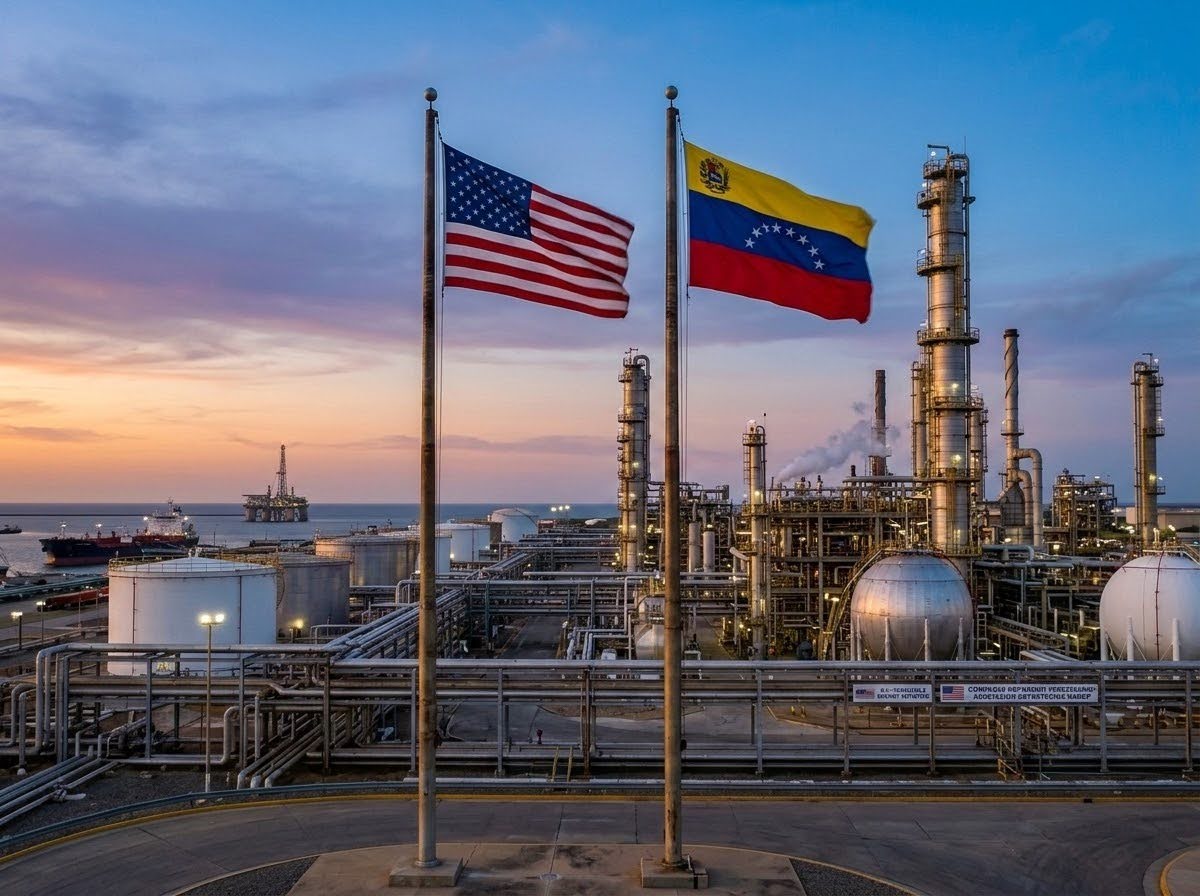
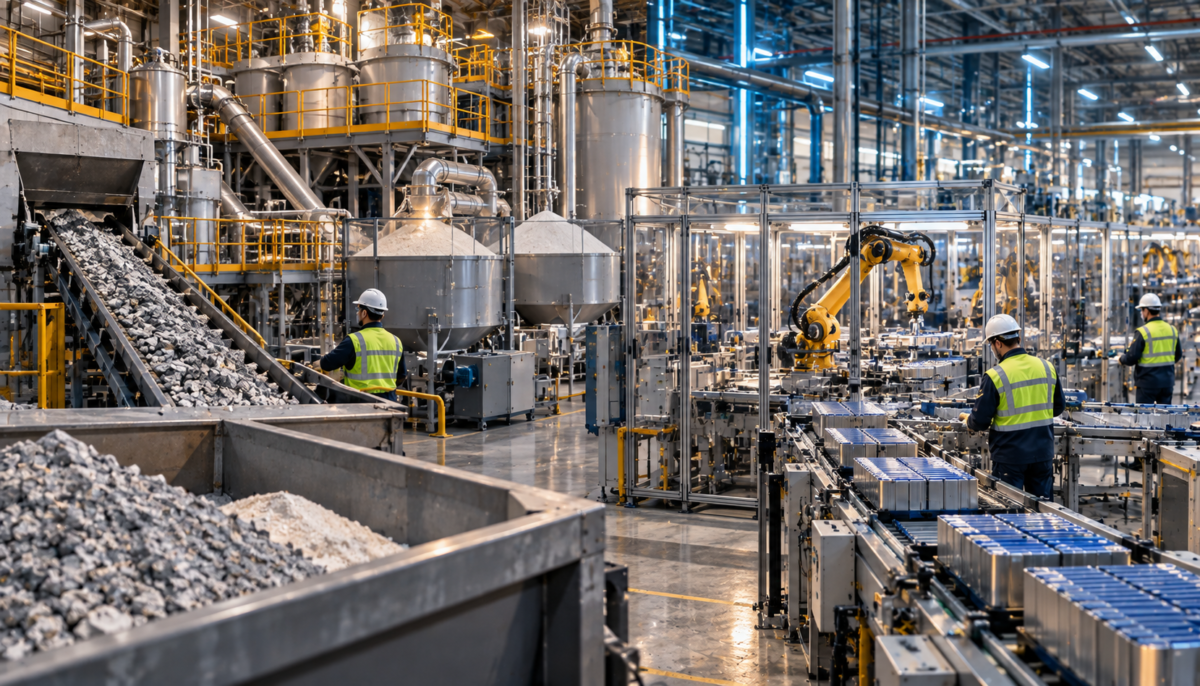
The United States aims to increase domestic manufacturing and improve its battery technology in the coming years to compete with China. However, the North American giant is playing catch-up following years of development in China.
Critical Minerals Dominance
President Trump has stated aims to develop the United States’ capabilities in areas such as critical minerals and battery technology, in a bid to reduce reliance on China.
In 2025, the Trump administration began seeking deals across Asia to secure U.S. rare earth supplies, after China put export controls on key rare-earth elements. The sector’s development could eventually help weaken China’s dominance in the global supply chain for critical minerals.
However, developing mining operations and strengthening supply chains could take several years, meaning that the United States is expected to remain reliant on China for rare earths well into the 2030s.
China has been investing in developing and expanding its rare-earth supply chain for decades. In 2024, China accounted for around 60% of global rare-earth mining output, followed by Myanmar, Australia and the United States, according to the International Energy Agency (IEA). Its dominance is even greater in separation and refining, where China represented about 91% of global production.
Tu Le, the founder of the innovation & management consulting firm Sino Auto Insights, explained, “It takes decades and tens, if not hundreds of billions of dollars” to achieve the kind of comprehensive scale across the supply chain that China has achieved. Le added, “We don’t have decades. We have five, six, seven years to try to become competitive.”
Trump Administration Mineral and Battery Progress
The Trump administration has launched or supported over 180 critical-minerals-related projects since taking office last year, according to a White House official, although these projects must still undergo due diligence and meet conditions to receive funding.
Meanwhile, announced U.S. government non-equity investment in rare-earth and production and processing reached $7.6 billion from the start of 2025 through June 2026, more than four times the $1.8 billion announced from 2020 through 2024, according to the Center for Strategic and International Studies.
As the United States attempts to develop its critical mineral mining and enhance supply chains, the government is also trying to build up the country’s battery supply chain. This follows the cancellation of several battery manufacturing projects introduced under President Biden, as the Trump administration shifted its focus away from electric vehicle production and sales.
In October 2025, the U.S. Department of Energy (DoE) announced that it had canceled $700 million in grants, including some earmarked for batteries and manufacturing.
However, President Trump has shown greater support for expanding the U.S. battery industry in recent months, particularly as a means of countering China’s sectoral dominance.
Vying for Battery Dominance
In addition to mineral mining, China’s strongest role in battery production is in refining and processing. Its control of the industry allowed it to impose strict export controls on rare earths, as well as other minerals and processing equipment, in 2025.
China has also significantly developed its battery component manufacturing sector over the past decade as it has scaled up domestic electric vehicle production, meaning that China now produces approximately 85% of the world’s EV battery cathode active material and over 90% of anode active material, according to the IEA. It also produces around 80% of the world’s battery cells.
The IEA stressed that the lack of investment in midstream stages in countries such as the United States “poses a growing risk to global supply security.” Therefore, to compete with China’s dominance in the global battery storage industry, the United States must develop capacity in mining and refining, as well as battery component manufacturing.
In August, the DoE announced plans to award $500 million to seven companies in the fields of battery minerals or materials, manufacturing, or recycling. This is the first Trump administration financing round of two $3 billion DoE battery technology and materials programs established under the Biden-era Infrastructure Investment and Jobs Act.
Several companies selected for DoE funding target areas where China has a strong presence. For example, the battery anode producer Coreshell Technologies was awarded $50 million. Meanwhile, Lilac Solutions, a direct lithium extraction technology provider, was awarded $100 million.
Tu Le highlighted the progress in the United States, as well as some of the challenges in scaling operations to compete with China. Le explained, “We have a ton of innovation coming out of the United States… These small fledgling companies are super innovative, but getting and building prototypes of what they’re trying to sell is one thing. Being able to mass produce them at a high-quality level, repeatably in the millions of units is another thing entirely.”
Reducing U.S. reliance on China will depend on whether investment translates into competitive, large-scale battery production. While funding and innovation are helping build domestic capacity, closing the gap will require time, cost reductions and stronger supply chains.
Keep In Touch with Shale Magazine
As the new era of energy unfolds, you can bet we’ll be the boots on the ground to keep you informed. Subscribe to Shale Magazine for sharp insight into the arenas that matter most to your life. And don’t forget to listen to our riveting podcast, The Energy Mixx Radio Show, where our very own Kym Bolado interviews the most extraordinary thought leaders, business innovators, and industry experts of our time.