
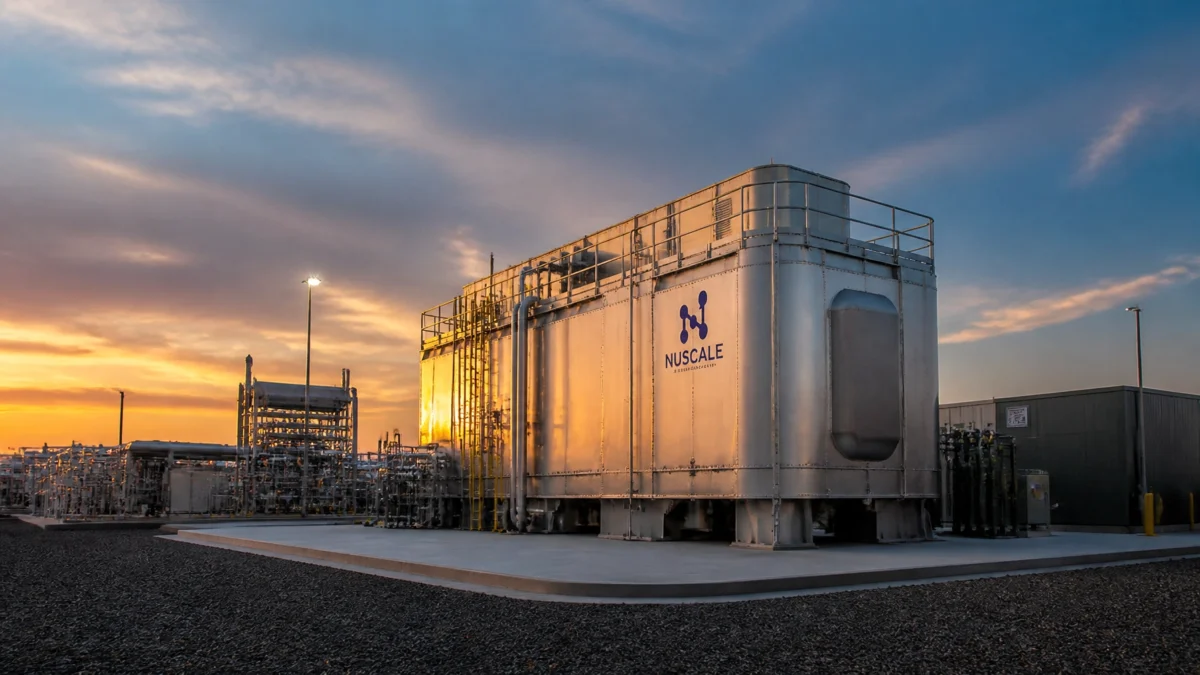
Accelerating nuclear facility deployment has become a cornerstone of the United States’ strategy for achieving energy dominance and maintaining a competitive edge in the global technological race. On July 22, 2026, the U.S. Department of Energy (DOE) took a historic leap forward by announcing the first wave of project selections under the Genesis Mission. This initiative, which spans all 50 states and involves over $5 billion in federal commitments, represents the most significant effort to date to integrate artificial intelligence (AI) directly into the nation’s scientific and energy infrastructure.
The Genesis Mission was originally established via executive order in November 2025 with the explicit goal of embedding AI into the fabric of American scientific research. By automating complex workflows and providing researchers with unprecedented computational power, the mission aims to double the nation’s scientific productivity. The recent announcement of 278 selected projects marks the culmination of the largest response to a funding opportunity in the history of the DOE, signaling a massive appetite for innovation across the energy sector.
Genesis Mission Accelerating nuclear facility deployment through AI
The centerpiece of the July announcement is a flagship three-year, $60 million investment dedicated specifically to the nuclear sector. This project seeks to leverage advanced AI models to overhaul the traditional timelines associated with designing, permitting, and constructing nuclear plants. By utilizing generative design and predictive maintenance algorithms, the DOE aims to reduce the capital costs that have historically hindered the expansion of nuclear power in the United States.
According to Secretary of Energy Chris Wright, the 278 projects selected represent the very best of the nation’s scientific enterprise. The nuclear-focused portion of the mission is designed to create a digital framework where AI can simulate thousands of reactor configurations and safety scenarios in a fraction of the time it would take human engineers. This capability is essential for accelerating nuclear facility deployment and ensuring that the next generation of small modular reactors (SMRs) can reach the grid safely and economically.

The $60 million allocation is not just about software; it is about building the American Science and Security Platform. This integrated infrastructure combines the DOE’s world-class supercomputing resources with experimental facilities. Awardees will gain exclusive access to high-performance computing clusters and advanced AI models developed at national laboratories, allowing them to solve complex physics problems that were previously computationally prohibitive.
Strategic funding for Accelerating nuclear facility deployment
The scale of the Genesis Mission is reflected in the diversity of its participants. The 278 projects involve 342 different institutions, creating a collaborative ecosystem that bridges the gap between theoretical research and commercial application. The breakdown of stakeholders includes:
- 16 DOE and NNSA National Laboratories
- 142 Universities
- 157 Private Sector Companies
- 13 Nonprofits
- 14 Other Federal and State Institutions
This broad coalition ensures that the benefits of AI-enabled research are distributed across the entire economy. From Google’s commitments to nuclear power to grassroots university research, the Genesis Mission is fostering a “whole-of-government” and “whole-of-industry” approach. In addition to the $60 million nuclear project, the DOE also announced a $293 million funding round specifically to support the Genesis Mission platform, ensuring the underlying hardware and data security protocols can handle the massive influx of AI-driven data.
The involvement of more than 15 federal agencies, including NASA, the Department of Defense (DOD), and the National Science Foundation (NSF), underscores the national security implications of this mission. AI is being treated as a dual-use technology that can secure the energy grid while simultaneously advancing discovery science and national defense capabilities.

The role of AI in Accelerating nuclear facility deployment and safety
One of the most critical challenges facing the nuclear industry is the cost of operations and maintenance. The Genesis Mission’s AI initiative aims to deploy “digital twins” of nuclear facilities: virtual replicas that can predict when a pump might fail or how a change in coolant temperature will affect long-term structural integrity. By moving from reactive to predictive maintenance, operators can significantly cut costs and improve the overall safety profile of the fleet.
Beyond the nuclear sector, the Genesis Mission is also targeting breakthroughs in critical mineral extraction and intelligent chip design. However, the focus on nuclear energy is particularly timely as the U.S. looks to transition from natural gas to nuclear for its baseload power requirements. The ability of AI to optimize the fusion energy path is also a key component of the mission, with several projects focused on the magnetic confinement and materials science needed to make commercial fusion a reality.
The DOE’s data-first methodology ensures that every award is anchored in rigorous analysis. The selection process prioritized projects that showed a clear path toward commercialization and grid reliability. By providing researchers with access to the DOE’s massive data repositories, the Genesis Mission is effectively “training” the next generation of industrial AI on real-world datasets that are not available anywhere else in the world.
National security and the American Science and Security Platform
The Genesis Mission is a direct response to the global race for AI supremacy. By integrating AI into the national labs, the DOE is ensuring that the United States remains the leader in energy innovation. The platform provides a secure environment for sensitive research, protecting American intellectual property from foreign adversaries while allowing for domestic collaboration at an unprecedented scale.
The projects spanning all 50 states ensure that the economic benefits of the energy transition are felt nationwide. Whether it is a small startup in the Midwest developing AI-optimized heat exchangers or a major university in the Northeast working on reactor physics, the Genesis Mission provides the resources necessary to compete.
As the program moves into its implementation phase, the industry will be watching closely to see how quickly these AI-enabled workflows can be integrated into the actual construction and operation of energy assets. If successful, the mission will not only provide affordable and reliable energy but will also redefine how scientific discovery is conducted in the 21st century.

The 2026 awards represent a pivotal moment for the DOE. By placing a $60 million bet on nuclear AI, the department is signaling that the future of energy is not just about fuel: it is about the data and intelligence that manage it. With the support of Secretary Wright and the broader federal enterprise, the Genesis Mission is poised to turn the promise of AI into the reality of a modern, resilient, and dominant American energy landscape.
Keep In Touch with Shale Magazine
As the new era of energy unfolds, you can bet we’ll be the boots on the ground to keep you informed. Subscribe to Shale Magazine for sharp insight into the arenas that matter most to your life. And don’t forget to listen to our riveting podcast, The Energy Mixx Radio Show, where our very own Kym Bolado interviews the most extraordinary thought leaders, business innovators, and industry experts of our time.
Subscribe to get more posts from Amanda Jenkins