The new energy bottleneck is no longer simply crude supply. It is the global system’s ability to refine, insure, transport, store and deliver energy during war.
How war is shifting the global energy crisis
When I wrote The Great Energy Realignment several months ago, the central question was how the global energy system would cope with a sustained disruption of the Strait of Hormuz. For most of my career, a closure of Hormuz had been one of those dire scenarios that analysts modeled. When the war involving Iran, Israel, and the United States finally turned that theoretical risk into a real disruption, I expected oil prices to remain much higher than they ultimately did. Instead, the system adapted through a combination of emergency inventories, alternate pipelines, changing trade flows, increased production elsewhere, and lower demand.
That adaptability became one of the major themes of The Great Energy Realignment. Saudi Arabia and the United Arab Emirates pushed more crude through routes that bypassed Hormuz, China drew on inventories accumulated when oil was cheaper, refiners adjusted crude slates, and producers outside the Persian Gulf increased their contribution to global supply. Those adjustments did not make the disruption disappear, but they prevented the loss of Gulf exports from creating the sustained $150-per-barrel oil market that once seemed entirely plausible.
The developments since then have revealed the other side of that story. The global energy system successfully moved around some of the original constraints, but it did not eliminate them. Instead, the pressure has increasingly shifted downstream into refining, tanker capacity, shipping insurance, storage, and transportation infrastructure. Crude oil exports from the Middle East have recovered substantially, yet diesel remains unusually scarce and expensive, Russian and Middle Eastern refinery capacity has been damaged or constrained, tanker rates have soared, and the Red Sea has become another major source of risk.
That evolution changes the current energy crisis. The world still possesses enormous quantities of oil and natural gas, and production itself is not the primary limitation in many of the markets experiencing the greatest stress. Increasingly, the question is whether those resources can be processed, moved, insured, stored, and delivered through a system in which several critical pieces of infrastructure are under pressure at the same time.
The Bottleneck Moves Downstream
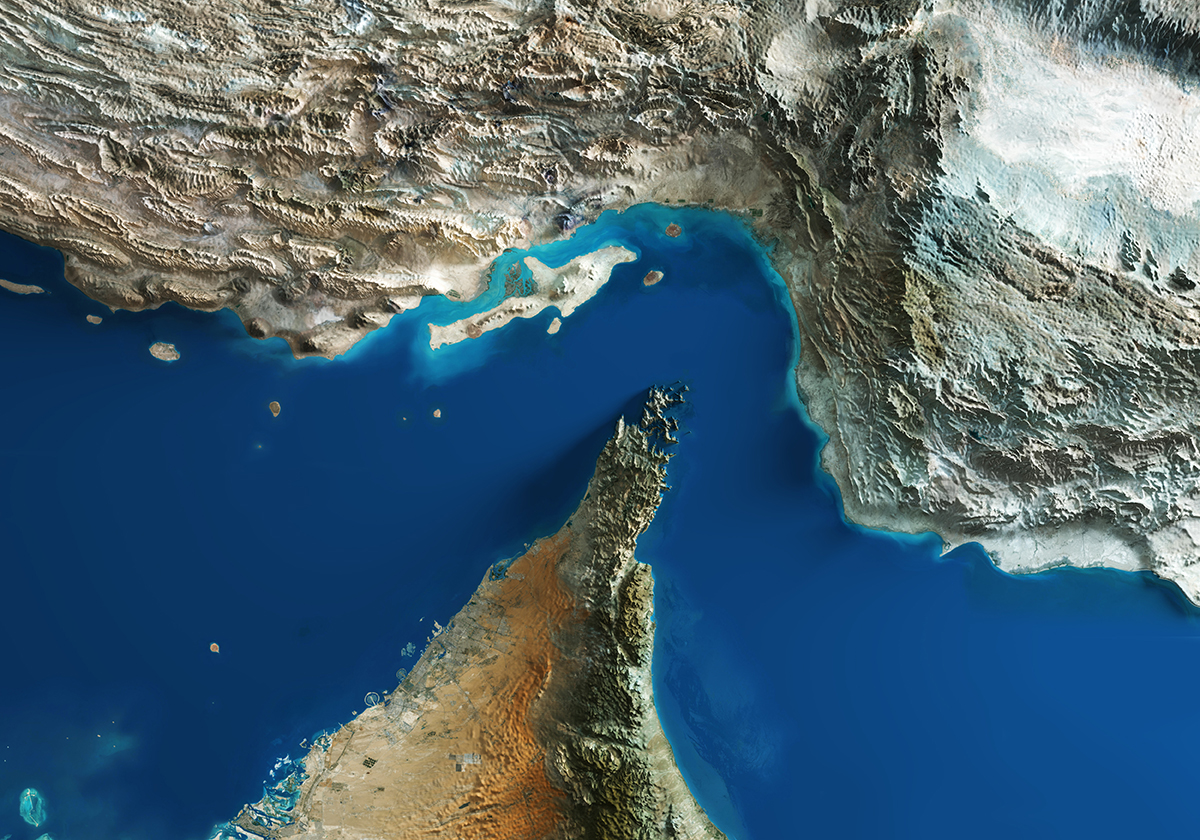
The Strait of Hormuz remains the clearest example of how quickly the energy system can adapt when the economic incentive is large enough. Before the war, roughly 21 million barrels per day of crude oil, condensate, and petroleum products moved through the Strait of Hormuz, equivalent to about one-fifth of global petroleum liquids consumption. About one-fifth of global LNG trade also passed through the Strait, making it one of the most important energy chokepoints on the planet. When commercial traffic collapsed following the outbreak of fighting, the immediate concern was that millions of barrels per day of Persian Gulf production would simply disappear from the market for an extended period.
That did not happen. Gulf producers increasingly relied on bypass pipelines, terminals outside the Persian Gulf, and ship-to-ship transfers near Oman to move crude around the disrupted Strait. By early October, overall Middle Eastern crude exports had recovered close to prewar levels even though traffic through Hormuz remained well below normal. In early October, crude flows through the Strait were running at about 10.1 million barrels per day, roughly 74% of prewar crude flows, while exports through the Gulf of Oman and Red Sea had risen to 6.7 million barrels per day, more than twice their prewar level. Taken together, those alternate flows were enough to offset much of the loss through Hormuz.
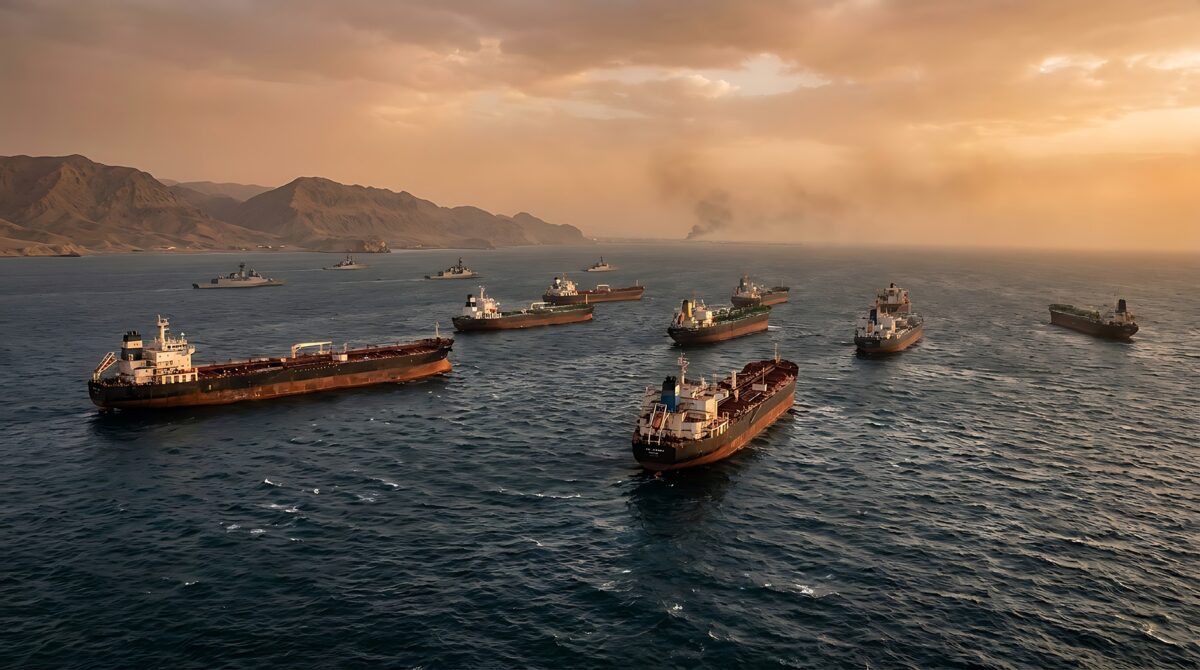
That recovery is evidence of a remarkably adaptable energy system, but it should not be mistaken for a return to normal conditions. Oil that once moved through relatively straightforward routes is now being redirected through more complicated and expensive ones, with additional handling, longer voyages, elevated insurance premiums, and much higher tanker rates. Reuters reported that tanker costs from the Middle East to Asia have exceeded $1.2 million per day in some cases, which helps explain why oil prices have remained elevated even as physical exports have recovered.
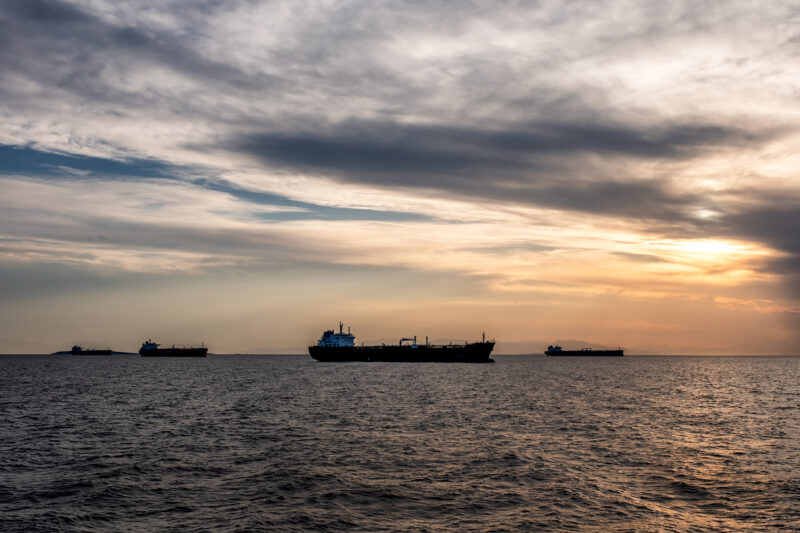
The distinction between crude availability and delivered energy has therefore become much more important. The oil still exists, and in many cases it is still being produced, but getting it from a field in the Persian Gulf to a refinery in Asia or Europe or California now requires more infrastructure, more logistics, and considerably more money. What initially looked like a straightforward crude-supply problem has gradually evolved into a broader problem of deliverability.
Crude Recovered Faster Than Refined Products
The refining system has been much less successful at absorbing the shock, which is why diesel has become one of the clearest indicators of where the pressure has moved. In September, U.S. retail gasoline prices averaged $4.35 per gallon, while diesel averaged $6.29 per gallon. That extraordinary gap developed even though U.S. refineries were operating at high utilization rates and domestic distillate production remained strong.
The problem is that crude oil and diesel are not interchangeable. Crude must reach a refinery capable of processing it, and the refinery must then produce the particular mix of gasoline, diesel, jet fuel, and other products that the market requires. Different crude oils have different characteristics, refinery configurations vary significantly, and there are physical limits on how far refiners can shift their product yields in response to changing prices.
Those limitations are important because global refinery output has been constrained in several important regions at the same time. EIA has attributed the tight global distillate market to reduced refining activity in Russia, China, and the Middle East. U.S. distillate production averaged about 5.1 million barrels per day from January through August, the highest level since 2019, and refinery utilization was running near 97% in September. Yet U.S. distillate inventories were still 13% below the five-year seasonal average because strong international prices encouraged exports at the same time overseas supplies were being reduced.
This is why record or near-record U.S. crude production does not guarantee inexpensive diesel. American refiners can run close to their physical limits while global buyers compete aggressively for the products they produce. When refinery capacity is damaged elsewhere, additional demand is shifted toward the facilities that remain in operation, including those on the U.S. Gulf Coast.
The same dynamic is likely to persist beyond the immediate crisis. EIA expects distillate markets to remain tight well into 2027. Its October outlook projects East Coast inventories to remain 20% to 30% below the five-year average through the coming winter, with conditions gradually improving later next year. That suggests the current diesel problem is not simply a brief consequence of one event in the Persian Gulf, but the result of several overlapping disruptions across the global refining system.
Russia Shows Why Refineries Matter
Russia’s experience since the invasion of Ukraine helps illustrate why refining capacity has become so important. During the early stages of the war, much of the attention focused on Russian crude oil and natural gas exports. Europe rapidly reduced its dependence on Russian pipeline energy, while Russian crude that once went west was increasingly redirected toward China, India, and other Asian customers. The shift was expensive and disruptive, but the global crude market ultimately proved capable of rerouting enormous volumes.
Refineries do not have that flexibility. A tanker carrying Russian crude can change destinations if a buyer in Europe disappears, but a damaged refinery is a different story. Refineries are fixed industrial complexes made up of distillation units, hydrotreaters, crackers, utilities, storage tanks, pipelines, and loading facilities that must operate together. When important units are damaged or taken offline, the market loses the ability to turn crude into usable products even if crude production itself continues.
Repeated Ukrainian attacks have made that distinction increasingly important. Russian refinery damage, along with reduced Middle Eastern refining activity, has contributed significantly to the global diesel shortage. The IEA reported in September that combined net diesel and gasoil exports from Russia and the Gulf were 1.6 million barrels per day lower in August than in February, creating a supply deficit that could not be repaired simply by restoring crude production.
Russia has also restricted diesel exports, adding another layer of pressure to the market. President Vladimir Putin has said Western sanctions are preventing Russian diesel from reaching global markets, while Deputy Prime Minister Alexander Novak has indicated that some exports could resume once domestic production returns to surplus.
For consumers, the distinction between crude and refined products eventually becomes visible at the pump. The world can have adequate crude supplies while still facing shortages of diesel, jet fuel, or gasoline because the facilities needed to convert that crude into finished products are unavailable. That is fundamentally different from the classic energy crisis in which the primary problem is insufficient oil coming out of the ground.
Two Chokepoints, One Energy System
The expansion of the conflict into Yemen adds another layer of risk because it places a second major maritime chokepoint under pressure. The Bab el-Mandeb Strait connects the Red Sea with the Gulf of Aden and the Indian Ocean, making it essential for ships traveling between the Suez Canal and Asian markets. Iran-backed Houthi forces have increasingly threatened Saudi interests and commercial shipping in the region, prompting Saudi Arabia to re-enter the Yemen conflict with airstrikes and support for government forces attempting to retake the Bab el-Mandeb coastline.
The strategic implications are particularly important for Saudi Arabia because the kingdom has spent decades building infrastructure specifically designed to reduce its dependence on the Strait of Hormuz. Its East-West Pipeline carries crude from eastern production areas across the country to the Red Sea port of Yanbu, giving Saudi Arabia an alternative export route when traffic through Hormuz is disrupted. In theory, that redundancy provides exactly the kind of flexibility the current crisis has demonstrated is so valuable.
That vulnerability has already been demonstrated. Saudi Arabia temporarily shut the East-West Pipeline in September after drone attacks, briefly interrupting crude loadings at Yanbu before operations resumed. By early October, the pipeline was again carrying large volumes of crude, but the episode underscored an important limitation of redundancy: infrastructure built to bypass one chokepoint can itself become a target.
The problem is that an alternate route is useful only if the entire route remains available. If Saudi crude can bypass Hormuz but then encounters serious security problems in the Red Sea or Bab el-Mandeb, part of the advantage provided by the East-West Pipeline disappears. What looked like redundancy at one point in the system can still depend on another vulnerable chokepoint farther downstream.
That is one of the most important lessons emerging from the current conflict. Energy resilience cannot be measured simply by counting pipelines, terminals, or refineries individually. The entire chain has to function, from production through transportation, processing, storage, and final delivery. A pipeline does little good if the terminal at the other end is inaccessible, while a refinery cannot contribute much if crude cannot reach it or finished products cannot leave.
The same principle applies well beyond the Middle East. Europe discovered after Russia’s invasion of Ukraine that replacing Russian pipeline gas required more than simply finding another producer. It needed LNG terminals, additional shipping, sufficient storage, pipeline connections, and enough regasification capacity to move the new supply through the continent. Redundancy is therefore a system characteristic rather than the feature of a single asset.
Shipping Costs Have Become Part of the Energy Shock
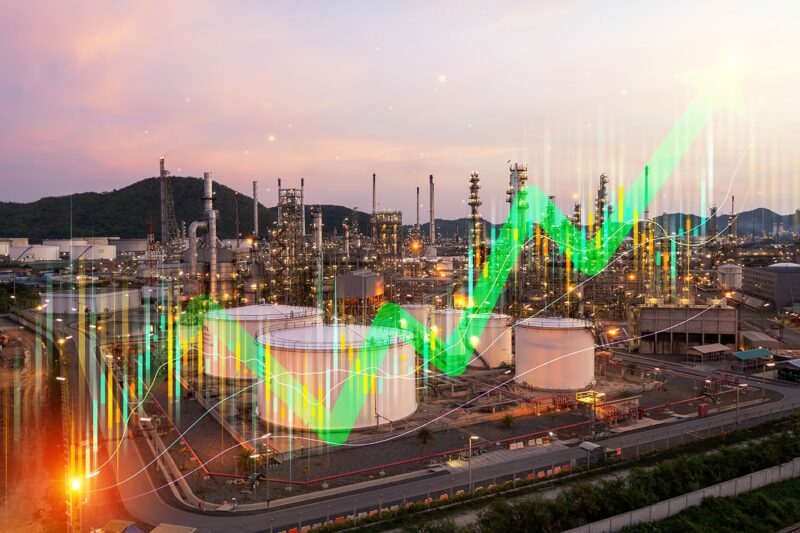
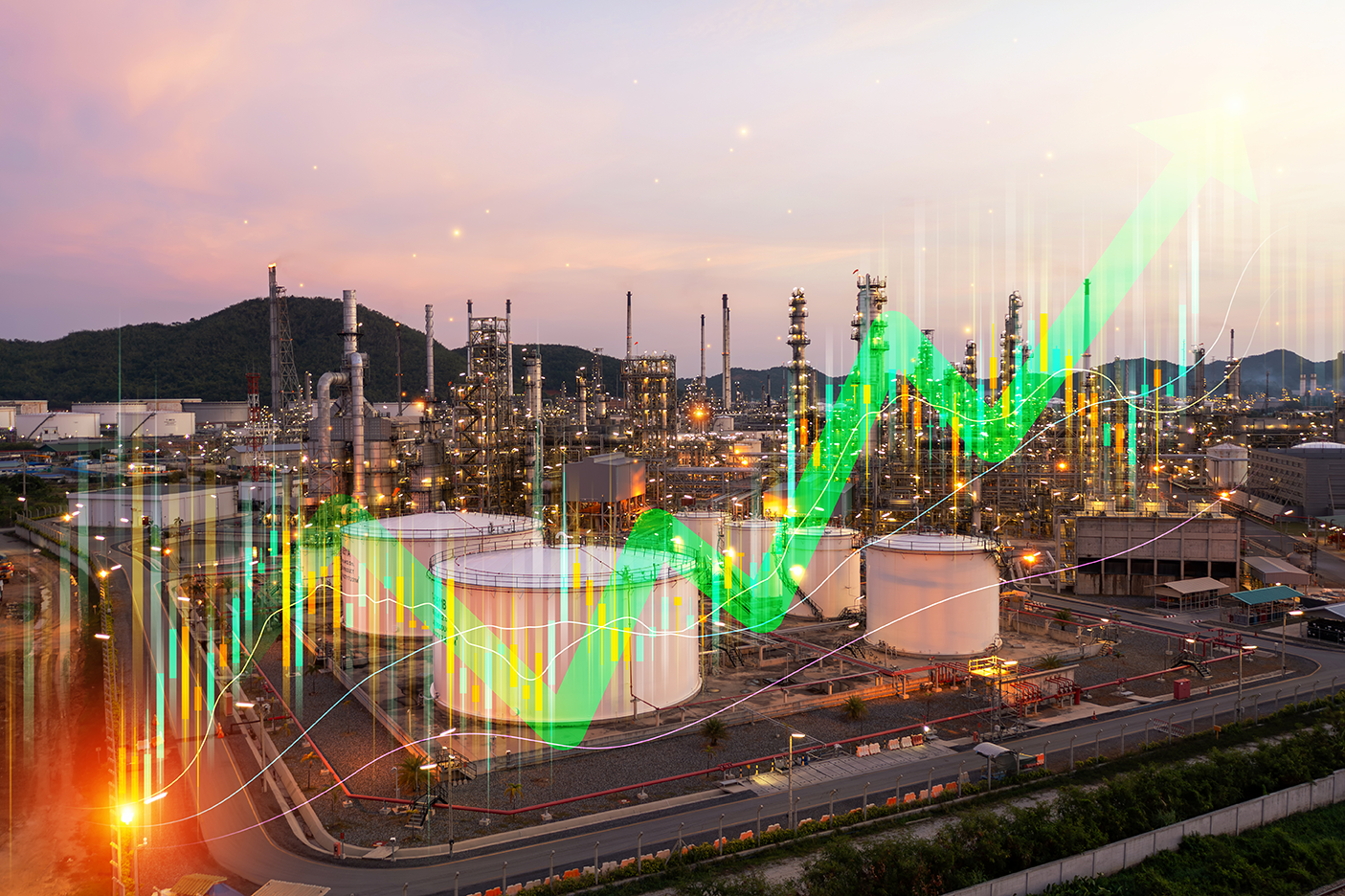
Transportation has always been part of the cost of energy, but under ordinary conditions it is easy to overlook because freight markets usually function in the background. Tankers arrive, cargoes are unloaded, and transportation costs are incorporated into the delivered price without attracting much public attention. The scale of the current disruption has made those costs impossible to ignore.
Freight and insurance expenses have risen dramatically because tankers are operating through active conflict zones and relying on routes that are longer and more complicated than the ones they replaced. Some vessels have to wait for safer transit windows, others participate in ship-to-ship transfers, and still others travel much farther to avoid threatened waters altogether. Those changes reduce the effective capacity of the tanker fleet because the same vessel completes fewer voyages over a given period.
The oil market’s current problem has increasingly become one of logistics rather than outright supply. Even as Middle Eastern exports recovered, elevated freight and insurance costs kept the delivered price of oil high, particularly for Asian refiners. The fact that crude can leave the Middle East therefore does not mean the market is functioning normally, because buyers are paying significantly more to obtain and transport those barrels.
The effects of those higher transportation costs extend far beyond crude oil. Diesel powers much of the trucking, rail, agricultural, construction, and industrial activity that moves goods through the economy, while marine fuels are embedded in the cost of international trade. Higher energy transportation costs therefore work their way into food, manufactured goods, building materials, and countless other products long after the original fuel transaction has taken place.
This broader inflationary effect helps explain why the logistics bottleneck may ultimately prove more consequential than the initial crude disruption. Benchmark oil prices provide one measure of the crisis, but they cannot capture all of the additional costs generated by shipping delays, insurance premiums, damaged infrastructure, product shortages, and longer transportation routes.
From Just-in-Time to Just-in-Case
The cumulative effect of these disruptions is beginning to change the way the energy industry thinks about infrastructure. For several decades, companies across many industries pursued a “just-in-time” model that minimized inventories and avoided spending capital on infrastructure that might sit partially unused. The approach improved efficiency and returns under normal conditions, but it was also assumed that supply chains would remain sufficiently reliable to deliver what was needed when needed.
The past several years have challenged that assumption. Russia’s invasion of Ukraine disrupted gas and oil flows, the Iran war threatened Hormuz, and the escalation in Yemen has placed pressure on the Red Sea and Bab el-Mandeb. At the same time, refinery damage and low product inventories have demonstrated that even when crude remains available, the capacity to transform and move it cannot always be replaced quickly.
Oil executives are now explicitly talking about moving from “just-in-time” toward “just-in-case.” At the Energy Intelligence Forum in London in October, executives discussed the need for additional pipelines and export routes that could reduce reliance on vulnerable corridors. TotalEnergies has backed an Iraq-to-Syria pipeline and plans to expand pipeline capacity to the UAE port of Fujairah, while BP, ConocoPhillips, Chevron, and others are evaluating additional Iraqi and Mediterranean export options.
Those projects illustrate a fundamental tradeoff. Redundant infrastructure is expensive, and some of it may operate below capacity for long periods. Spare pipelines, storage tanks, export terminals, and refinery capacity can look inefficient when markets are calm, particularly when investors are focused on maximizing returns from existing assets.
The economics change when the primary system fails. A pipeline that appears underutilized during normal periods can suddenly become strategically invaluable when a chokepoint is closed. Extra storage can carry an ongoing cost until inventories are needed to bridge a disruption, while spare refining capacity can look unnecessary until several major facilities go offline at the same time. The challenge for governments and companies is determining how much redundancy is worth paying for before the next crisis rather than after it has already begun.
That calculation is familiar to anyone who has worked around critical industrial infrastructure. Refineries and chemical plants routinely use backup systems, parallel pumps, emergency generators, spare equipment, and multiple layers of protection because the consequences of failure can far exceed the cost of redundancy. The global energy system is increasingly confronting the same question on a much larger scale.
The Buffers Are Being Used Up
Infrastructure is only one form of insurance against disruption. Inventories provide another, and they played an important role in preventing the first phase of the Hormuz crisis from becoming even more severe. The International Energy Agency and member governments coordinated extraordinarily large releases of emergency stocks, while China drew heavily on crude inventories accumulated before the war. Commercial inventories elsewhere gave refiners and consumers additional time to adjust to changing supply routes.
Those measures demonstrated why inventories exist, but they also highlighted their limitations. A barrel taken out of storage solves today’s supply problem only by reducing the cushion available tomorrow. If inventories are not replenished before another disruption occurs, the system enters the next crisis with less room to maneuver.
That problem is becoming more important because the disruptions are increasingly overlapping. Hormuz remains unstable, tanker attacks continue, diesel inventories are low, Russian refinery capacity is impaired, and the conflict in Yemen is threatening another major shipping corridor. Vitol CEO Russell Hardy warned in early October that depleted Western inventories had left the market with relatively little margin for additional disruption even as Middle Eastern exports improved.
Recent developments at Hormuz reinforce that concern. Reuters recently reported that tanker attacks and incidents of harassment reached their highest weekly level since the start of the Iran war, while commodity-vessel traffic through the Strait briefly fell to its lowest daily level since July. Alternative routes have so far compensated for much of that decline, but the need to rely increasingly on those routes demonstrates how little slack remains in parts of the system.
The global energy system has shown considerably more resilience than I expected when the war began, and that remains an important conclusion. But resilience is not the same as unlimited capacity. Much of the system’s success has come from drawing inventories, utilizing alternate routes more heavily, paying much higher transportation costs, and pushing surviving infrastructure harder.
The Real Constraint Is Deliverability
The developments of the past several months reinforce a point that was already emerging in The Great Energy Realignment. The defining energy question is increasingly not simply what resources a country possesses, but whether those resources can be turned into useful energy and delivered reliably when normal systems are under stress.
The world still has abundant crude oil. The United States is producing record volumes, Saudi Arabia and the UAE retain enormous reserves, Russia remains one of the world’s largest petroleum producers, and countries such as Canada, Brazil, and Guyana continue adding supply. Yet those resources alone do not guarantee that diesel, jet fuel, gasoline, or natural gas will be available at the place and time consumers need them.
A barrel of oil must move from the field through gathering systems and pipelines to a terminal. A tanker must be available, insurable, and willing to enter the relevant waters, after which the crude must reach a refinery capable of processing it. The resulting products then have to move through another network of pipelines, ships, rail systems, storage terminals, and trucks before they reach the final customer.
Every stage of that process contains both capacity and potential vulnerability. When resources are plentiful but deliverability becomes scarce, the strategic value shifts toward the infrastructure that keeps those resources moving. Refinery capacity, pipelines, tanker fleets, ports, storage terminals, alternative export routes, and even insurance capacity become much more important than they appear during normal market conditions.
This is also why the current crisis could shape investment long after the wars themselves are over. Governments and energy companies now have recent evidence of the costs associated with depending too heavily on a single supplier, refinery, route, or chokepoint. Some of the infrastructure built in response will inevitably look redundant when conditions eventually stabilize, but redundancy is precisely what gives a system the ability to withstand the next disruption.
The Next Phase of the Great Energy Realignment
The Great Energy Realignment was ultimately about the return of energy security as a strategic priority. Russia’s invasion of Ukraine changed the direction of major oil and natural gas flows, while Europe traded heavy dependence on Russian pipelines for a more diverse and more expensive supply system built partly around LNG. China accumulated inventories and expanded its energy options, India used its refining capacity and access to multiple suppliers to strengthen its position, and the United States benefited from abundant domestic production while remaining deeply connected to international energy markets.
The Iran war added another lesson by demonstrating the continuing power of geography. The global system adapted to the loss of normal traffic through Hormuz, but doing so required emergency inventories, alternative pipelines, new shipping arrangements, higher freight rates, and substantial changes in trade. The subsequent pressure on diesel, refining, and Red Sea shipping has shown that solving one bottleneck can simply move the problem elsewhere.
The next stage of the realignment is therefore becoming clearer. The world is not facing a simple shortage of oil, natural gas, or energy resources. The more persistent challenge is maintaining the physical systems needed to convert those resources into useful energy and deliver them through an increasingly complicated geopolitical environment.
For decades, much of the energy industry pursued efficiency because redundancy is expensive. Spare capacity can depress returns, inventories tie up capital, and duplicate infrastructure may appear wasteful during long periods of stability. Consumers and taxpayers ultimately bear much of the cost of maintaining those extra options.
The events of the past several years have provided an equally clear demonstration of the cost of having too few options. Russia’s invasion exposed the strategic vulnerability created by Europe’s dependence on a dominant natural-gas supplier, Hormuz exposed the world’s reliance on a narrow maritime corridor, and the fighting in Yemen has highlighted the vulnerability of a Red Sea route that itself provides an alternative to the Persian Gulf. At the same time, damage to Russian and Middle Eastern refineries has shown that abundant crude does not guarantee adequate diesel, while declining inventories have demonstrated that emergency reserves can buy time without replacing functioning infrastructure.
That is the connection between The Great Energy Realignment and what is happening now. Energy security increasingly depends not merely on possessing resources, but on maintaining enough infrastructure, redundancy, storage, and transportation flexibility to keep those resources moving when part of the system fails. The countries and companies that recognize that distinction are likely to be much better positioned for the next disruption than those that continue to optimize only for the lowest-cost system under normal conditions.