ENMG Analysis
Google and Fortum have signed a 22-year nuclear power purchase agreement under which Google will purchase up to 50% of the capacity from Finland’s Loviisa nuclear power plant. The agreement is designed to provide Fortum with the revenue certainty needed to continue major modernization, power-uprate, and lifetime-extension work through 2050.
The deal links two infrastructure decisions that are increasingly connected across energy markets: the expansion of electricity-intensive artificial intelligence infrastructure and the preservation of existing nuclear generation. Google separately announced a €13 billion, or approximately $15.1 billion, investment in Finnish AI infrastructure over 2027 and 2028. As Reuters reported, the investment includes data-center and supporting infrastructure projects.
The agreement is significant because it illustrates how large electricity consumers can become long-term financial anchors for existing power plants, not only purchasers of short-term energy. It also raises questions about how much generation will remain available to the broader Finnish and Nordic electricity markets, how the PPA will be settled, and whether similar structures can support new nuclear construction.
Loviisa’s extension depends on long-term revenue
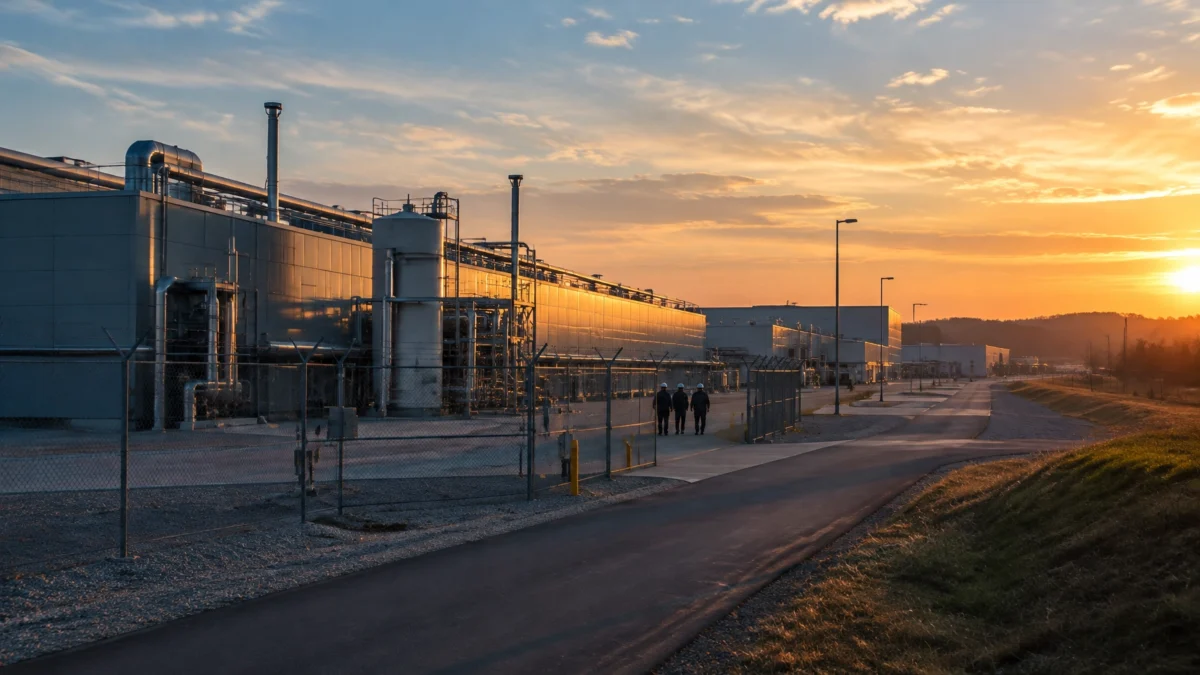
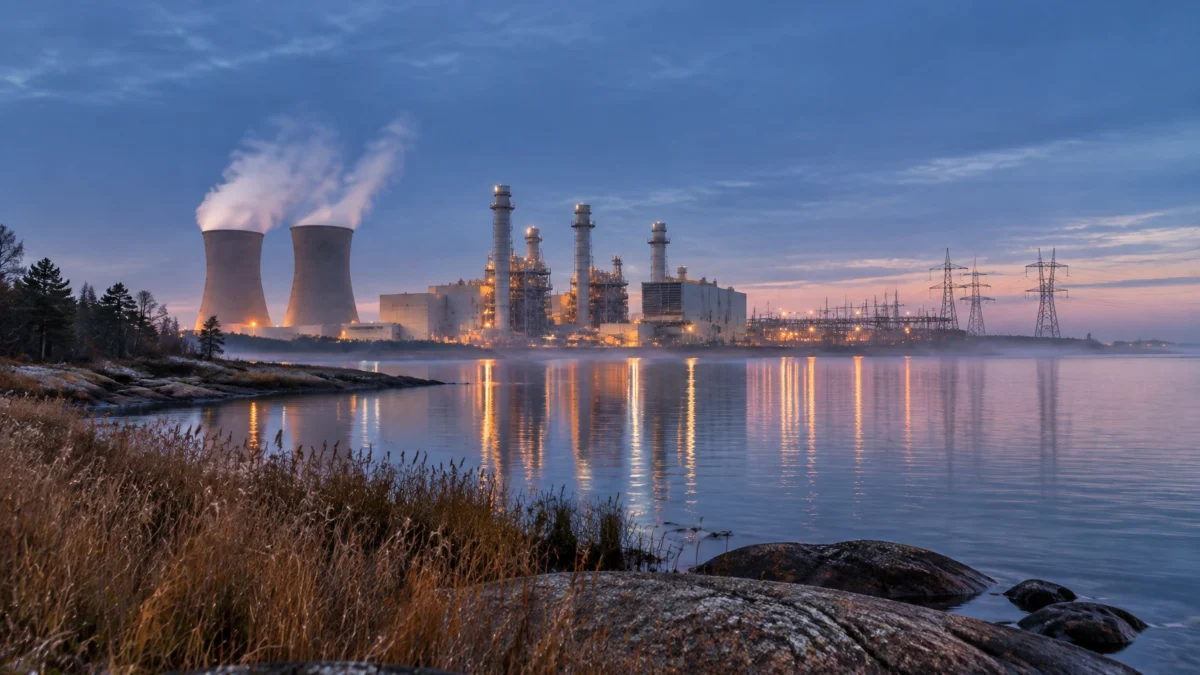
Fortum owns and operates the Loviisa plant on Finland’s southeastern coast. The facility consists of two VVER-440 pressurized water reactors, each rated at 507 megawatts electric, or MWe. The units entered service in the late 1970s and early 1980s and produce approximately 8 terawatt-hours of electricity annually.
World Nuclear News reported that Loviisa supplies more than 10% of Finland’s electricity. Fortum announced that the plant employs approximately 580 people and operates under licenses that extend through the end of 2050.
The plant’s continued operation is not automatic. Fortum says its Loviisa lifetime-extension program represents an investment of approximately €1 billion between 2023 and 2050. About €700 million of capital expenditure and roughly 80% of the required projects remain subject to investment decisions, according to the company.
A long-term PPA reduces the risk that Fortum will have to make those investments while relying entirely on volatile wholesale electricity prices. Fortum says the agreement is expected to improve the company’s comparable return on net assets by approximately 1.4 percentage points over time once 50% of the plant’s generation capacity is contracted.
The agreement also supports a planned 38-MW capacity increase expected to be completed in 2028 and is expected to enable an additional 10-MW increase. Those uprates would increase available output without constructing an entirely new reactor, although the additional power remains subject to engineering, regulatory, and operational execution.
What the Google Fortum Nuclear PPA’s 50% Capacity Commitment Means
The phrase “up to 50% of capacity” requires careful interpretation.
Capacity is measured in megawatts, or MW, and describes how much power a plant can produce at a given moment. Energy is measured in megawatt-hours, or MWh, and describes how much electricity is produced over time. A plant with 500 MW of capacity operating for one hour produces 500 MWh of energy.
Loviisa’s two units have a combined nominal capacity of approximately 1,014 MWe before the planned uprates. A 50% capacity commitment would therefore represent a nominal share of roughly 507 MW at the existing rating, although the agreement is described as covering “up to” 50% and begins with a smaller contracted capacity in 2028. Fortum says the contract reaches the 50% level during 2030 through 2049.
That does not mean Google will physically consume exactly half of Loviisa’s electricity every hour or receive a dedicated stream of electrons from the plant. Electricity from generators flows into an interconnected grid, where physical flows are determined by system conditions, dispatch, transmission constraints, and demand.
The commercial agreement could include physical delivery, financial settlement, or a combination of capacity and energy payments. The public announcement does not disclose the contract price, delivery point, minimum energy obligations, outage provisions, or whether the arrangement is structured partly as a virtual PPA.
In a physical PPA, the buyer generally pays for electricity delivered to a defined grid point, subject to the terms of the agreement. In a financial PPA, the plant may continue selling electricity into the wholesale market while the parties settle the difference between a contracted price and a market reference price. In either case, the contract can provide revenue visibility without changing the physical path of every electron.
The distinction matters for Finland’s power system. If Google has contracted a portion of Loviisa’s output, Fortum may have less uncommitted generation to sell into the merchant market during periods when the plant is operating. At the same time, the agreement helps preserve the plant’s full generating capability for the system rather than allowing the units to retire when their original operating horizons end.
The effect on ratepayers will depend on the contract’s price, tax treatment, grid charges, market conditions, and the extent to which the agreement supports investment that would otherwise not occur. Fortum and Google have said the partnership is intended to support reliable and affordable electricity for Finnish households and businesses, but those outcomes cannot be established from the announcement alone.

AI demand is changing corporate power procurement
Google’s Finnish investment reflects a broader shift in the relationship between technology companies and power generators. Data centers require large volumes of electricity, and AI-focused facilities can have higher power density and more concentrated load profiles than traditional computing campuses.
Our earlier analysis, Why AI Data Center Power Demand Is Reshaping the Global Energy Grid, examined how data-center growth is affecting generation planning, transmission, storage, and natural gas demand. The Fortum agreement adds an important European example: a technology company is using a long-term contract to support an existing nuclear plant while expanding its own electricity-consuming infrastructure.

Google has pursued a similar strategy in the United States. In 2024, the company announced an agreement with Kairos Power targeting up to 500 MW of advanced nuclear capacity by 2035, with the first reactor intended to begin operation later this decade. That arrangement differs from the Loviisa deal because it involves future advanced reactors rather than an operating plant with an established generation history.
The Finnish agreement is therefore less about proving a new reactor design and more about financing the continued operation of an existing asset. It may offer a nearer-term model for other data-center developers seeking firm, low-carbon power while new generation and transmission projects face long development timelines.
The deal is broader than nuclear generation
Fortum and Google also signed a memorandum of understanding covering potential cooperation on new nuclear generation, renewable energy, flexibility services, and energy portfolio management.
As an initial step, Fortum said it has agreed to optimize a new 94-MW battery storage system that Google has contracted for at its planned Kajaani data-center location. The combination of nuclear, renewable generation, and storage is important because a large data center’s demand may be continuous even when renewable output varies.
Nuclear generation can provide steady output, while batteries can help manage short-duration fluctuations and grid constraints. Wind and solar can add energy supply at competitive periods, but their contribution depends on weather and requires balancing resources, transmission, storage, or other forms of flexible generation. Natural gas and hydroelectric resources may also remain important to system balancing depending on regional market conditions.
The structure described by Fortum is not a commitment to build a new reactor. It is an agreement to explore potential business models and sites. New nuclear projects would still require technology selection, licensing, financing, supply-chain capacity, construction, and a commercial framework capable of managing cost and schedule risk.
That distinction is also relevant when comparing Finland with the United States. Our coverage of the U.S. “Atomic Intelligence” policy context examined federal efforts to connect nuclear development with AI infrastructure and national security. Finland’s approach, as presented in this agreement, relies more directly on a corporate customer, an incumbent utility, existing nuclear assets, and coordinated investment in renewables and storage.
What to watch next
The first issue is execution. Fortum must complete the planned modernization and uprates while continuing to operate two aging reactors under the extended licenses. Future investment decisions will indicate how much of the announced €1 billion program is formally committed.
The second is contract transparency. The public details establish the term, capacity ramp, and strategic purpose, but not the complete settlement structure. The eventual treatment of outages, market exposure, physical delivery, and environmental attributes will determine how the agreement affects both companies and the Finnish market.
The third is whether the partnership produces a commercially viable pathway for new nuclear reactors. The memorandum of understanding creates an avenue for cooperation, but it does not authorize construction or guarantee a project.
Finally, the market will be watching whether other technology companies follow Google’s approach. If long-term corporate PPAs become a more common source of revenue certainty for nuclear plants, they could help support lifetime extensions and new projects. They could also increase competition for firm generation and place greater importance on building additional supply for households, manufacturers, and other commercial users.
The Loviisa agreement therefore represents more than a power contract. It is a test of whether corporate demand from AI infrastructure can help preserve existing nuclear capacity while also supporting the broader generation, storage, and grid investments needed to serve a growing electricity system.
Keep In Touch with Shale Magazine
As the new era of energy unfolds, you can bet we’ll be the boots on the ground to keep you informed. Subscribe to Shale Magazine for sharp insight into the arenas that matter most to your life. And don’t forget to listen to our riveting podcast, The Energy Mixx Radio Show, where our very own Kym Bolado interviews the most extraordinary thought leaders, business innovators, and industry experts of our time.
Subscribe to get more posts from Amanda Jenkins