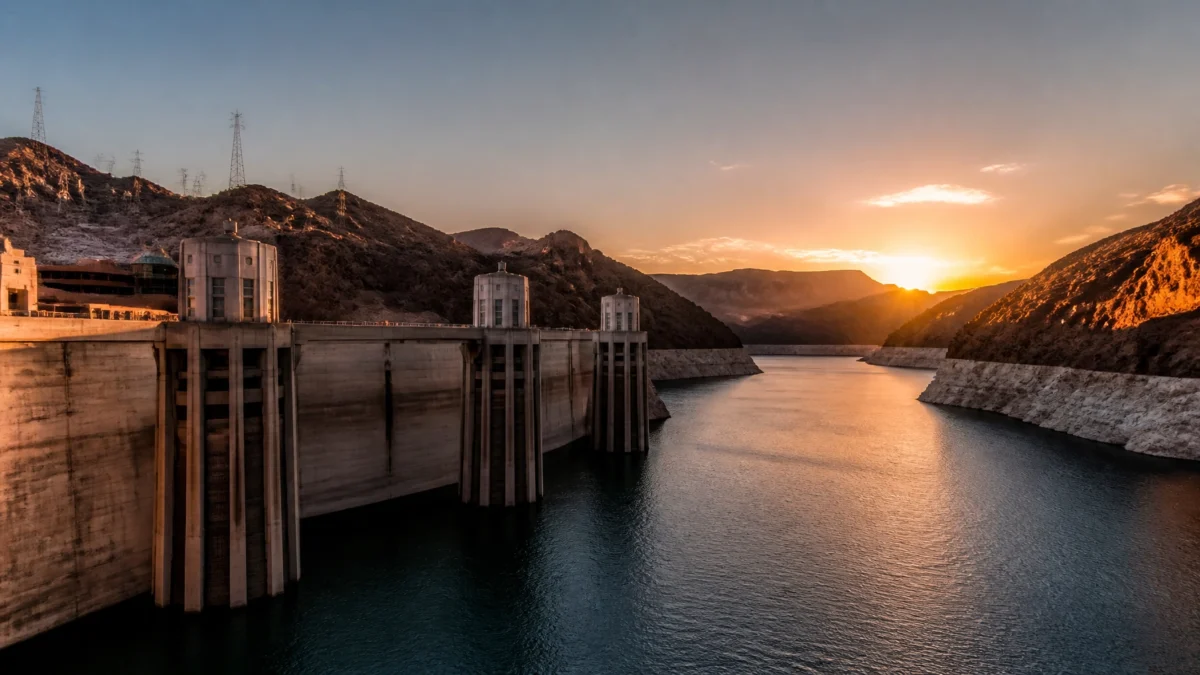
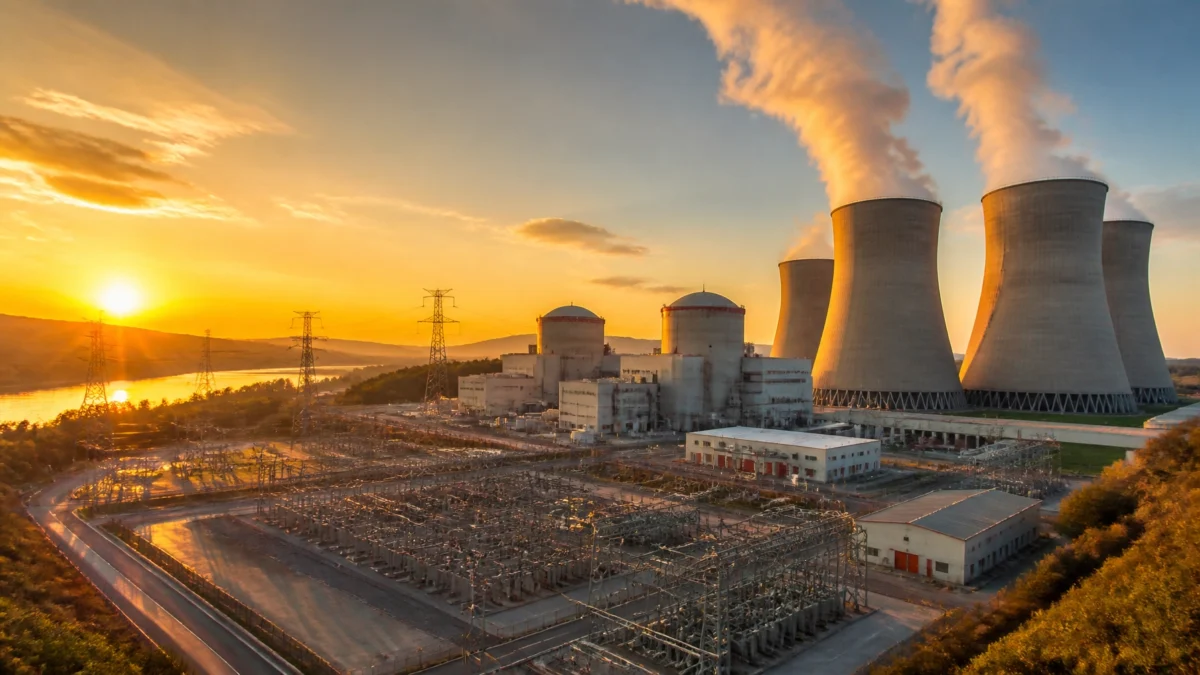
Federal energy financing priorities are shifting significantly as the Department of Energy redirects billions of dollars toward transmission, nuclear infrastructure, and other dispatchable power projects. The move reflects growing concern over rising electricity demand driven by artificial intelligence, manufacturing expansion, and grid reliability challenges. According to POWER Magazine, citing Department of Energy announcements, the Office of Energy Dominance Financing now has more than $289 billion in available loan authority, a portfolio that the Department of Energy describes as the largest public energy lending platform in the world. Gregory A. Beard is directing the office after the Department of Energy announced his appointment in January 2026. Reuters, POWER Magazine, and Department of Energy materials indicate that lending authority is being redirected toward transmission, nuclear, and other firm-power infrastructure after a broad review of prior commitments.
For the past several years, energy economists, utility executives, and power-market analysts have tracked a widening gap between rising electricity demand and the infrastructure needed to serve it. Industry analysts have cited load growth from artificial intelligence data centers, advanced manufacturing, population growth in the Sun Belt, and wider electrification trends as primary drivers. According to the Department of Energy’s EDF year-end review and reporting from POWER Magazine, more than $83 billion in legacy Biden-era loans and commitments has been restructured, revised, or de-obligated, including roughly $9.5 billion tied to wind and solar projects. The agency said the capital reallocation is intended to emphasize dispatchable generation, higher-capacity transmission, and domestic nuclear supply chains. The policy shift represents a significant change in federal financing priorities, although its long-term market impact will ultimately depend on project execution, regional implementation, and future electricity demand.
Evaluating the Energy Dominance Financing Transformation
The structural overhaul executed by the Office of Energy Dominance Financing is one of the largest federal energy-finance realignments now underway. According to the Department of Energy, the office has more than $289 billion of available authority, and over $83 billion of earlier commitments has been revised, restructured, or de-obligated. POWER Magazine reported that DOE is shifting away from subsidized intermittent projects and toward infrastructure considered more critical for affordability, reliability, and industrial competitiveness. S&P Global Platts and Reuters have similarly emphasized that rising utility capital requirements are increasingly being shaped by transmission constraints, nuclear supply chain bottlenecks, and accelerating load forecasts.

Several transactions and conditional commitments have been highlighted as evidence of the new financing direction. The numbers below were reported by Reuters, POWER Magazine, S&P Global Platts coverage, and Department of Energy announcements:
- $289 billion total available loan authority under the Office of Energy Dominance Financing, directed by Gregory A. Beard, according to DOE and POWER Magazine.
- $26.5 billion package to Southern Company, announced by DOE and reported by Reuters and POWER Magazine, to support more than 16 GW of firm power investments, including nuclear uprates, natural gas additions, hydropower modernization, storage, and more than 1,300 miles of transmission upgrades.
- $3.26 billion loan to AEP Texas, announced by DOE and covered by POWER Magazine, to finance roughly 100 transmission projects spanning about 2,800 miles in Texas, with DOE estimating roughly $685 million in customer savings over 30 years.
- $17.5 billion in conditional commitments for American nuclear supply chain components, announced by DOE, to support Westinghouse AP1000 reactors across up to five project sites, with $1 billion of equity required per project before DOE funds are drawn.
- More than $83 billion in legacy Biden-era loans and commitments that have been de-obligated, revised, or restructured, according to DOE, including about $9.5 billion in wind and solar projects.
These figures are material because financing costs, not just fuel costs, often determine which large-scale power assets move from planning into construction. In this case, capital is being concentrated into transmission and firm generation assets that are expected by supporters to improve reserve margins and reduce bottlenecks. At the same time, critics of the policy shift argue that some renewable and storage projects were being displaced even though those resources can still contribute meaningfully to capacity, especially when paired with regional transmission expansion. That disagreement should be acknowledged because the reliability debate is not purely technological; it is also regional, regulatory, and economic.
Baseload Transmission and Nuclear Infrastructure as National Priorities
The elevation of nuclear energy and high-voltage transmission within the federal lending framework reflects a view that has been gaining traction among utilities, lenders, and grid planners: reliability is increasingly being valued alongside decarbonization and cost control. Large transmission projects and nuclear components must often be financed over long periods, and private lenders have historically been cautious when regulatory uncertainty, construction risk, and permitting delays are involved. In that environment, federal credit support can be used as a risk-sharing tool, particularly for projects that are intended to serve broader system needs rather than narrow merchant-market opportunities.

The Department of Energy defined the nuclear component of the strategy most clearly in its American Nuclear Supply Chain Loans announcement. DOE said $17.5 billion in conditional commitments would support long-lead items for up to 10 Westinghouse AP1000 reactors across as many as five project sites. The structure matters. Up to five loans would be issued, each aligned with a two-reactor site, and $1 billion in equity per project would be required before DOE financing is released. That equity is expected to come from Westinghouse and its project partners. According to DOE and coverage in POWER Magazine, the goal is not merely reactor deployment; it is also to rebuild domestic manufacturing capacity for pressure vessels, steam generators, pumps, modular structures, and other long-lead equipment that has often been sourced through globally constrained supply chains.
Transmission has also been placed at the center of the financing pivot. DOE’s $3.26 billion loan to AEP Texas was closed to support approximately 100 projects and about 2,800 miles of lines, and the Southern Company package includes more than 1,300 miles of transmission and grid upgrades. Those investments matter because generation additions are less valuable if delivery infrastructure remains congested. S&P Global Platts and POWER Magazine have both noted that utilities are facing simultaneous pressure to connect new industrial load, support data center growth, integrate additional resources, and maintain system resilience during heat waves and storms.
Natural gas was also included in parts of the Southern package, and that inclusion should be separated from the nuclear narrative rather than blurred into it. Reuters reported that the Southern financing supports a mix that includes nuclear capacity expansion, gas-fired additions, grid upgrades, and other assets. Supporters argue that this reflects operational realism because gas plants can be added faster than new nuclear units and can stabilize systems while larger projects are being built. Others contend that a heavier focus on gas could preserve fuel-price exposure and emissions for longer than some planners expect. Both perspectives are relevant to how the portfolio should be interpreted.
The Financial Mechanics and Economic Impact on Regional Markets
Understanding the practical importance of the $289 billion lending authority requires more than repeating the headline number. The key question is how that authority is being translated into lower financing costs, faster procurement of long-lead equipment, and grid upgrades that can actually be permitted and built. In utility finance, large federal loans and guarantees can reduce interest expense, extend tenors, and improve project bankability. Those effects are especially important when multibillion-dollar transmission or nuclear projects would otherwise be delayed by high capital costs or balance-sheet limits.

The Southern Company package provides a useful example. DOE said the $26.5 billion package could deliver more than $7 billion in electricity cost savings for customers in Georgia and Alabama and reduce Southern’s interest expense by more than $300 million annually once fully funded. Reuters reported that the loan supports 6.3 GW of nuclear-related capacity actions through plant expansions and license renewals, alongside broader grid investments. POWER Magazine described the package as the largest loan in DOE history. If those savings materialize as projected, they will have been achieved through financing structure as much as through fuel or technology choices.
The AEP Texas transaction illustrates a different but equally important mechanism. Transmission earnings are regulated, but construction timelines can be slowed when utilities must balance multiple capital priorities at once. By providing up to $3.26 billion for about 100 projects, DOE is effectively trying to accelerate wire infrastructure in a state where demand growth has been amplified by data centers, population migration, industrial expansion, and Permian Basin activity. The benefits are expected to be regional rather than symbolic: more transfer capability, lower congestion, improved resilience, and a better platform for future generation interconnection.
The restructuring of legacy commitments should also be viewed carefully. DOE has said more than $83 billion in prior loans and commitments has been reworked, with roughly $9.5 billion in wind and solar projects eliminated or de-obligated. Supporters of the new strategy argue that federal capital had been spread too widely across projects that did not provide firm capacity or sufficient reliability value. Critics respond that renewables, storage, and transmission together can still lower system costs and that removing capital from those categories may narrow optionality in some markets. The ultimate effect will likely vary by region, because ERCOT, PJM, MISO, the Southeast, and Western systems do not face identical load shapes, reserve margins, or permitting conditions.
Whether the financing strategy ultimately delivers lower electricity costs, improved reliability, expanded domestic manufacturing, and long-term energy security will depend not only on federal financing but also on project execution, permitting timelines, utility investment decisions, and evolving electricity demand. As construction progresses, the effectiveness of the program will become clearer through measurable outcomes rather than policy announcements alone.
Keep In Touch with Shale Magazine
As the new era of energy unfolds, you can bet we’ll be the boots on the ground to keep you informed. Subscribe to Shale Magazine for sharp insight into the arenas that matter most to your life. And don’t forget to listen to our riveting podcast, The Energy Mixx Radio Show, where our very own Kym Bolado interviews the most extraordinary thought leaders, business innovators, and industry experts of our time.
Subscribe to get more posts from Amanda Jenkins