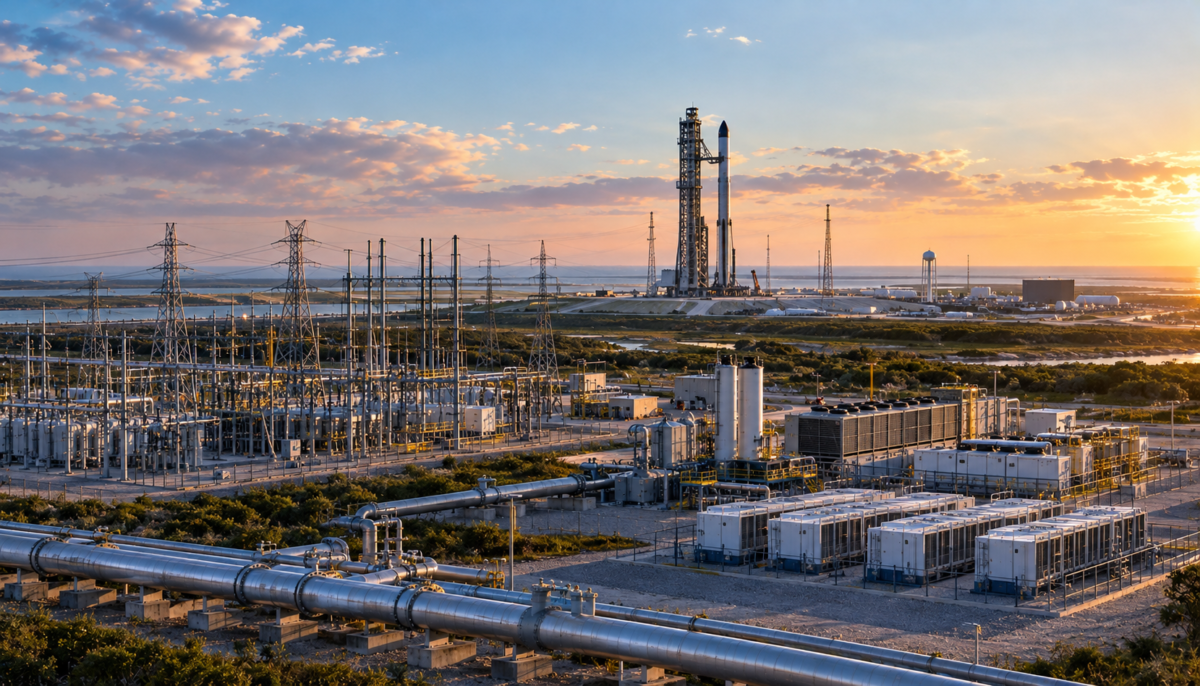

The restart would return a 615-MW nuclear facility to Iowa’s power system, subject to federal licensing approvals.
ENMG Analysis
The U.S. Department of Energy has closed a loan of up to $1.9 billion to NextEra Energy to help finance the restart of the Duane Arnold Energy Center in Linn County, Iowa. The transaction gives the project a substantial financing foundation, but it does not authorize the plant to resume operations. NextEra must still complete upgrades and obtain the required Nuclear Regulatory Commission approvals, including approvals related to the facility’s license and restart.
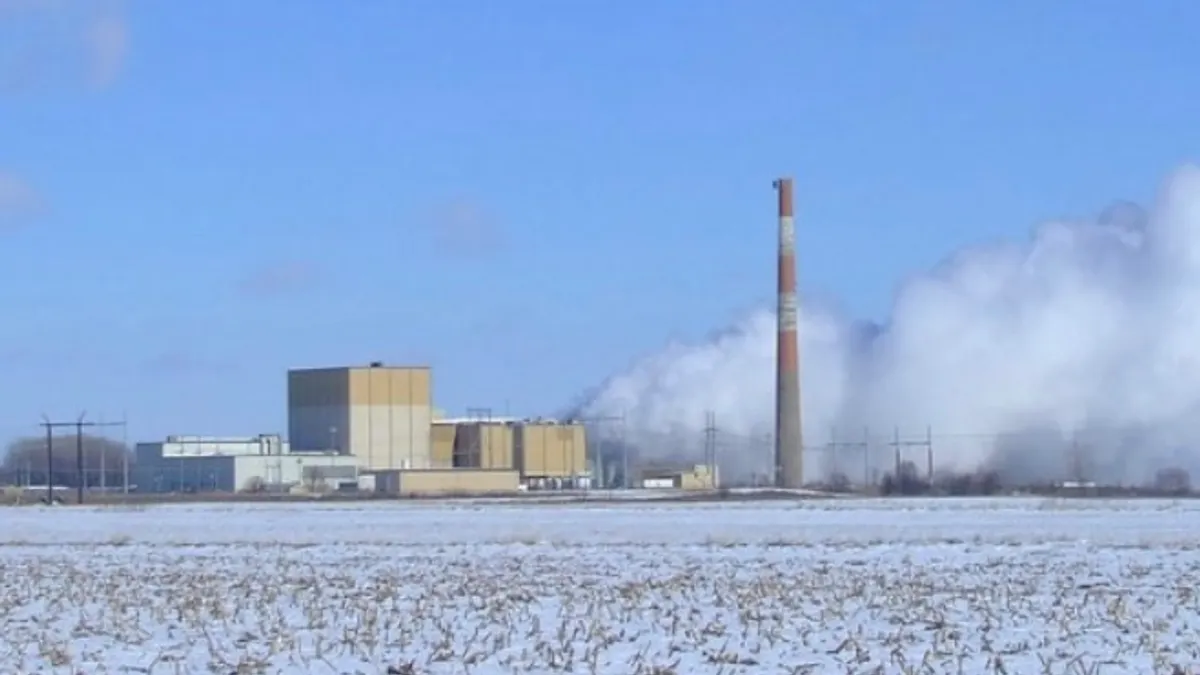
DOE closed the loan on September 8 through the department’s Office of Energy Dominance Financing. Duane Arnold is a single-unit, 615-megawatt boiling water reactor that stopped operating in 2020. NextEra is targeting a return to service by early 2029, although that schedule remains contingent on regulatory reviews, inspections, engineering work and operational readiness.
The financial close is significant because it supports the effort to bring an existing nuclear asset back into service rather than developing a new reactor from the ground up. It also tests whether long-term contracts, federal credit support and rising demand from large electricity users can make a shuttered nuclear plant economically viable.
What the loan supports
The DOE loan is described as being up to $1.9 billion. That wording identifies the maximum financing commitment; it does not necessarily mean the full amount will be drawn immediately or that federal financing eliminates the project’s remaining capital requirements.
NextEra has described the restart as a multibillion-dollar undertaking. Public materials reviewed for this article confirm that the company is contributing substantial capital to the project, but they do not independently confirm an exact $1.5 billion NextEra contribution. ENMG is therefore not presenting that figure as a verified company commitment.
Reuters reported that the loan is part of a broader push to restart retired U.S. nuclear plants as electricity demand increases. The transaction also fits within the evolving Office of Energy Dominance Financing portfolio, which has increasingly emphasized nuclear generation, transmission and other firm-power infrastructure.
The project is expected to create nearly 1,500 construction jobs and support more than 450 permanent operating positions, according to DOE. Those estimates include different phases of the project and should not be interpreted as a guarantee of a particular employment level. The number of jobs ultimately created will depend on the scope and timing of refurbishment, procurement and ongoing operations.
The plant’s capacity is not the same as its energy output
Duane Arnold’s 615 MW refers to its electrical generating capacity, or the maximum rate at which the reactor can produce power under operating conditions. It is not a statement that the plant will produce 615 megawatt-hours every hour or deliver the same amount of electricity without interruption.
Energy production is measured in megawatt-hours. If a 615-MW plant operated at full capacity for every hour of a 365-day year, the theoretical output would be approximately 5.39 million MWh. Actual generation would depend on plant availability, refueling outages, maintenance, grid conditions and any operating limitations imposed by the NRC.
That distinction matters for financing and grid planning. Capacity helps system planners evaluate whether the region has enough generating capability to meet peak demand. Energy output determines how much electricity is actually produced over time. A nuclear unit can provide a large volume of energy because it is designed for sustained operation, but its commercial value still depends on safe operation, availability and the terms under which its output is sold.
Google’s 25-year agreement underpins the economics
A 25-year power purchase agreement with Google is a central element of the restart plan. Under a PPA, a buyer agrees to purchase electricity under specified commercial terms for a defined period. For a capital-intensive project, that type of long-term revenue commitment can make it easier to secure financing because lenders have greater visibility into future cash flow.
Utility Dive reported that Google is expected to be the primary customer for the revived plant’s output, supporting the company’s cloud and artificial intelligence infrastructure in Iowa. World Nuclear News reported that the restart plan is underpinned by the 25-year agreement and remains subject to regulatory approvals.
The PPA may reduce exposure to short-term wholesale electricity prices, but it does not remove the project’s operational risks. The plant must still complete refurbishment, satisfy NRC requirements and demonstrate that it can operate reliably after a multiyear period offline. The contract also concentrates a significant portion of the project’s commercial rationale around the electricity needs and creditworthiness of a large customer.
The arrangement reflects a broader policy and market pattern in which nuclear facilities are paired with large electricity users. ENMG previously examined that approach in its coverage of the nuclear capacity expansion strategy and the UPRISE policy framework. Similar agreements are being considered as utilities and technology companies seek firm power for data centers, manufacturing facilities and other high-load operations.
The demand question is substantial. ENMG’s reporting on the Crusoe and Aalo nuclear-powered data-center demonstration examined a different model involving advanced nuclear technology and an artificial intelligence data center. Duane Arnold represents a more immediate approach: restoring an existing commercial reactor and contracting its output to support new digital infrastructure.
NRC approval remains the critical milestone
The DOE loan does not replace the NRC’s role as the federal nuclear safety regulator. Before Duane Arnold can resume commercial operations, NextEra must complete the required licensing process and satisfy the NRC that the plant, its systems and its operating organization are ready to return to service.
The restart involves more than turning equipment back on. The plant has been shut down since 2020, and the earlier decision to retire it followed a combination of storm damage and cost pressures. NextEra must demonstrate the condition of major systems, validate equipment and procedures, address regulatory requirements and complete inspections under NRC oversight.
The Iowa Utilities Commission has issued a state-level certificate related to construction and operation, but that action does not substitute for federal nuclear authorization. The NRC’s review remains decisive for the operating schedule.
The early-2029 target should therefore be treated as a company objective rather than a guaranteed date. Delays in licensing, equipment procurement, testing or construction could move the restart beyond that window.

Implications for the broader power system
If completed, the restart would add 615 MW of nuclear generating capacity to Iowa and the Midwestern power system. That could improve the supply mix during periods of high demand and reduce the need for some replacement generation, although the effect on regional prices will depend on market conditions, transmission constraints, fuel costs and the plant’s operating performance.
Nuclear power would not operate in isolation. Natural gas plants may continue to provide flexible generation, while wind and solar resources contribute energy when weather conditions support production. Battery storage can shift electricity over limited periods, and transmission investment can move power between regions. The value of Duane Arnold will therefore be measured within a system that includes all of these resources rather than as a replacement for them.
The project also raises questions about cost allocation. Google’s long-term contract is intended to connect new generation with new demand, which may help limit the extent to which existing residential customers bear the cost of serving data-center growth. At the same time, regulators and consumer advocates will continue to examine whether transmission, backup capacity and grid-upgrade costs are assigned appropriately.
For other shuttered nuclear plants, Duane Arnold could provide a useful precedent if the project returns safely, on schedule and within its expected cost range. A successful restart would demonstrate that some retired reactors may retain economic value when power demand rises and a large customer provides long-term revenue support. A delayed or more expensive project would offer a different lesson about the difficulty of refurbishing facilities that have spent years outside commercial operation.
What to watch next
The most important milestones are:
- NRC decisions on license-transfer and restart-related approvals.
- Completion of major inspections, upgrades and testing.
- Progress toward the early-2029 commercial-operation target.
- Final financing drawdowns and updated project-cost disclosures.
- Construction employment and permanent staffing levels.
- Google’s data-center development and electricity requirements in Iowa.
- The plant’s eventual operating performance and effect on regional power markets.
The loan close moves Duane Arnold from a restart proposal into a better-capitalized project phase. It does not settle the regulatory, technical or commercial questions that will determine whether the plant returns to service. Those questions will be answered through the NRC process, construction progress and the facility’s performance once it is authorized to operate.
Keep In Touch with Shale Magazine
As the new era of energy unfolds, you can bet we’ll be the boots on the ground to keep you informed. Subscribe to Shale Magazine for sharp insight into the arenas that matter most to your life. And don’t forget to listen to our riveting podcast, The Energy Mixx Radio Show, where our very own Kym Bolado interviews the most extraordinary thought leaders, business innovators, and industry experts of our time.