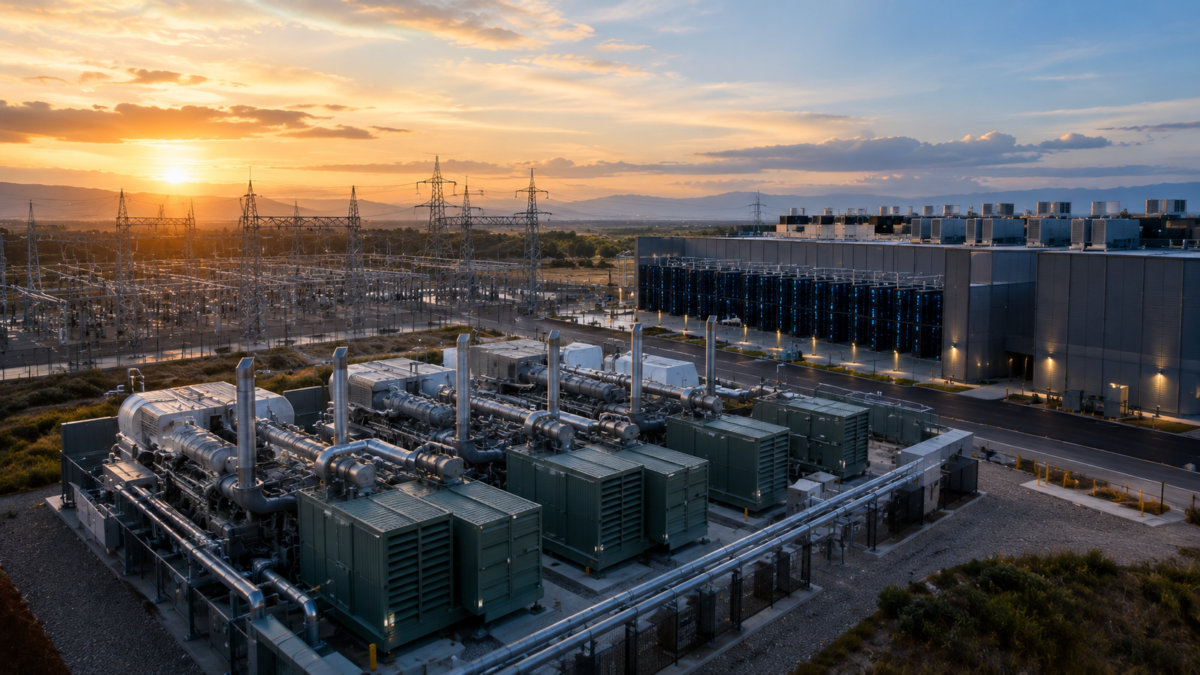

Modern oil and gas operations depend on digital platforms that connect field assets, enterprise systems, cloud services, and engineering workflows across geographically distributed environments. Reliable architecture allows these systems to scale, integrate new capabilities, and maintain dependable performance without disrupting production. In this interview, Hakim Arabi discusses the engineering principles that shape enterprise-scale digital infrastructure for today’s energy industry.
A SHALE Exclusive By Ellen F. Warren
Software architecture has become a strategic engineering discipline within the energy industry because decisions made early in the design of a platform often determine how effectively it can accommodate future technologies, integrate with existing systems, and support years of continuous operation. Those decisions must also create frameworks that remain resilient as operational requirements, cybersecurity demands, and digital capabilities continue to expand.
Few engineers have spent their careers addressing those challenges across enterprise-scale oil and gas environments. Houston-based program software architect, inventor, and researcher Hakim Arabi has led the design of large-scale distributed software platforms, enterprise architecture initiatives, and multidisciplinary engineering teams for one of the world’s largest oilfield services and technology companies. That combination of enterprise engineering leadership, patented innovation, and published technical research provides a unique perspective on the architectural decisions that shape modern oil and gas operations.
Throughout his career, Arabi has focused on designing software architectures that enable complex energy environments to incorporate new technologies without sacrificing reliability or long-term maintainability. Spanning cloud platforms, edge computing, distributed systems, and industrial artificial intelligence, his work demonstrates how thoughtfully engineered digital infrastructure supports reliable, enterprise-scale oil and gas operations. This interview examines the architectural strategies and design decisions required to build software platforms that deliver reliable, long-term performance across complex energy systems.

Ameur Hamdane is an accomplished Senior III Geophysicist and Project Leader at one of the world’s leading oilfield services companies. With 15 years of experience in all aspects of advanced seismic processing and imaging, including high-resolution imaging for both marine and land datasets in complex environments, from onshore Europe to the deepwater Gulf of Mexico, he is widely recognized for his leadership in global geophysics and for fostering innovation and collaboration across international teams. Ameur is a member of the Society of Exploration Geophysicists (SEG) and the American Society of Civil Engineers (ASCE), and an organizing member of the Geophysical Society of Houston (GSH). He has published numerous technical case studies and guidelines, and contributes to the advancement of geophysical research and standards as a peer and journal reviewer for SEG and ASCE.
ELLEN WARREN: Oil and gas companies operate across field locations, enterprise applications, cloud environments, and specialized engineering systems. What are the biggest architectural challenges in connecting those environments into a cohesive digital platform?
HAKIM ARABI: The central challenge is that these environments were never designed to work together, and each operates according to different assumptions. Field systems have to remain reliable under constrained conditions where connectivity cannot be taken for granted. Enterprise applications support business processes on stable corporate networks. Cloud platforms provide scale but sit far from where the work physically happens, while specialized engineering systems are highly precise and often decades old. Building a cohesive digital platform means bringing those very different perspectives together without compromising what each one does well.
I often think back to watching an engineer move constantly between several screens because no single system presented the complete operational picture. The software was effectively forcing the engineer to serve as the integration layer. That experience reinforced a lesson that shaped much of my career: each system understood only part of the operation, with no shared model connecting them. Developing a unified approach to drilling data helped bridge those gaps, but true integration depends on establishing a common understanding of what the data represents so every system interprets the operation the same way.
That same lack of alignment extends beyond the data itself to the way these environments operate. A delay that is harmless in an enterprise application can have real operational consequences in the field, so the architecture cannot treat every system the same. Good architecture recognizes those differences, allowing decisions that require immediate action to remain close to the operation while the enterprise and cloud provide coordination, scale, and broader visibility. Bringing those layers together so they function as one reliable platform is ultimately the architect’s job.
EW: Software platforms in oil and gas often remain in service for many years while technology continues to change. What architectural principles help create systems that can accommodate new technologies without requiring major redesign?
HA: The single most important principle is maintaining clear boundaries between the parts of the system. When every component is tightly coupled, even small changes ripple through the entire platform until major upgrades become expensive and disruptive. Well-defined interfaces allow individual components to evolve independently, which is what gives a platform its longevity.
I also distinguish between what changes slowly and what changes quickly. An operation’s core data model and the relationships it captures remain relatively stable over time, while frameworks, cloud services, and other technologies evolve continuously. I anchor the architecture around those enduring elements and keep the faster-moving technologies at the edges, where they can be updated without affecting the rest of the platform. Much of the longevity of the systems I have designed came from making that distinction early.
Finally, I assume from the beginning that requirements will change in ways I cannot predict. Good architecture leaves room for that uncertainty instead of trying to anticipate every future need. The platforms that have served organizations well over many years were designed to adapt as conditions changed, not around the assumptions of a single moment.
EW: As software platforms grow, increasing data volumes, user demands, and system dependencies can place pressure on performance. Which early design choices have the greatest influence on a platform’s ability to scale effectively?
HA: Scalability is determined much earlier than most people realize, often by the first architectural decisions made before a platform carries any meaningful load. One of the most important is how data is organized and flows through the system. If those decisions are sound, the platform can grow with demand. If they are not, the bottlenecks become part of the architecture, and no amount of additional hardware can fully compensate for them.
Scalability also depends on allowing different parts of the platform to grow independently. When I designed an architecture capable of supporting many wells from a single platform, the components under the greatest demand could be expanded without affecting the rest of the system. That flexibility made it possible to support some of the industry’s largest programs without redesigning the platform each time requirements increased.
Equally important is deciding where work should take place. Time-critical operational decisions belong close to the field, while compute-intensive tasks are better suited to the cloud. Making those choices deliberately from the outset allows a platform to expand predictably as demand grows. In my experience, scaling challenges almost always trace back to architectural decisions made at the very beginning.
EW: Enterprise platforms frequently need to support both legacy infrastructure and modern cloud-native technologies. How do you design architectures that balance modernization with operational continuity?
HA: One of the first realities I accept is that legacy systems are often the backbone of an operation. They support critical processes, have proven themselves over many years, and replacing them all at once usually introduces more risk than value. Modernization succeeds when it respects that reality instead of trying to erase it.
In my experience, the most effective approach is to build around existing systems instead of replacing them wholesale. When I developed a private, vendor-neutral cloud service for delivering operational data, the objective was to work with the infrastructure organizations already relied on while making that information available to modern cloud-native applications. A well-designed architectural layer allows new capabilities to be introduced without exposing them to the complexity of the underlying systems.
That approach allows modernization to happen incrementally. Individual capabilities can be introduced, validated in live operations, and expanded over time without disrupting production. In oil and gas, where continuity and reliability are essential, good architecture provides a path to modernize while keeping the operation running safely.
EW: Your work includes patented software innovations alongside enterprise-scale platform architecture. How has the experience of creating patented technologies influenced the way you approach software architecture and complex engineering decisions?
HA: My work as an inventor has reinforced a habit that has shaped the way I approach engineering: I rarely accept that a difficult problem is simply unsolvable. Throughout my career, I have encountered limitations that were treated as unavoidable, and my first instinct has always been to ask whether they were true technical constraints or assumptions that had simply gone unchallenged.
That mindset carried into my patented work. Whether developing computer vision for real-time flare monitoring or AI systems for autonomous drilling, every invention began with a careful study of what already existed, where it worked well, and where it fell short. You cannot create something genuinely new without first understanding the strengths and limitations of the current approaches.
The patent process also taught me to separate a core idea from any single implementation. A strong invention protects the underlying principle, not just one way of writing the software. I bring that same perspective to architecture by focusing on designs that remain valuable even as technologies and implementations change.
EW: Oil and gas platforms often operate across geographically dispersed facilities where software systems must continue functioning under demanding operational conditions. From your experience designing distributed software platforms for large-scale energy operations, what design strategies have proven most effective for maintaining reliability across distributed environments?
HA: The first principle is to assume that failures will happen, because in distributed energy operations they inevitably do. Networks drop, connections degrade, and remote sites lose contact with centralized systems. An architecture that depends on perfect connectivity will fail when it is needed most, so I design every distributed platform with the expectation that parts of it will occasionally become unavailable while the overall system continues operating safely.
That philosophy naturally leads to local autonomy. When I deployed edge computing across large numbers of operating sites, each location had to continue functioning independently whenever communication with the center was interrupted and then synchronize cleanly once connectivity returned. Critical operational decisions should never depend on a live connection to a distant data center.
The final principle is graceful degradation. A reliable platform should lose nonessential capabilities before it loses essential ones, allowing operators to maintain safe, dependable operations even under difficult conditions. In distributed oil and gas environments, reliability comes from designing for the realities of the field, not for ideal operating conditions.
EW: Energy infrastructure presents unique cybersecurity challenges because operational continuity is just as important as protecting information. How should security considerations influence software architecture from the earliest stages of platform design?
HA: Security has to shape the architecture from the very beginning because, in oil and gas, you are protecting both information and the continuity of the operation. That makes this industry different from many others. In some environments, the safest response to a security event is simply to shut a system down. At a live operation, taking the wrong system offline can create safety and operational risks of its own. Security therefore has to protect the platform while allowing critical operations to continue safely.
From the earliest stages of design, I think about trust boundaries. Which systems should communicate directly? Which should remain isolated? How should operational data move between the field, enterprise applications, and cloud services, and where should those exchanges be validated? Those architectural decisions determine how well a platform can contain problems before they affect the broader operation.
When security is treated as an architectural concern instead of a feature, critical systems remain isolated, communication paths stay deliberate, and operational resilience becomes part of the platform itself. In an industry where uninterrupted operations matter as much as protecting information, those decisions have to be made before the first line of production code is written.
EW: Large software initiatives often involve competing priorities from engineering, operations, cybersecurity, and business leadership. How do you establish architectural direction that remains effective throughout the life of a platform?
HA: Every stakeholder sees the platform through a different lens. Engineering focuses on maintainability, operations on reliability, cybersecurity on protection, and business leadership on delivering value. None of those priorities is wrong, but they can easily pull a platform in different directions if each decision is made in isolation.
One of an architect’s most important responsibilities is providing a consistent technical direction that outlasts shifting priorities. That means understanding what each group is trying to accomplish, identifying where those goals genuinely align, and making architectural decisions that support the platform over its entire life instead of optimizing for the immediate request. Reliability, security, maintainability, and business value reinforce one another when the architecture is sound.
It also requires knowing which decisions should remain stable and which can adapt over time. I am willing to be flexible on implementation details, but I protect the architectural choices that would be difficult or impossible to reverse later. That balance between consistency and flexibility is what allows a platform to remain coherent as organizations, technologies, and operational demands continue to change.
EW: Your career has involved leading enterprise architecture initiatives across complex oil and gas environments. What lessons have those experiences taught you about making design decisions that remain effective as platforms grow and operational demands change?
HA: Experience has taught me that the most valuable architectural decisions are often the ones no one notices at the time. Early in my career, I thought success came from anticipating exactly what the future would require. I eventually realized the better goal is to build platforms that can adapt as those requirements inevitably change.
That perspective has made me far more deliberate about the decisions that are difficult to reverse. The way data is structured, how components depend on one another, and the boundaries between major parts of the platform may seem like technical details early in a project, but they determine how easily a system can grow years later. I have seen well-designed platforms continue delivering value long after their original requirements changed because those fundamental choices were made carefully.
I have also learned to protect simplicity. Every project accumulates requests for exceptions, special cases, and additional features, each of which seems reasonable on its own. Over time, though, that complexity becomes one of the greatest obstacles to maintaining and extending a platform. Keeping the architecture clear and disciplined is rarely the most visible part of the job, but it is one of the most important.
EW: Oil and gas operators are increasingly combining cloud computing, edge technologies, and industrial AI within the same digital ecosystem. How do you determine where each technology delivers the greatest operational value?
HA: I try to understand the operational decision before I think about the technology supporting it. A platform making millisecond decisions in the field has very different requirements from one identifying long-term production trends across hundreds of wells. Once the decision is clear, the appropriate technologies usually become obvious.
Some workloads are constrained by time, others by scale, and others by the amount of information they need to analyze. Matching the computing model to those constraints is the architect’s job. Real-time control requires predictable latency, enterprise coordination benefits from centralized computing, and AI is most effective when it can analyze broad operational context to support engineering decisions.
Viewed this way, edge computing, cloud platforms, and AI are complementary parts of the same system rather than competing technologies. The objective is to place each capability where it best supports the work being performed, creating a platform that remains efficient today while accommodating tomorrow’s operational demands.
EW: When you evaluate a software platform several years after its deployment, what characteristics tell you the original architectural decisions were successful?
HA: I don’t measure success by how impressive a system looks on the day it is deployed. I measure it years later, when the platform is still supporting the operation, adapting to new requirements, and continuing to earn the confidence of the people who rely on it every day.
The most successful systems I have worked on are often the ones people rarely think about because they simply do their job. Engineers can focus on the operation instead of the software, organizations can introduce new capabilities without disrupting existing ones, and the platform continues delivering value as the business grows and technology changes. That kind of longevity is never accidental. Enduring value comes from making sound architectural decisions from the beginning.
Ultimately, architecture is about creating technology that remains useful long after the original project is complete. If the platform continues to solve real operational problems, supports the people who depend on it, and remains valuable as the operation grows, I consider that a successful design.
Guest Contributor Note
This article was submitted by a guest contributor and reflects the author’s professional experience, analysis, and opinions. It was reviewed by ENMG for editorial quality, accuracy, and adherence to our publication standards. Any affiliations, disclosures, or potential conflicts of interest identified by the author are noted within the article where applicable.

About the author:
Ellen F. Warren writes about industry leaders and trends in various sectors, including energy, fintech, IT innovation, healthcare, business, logistics, supply chain, commercial real estate, and entrepreneurship. As a former Independent Director, she served for more than a decade on the Boards of multiple E&P companies in the oil and gas industry.