Will California Welcome Nuclear Power?
California has long had legislation in place to limit nuclear power development, largely due to concerns around nuclear waste disposal. However, state legislators are now discussing the potential for nuclear power development to meet the state’s clean energy goals over the next 20 years, which could ultimately lead to a long-term change in California’s energy mix.
Californian Nuclear Energy
California has two operating nuclear power reactors at one plant, three commercial nuclear facilities at various stages of decommissioning, and multiple research reactors that are operational or undergoing decommissioning, according to the California Energy Commission, which oversees the state’s nuclear power sector.
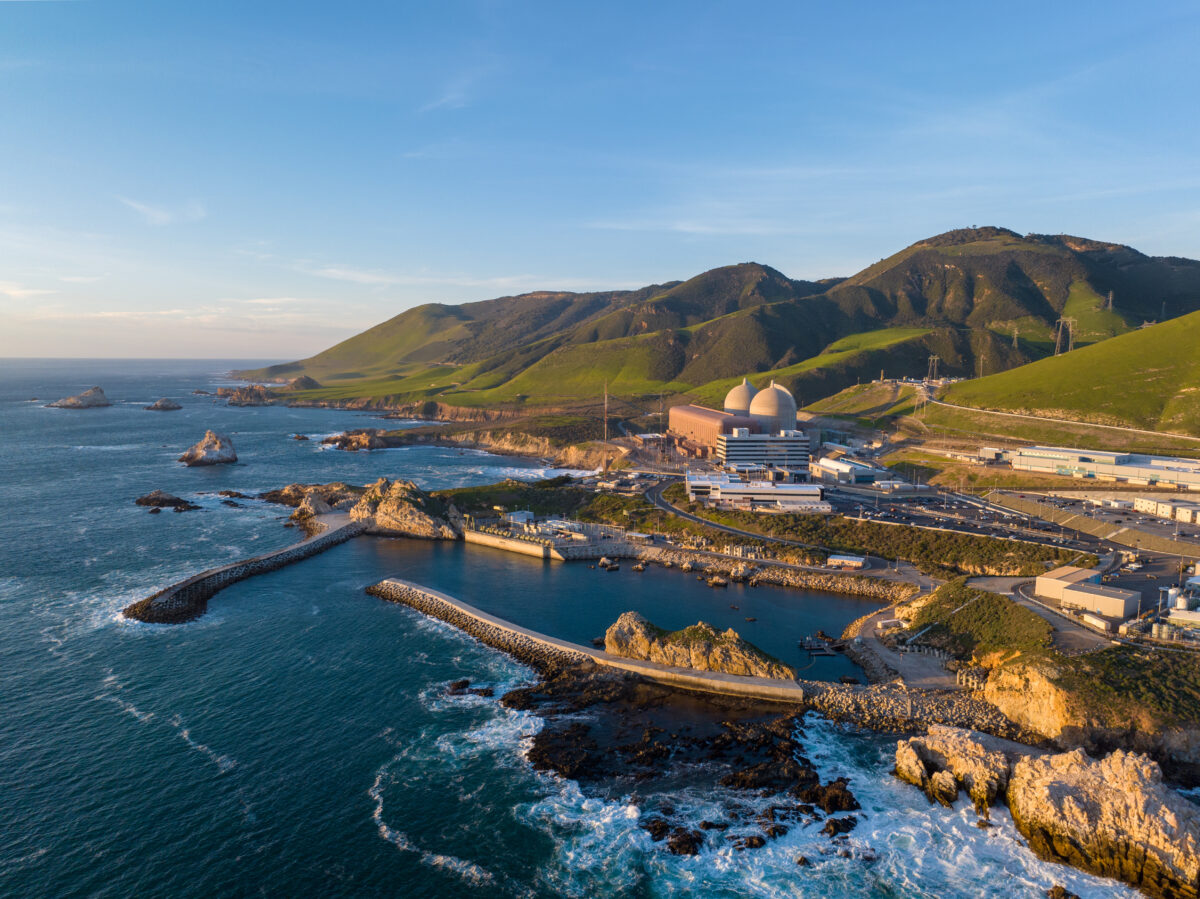
Diablo Canyon Power Plant (DCPP) opened in 1985 and has a capacity of 2,323 megawatts (MW). The plant, operated by PG&E, was slated for decommissioning in 2024 and 2025. However, in September 2022, California Governor Gavin Newsom sought to extend operations through 2030 to support the delivery of clean, reliable electricity as part of the state’s green transition goals.
PG&E submitted an application to the Nuclear Regulatory Commission (NRC) in November 2023 to renew DCPP’s operating licenses for 20 years, and the NRC approved the renewal in April 2026. The DCPP contains two Westinghouse Pressurized Water Reactor units. While the NRC renewed Unit 1 through November 2, 2044, and Unit 2 through August 26, 2045, a change to state legislation would be required to continue operations beyond 2030.
DCPP accounts for almost 9% of California’s total electricity supply and 17% of its zero-carbon electricity, as well as preventing between 6 and 7 million tons of greenhouse gases from entering the atmosphere compared with conventional generation resources, according to PG&E.
Changing Perceptions of Nuclear Power
For several decades, Californians have staged protests and waged political battles against DCPP over fears of the risks associated with nuclear power production. This reflects the broader public sentiment in the United States.
Following the cooling malfunction at Three Mile Island in 1979, which caused part of the core to melt in one of the reactors, public perception of nuclear power in the U.S. deteriorated. This poor public perception was compounded by two other prominent nuclear disasters at Chornobyl and Fukushima.
However, in recent years, public perception in the U.S. has improved significantly. Since 1983, the proportion of the U.S. public in favor of using nuclear energy has grown from about half to about three-fourths, reaching a record high in 2026, according to a Bisconti Research survey. Bisconti found that 77% of those surveyed favored nuclear energy in 2026, compared with 23% who opposed it. Meanwhile, 30% of those surveyed were strongly in favor of nuclear energy, compared to 5% who were strongly opposed.
In California, an FM3 Research 2022 poll, California Voter Views of Nuclear Energy for Electricity, which surveyed opinions of 620 voters statewide, found that 54% favored nuclear power, while 36% opposed it. The results were similar to those of 2013, when 51% of voters favored nuclear power. In San Luis Obispo County, on the central coast of California, one of the poll’s oversamples, the total approval rating for nuclear power rose to 73%.
Could Nuclear Energy Power California’s Future?
California has long been a frontrunner in U.S. clean energy development, and yet, until recently, it did not see a place for nuclear power in its future. This is demonstrated through the decision to decommission several of the state’s nuclear power plants in recent decades.
However, the state government is now considering extending the DCPP’s lifespan to 2045 and lifting the moratorium on new reactors. Almost 50 groups have joined a coalition that includes chambers of commerce, labor unions, nonprofits and the San Luis Obispo County Board of Supervisors to encourage lawmakers to extend operations at DCPP. Then, in August, the California Legislature passed a bill to commission a study on partially lifting the ban on new reactors.
Californian lawmakers had previously hoped that the accelerated development of the state’s renewable energy capacity would help it to achieve its climate goals. In the past, liberal officials had also voiced concerns about the potentially detrimental environmental impact of nuclear energy. However, recent analyses suggest that California may come to rely on nuclear power to achieve its 2045 goal of generating 100% of its electricity from clean energy sources, including wind, solar, geothermal, hydropower, and nuclear.
State lawmakers introduced legislation prohibiting new nuclear facilities half a century ago until the federal government found a place to permanently store radioactive nuclear waste, a goal that has not yet been achieved. However, the state’s current lawmakers have grown increasingly concerned about achieving their clean energy goals, which aim to tackle climate change and improve residents’ health.
Assemblymember Lisa Calderon, a Democrat who sponsored the bill to study the lifting of the state’s nuclear moratorium, stated, “Reducing greenhouse gas emissions is vital to the health of Californians and California’s economy.” Calderon added, “Nuclear energy could significantly contribute to reducing these harmful emissions that have increased the frequency, severity, and costs of wildfires, floods, and extreme heat events in California.”
What Will California’s Energy Mix Look Like in the Future?
Despite broader support from state lawmakers, several environmental groups are still pressuring the state government to invest more heavily in renewable energy and batteries, rather than nuclear power, to meet California’s clean power needs.
California has significantly increased the share of renewable energy in electricity generation over the last decade, with solar, wind, hydropower, and geothermal energy accounting for 70% of the state’s electricity generation in 2025, up from 49% in 2020.
However, California continues to rely heavily on electricity imports from other states, much of which is generated from natural gas, coal, and nuclear plants. California imports around a quarter of the electricity it uses. California’s energy is also expensive. It has the second-highest average power prices of any state, only after Hawaii.
If the state government changes nuclear power legislation, it could provide California with the tools it needs to meet its clean energy goals and become more self-sufficient in electricity generation. It could also help drive down prices for consumers. However, it is yet to be seen whether California is ready for this change.
Keep In Touch with Shale Magazine
As the new era of energy unfolds, you can bet we’ll be the boots on the ground to keep you informed. Subscribe to Shale Magazine for sharp insight into the arenas that matter most to your life. And don’t forget to listen to our riveting podcast, The Energy Mixx Radio Show, where our very own Kym Bolado interviews the most extraordinary thought leaders, business innovators, and industry experts of our time.